.svg)
.svg)
.svg)
.svg)
.svg)
.svg)
.svg)
.svg)
.svg)


.svg)
.svg)
.svg)
.svg)
.svg)
.svg)
.svg)
.svg)

.svg)
.svg)
.svg)

.svg)

.svg)
.svg)
.svg)
.svg)
.svg)


.svg)
.svg)
.svg)
.svg)
.svg)
.svg)
.svg)






.svg)


%20(1).png)

Corporate social responsibility (CSR) isn’t a “nice-to-have” anymore—it’s become a defining part of how companies show up in the world. In fact, 99% of S&P 500 companies now publish sustainability reports, and CSR participation continues to rise across mid-cap companies, too. Employees expect it. Communities notice it. And businesses see clear value in investing in social good.
For nonprofits, CSR means more opportunities than ever to build mission-aligned partnerships that deliver measurable impact.
In this guide, we’ll break down what CSR means today, how it shows up in the real world, and how nonprofits can partner with companies ready to make a difference.
Key takeaways
- CSR boosts business performance 💼 Companies invest in CSR because it improves reputation, strengthens brand loyalty, and drives revenue growth.
- There are four core types of CSR 🌱 Corporate philanthropy, volunteerism, environmental sustainability, and ethical labor practices are the most common paths businesses take.
- CSR partnerships help nonprofits grow 🤝 When companies give—whether donations, volunteers, or in-kind support—nonprofits gain new resources and long-term allies.
- Mission alignment matters most 🎯 CSR partnerships thrive when nonprofits and companies share values and can clearly articulate a shared impact goal.
- Employees want to work for responsible companies 👥 Strong CSR programs improve recruitment, retention, and engagement—making companies more motivated to participate.
- Givebutter makes CSR partnerships easier to manage and scale 🧈 Tools like matching gifts, seamless donation flows, and built-in donor engagement help businesses give more and nonprofits grow faster.
What is corporate social responsibility?
Corporate social responsibility (CSR) is a business model that promotes accountability, sustainability, and support for wider society. CSR initiatives look different for every business. Some may join environmental movements, engage with social issues, give back to local communities, or support other worthwhile causes.
For businesses, CSR initiatives don’t just fulfil a desire to help the world—they’re also a strategic move. Recent research found that 92% of corporate impact leaders invest in CSR because it’s good for business.
For nonprofits, more businesses engaging with corporate social responsibility is always a win, as it means there’s a better chance of your organization receiving donations, volunteers, or in-kind support.
Comparing CSR vs ESG vs sustainability
While the corporate social responsibility definition is frequently interchanged with ESG (environmental, social, and governance) and sustainability, each plays a distinct role. Here’s the simplest way to think about them:
- Corporate social responsibility (CSR) 🌍 A voluntary, values-driven commitment to operate ethically and contribute positively to society and the environment. Think: philanthropy, community programs, ethical labor practices, and culture-driven impact.
- Environmental, social, and governance (ESG) 🏛️ A data-focused framework companies use to measure and report their environmental, social, and governance performance. ESG is more standardized, often regulated, and used by investors and stakeholders to assess risk and long-term value.
- Sustainability ♻️ The big-picture goal: a company operating in environmentally, socially, and economically responsible ways over the long term. CSR programs and ESG reporting are two primary ways businesses pursue sustainability.
While this guide centers on CSR, many of the strategies outlined here also support broader sustainability and ESG goals.
The 4 types of corporate social responsibility
CSR can take a slightly different form at every company, but most initiatives fall into four key categories.
1. Corporate philanthropy 💛
Corporate philanthropy promotes the welfare of others by aligning a company with socially responsible causes.
It often involves donating money, products, services, and other resources to nonprofits, but there’s more to it! Businesses may also invest in community projects or add their voice to decision-making committees.
2. Volunteerism 👷
Volunteering programs enable corporate employees to get hands-on with causes they’re passionate about, while providing their partnering nonprofit with free resources and access to future donors.
Medium and large enterprises can mobilize their massive workforces to achieve a fundraising goal or meet a work quota more quickly. However, small businesses can also serve as a highly valuable volunteer resource—they often have large local networks.
3. Environmental sustainability 🌲
Environmental sustainability is a key focus area for many large businesses, encompassing production and packaging, as well as everyday workplace habits and long-term investments.
Consumer brands and suppliers are among the largest sources of carbon emissions and plastic pollution, prompting many companies to prioritize environmental conservation and sustainability.
4. Ethical labor practices and social justice 👍
Ethical CSR strategies ensure that every company stakeholder—from vendors and employees to partners and customers—is treated fairly.
This is particularly relevant for global companies, where labor laws may vary significantly. With ethics-focused CSR activities, businesses typically place an added emphasis on transparency—like publishing annual reports or reporting on gender pay gaps.
Benefits of CSR for companies and nonprofits
When businesses and nonprofits team up through CSR, everyone wins.
Benefits for companies
- Attracts top talent 🕴️ 88% of leaders say their impact strategy is future-proofing their business when it comes to talent, highlighting the link between CSR initiatives and attracting the very best.
- Keeps shareholders happy ✔️ Many investors are eager to be publicly aligned with businesses committed to sustainability initiatives, so having a strong CSR program helps maintain shareholder support.
- Benefits your bottom line 💰 Companies with a clear corporate purpose generated 58% more revenue than those that didn’t, meaning consumers are more likely to buy from businesses that support social good.
Benefits for nonprofit organizations
- Opportunities for more donations 💸 Every business and employee engaged in CSR is a potential future donor.
- In-kind support ♥️ Even if a business can’t provide monetary donations or corporate sponsorship, they can often offer support in another way—like prize donations for a raffle.
- Volunteer programs 📝 Volunteering initiatives connect you with a valuable resource to raise awareness and further your mission.
- Long-term partnerships 🤝 Nonprofits that partner with businesses benefit from financial support or in-kind support for years to come, and the positive publicity that comes with it.
Strategic CSR programs deliver real benefits for everyone involved. Businesses can promote their sustainability initiatives and nonprofit support, while nonprofit organizations benefit from access to donations, volunteers, and sponsorships.
7 examples of corporate social responsibility (CSR) in action
CSR comes to life when companies act on their values. These real-world CSR examples demonstrate what’s possible when businesses invest in social good—and how nonprofits can leverage similar partnerships.
1. Google: Powering progress with renewable energy ⚡
Social and environmental impact are key values at Google. In 2017, Google became the first company to match its annual electricity consumption with renewable energy—a feat it has continued to achieve every year since.
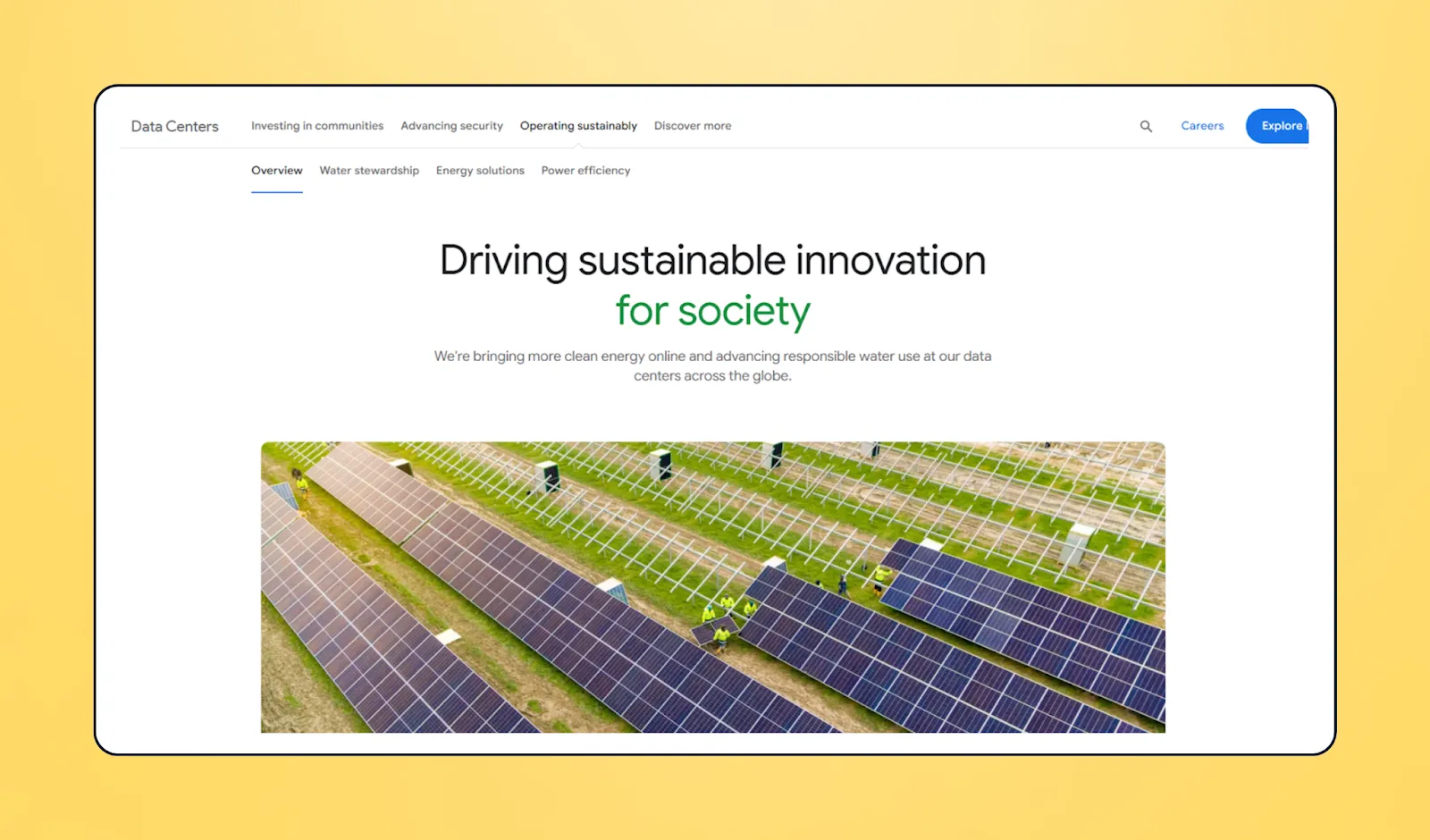
🌍 CSR type: Environmental sustainability
⭐ Program result: Google’s data centers are 6x more energy efficient than they were five years ago, and the company has invested more than $3.7B in clean energy projects and partnerships to date.
2. Pfizer: Expanding global health equity at scale 🩺
Since it was established in 2016, the Pfizer Foundation’s Global Health Innovation Grants (GHIG) program has awarded one-year grants to improve the quality of care and health systems in lower-income countries. Pfizer’s example demonstrates corporate philanthropy and community engagement at scale.
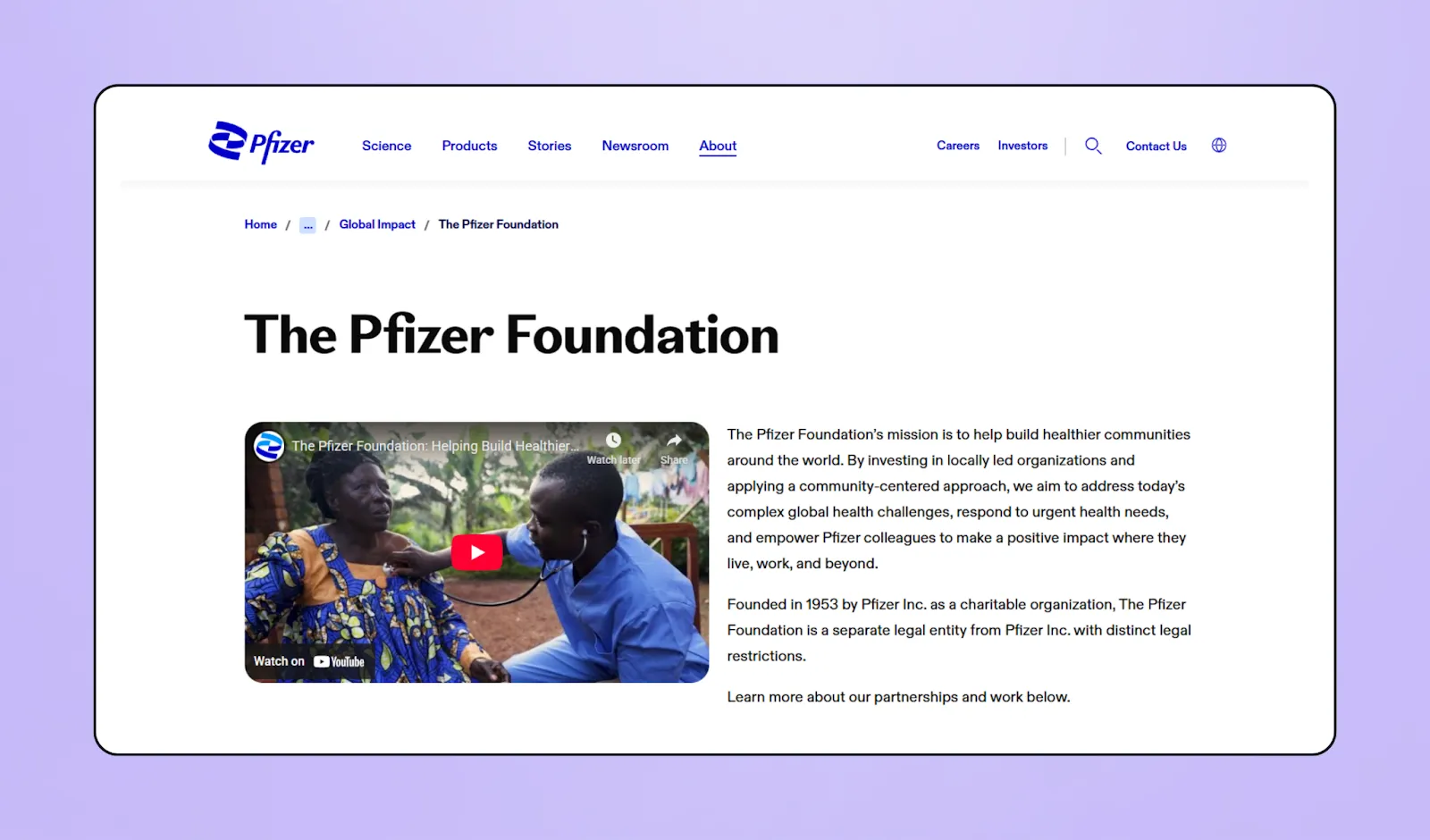
🌍 CSR type: Corporate philanthropy
⭐ Program result: In the past seven years, the GHIG program has improved access to healthcare for more than 6 million people, created more than 1,800 points of care, and trained over 80,000 health workers.
3. Sprout Social: Mobilizing employees to fuel community impact 💬
Sprout Social supports nonprofit organizations through a matching gift program, volunteer hours, and charitable donations—plus an annual Philanthropy Week. In 2020, Sprout Social hosted its Philanthropy Week on Givebutter, raising $42K for 10 different charities.

🌍 CSR type: Corporate philanthropy, ethical labor practices, and volunteering
⭐ Program result: Last year, employees raised more than $50K, and Sprout contributed $575K to nonprofit partners—plus a $200K donation in scholarship funds in partnership with the United Negro College Fund and the Hispanic Scholarship Fund.
4. Starbucks: Investing in ethical sourcing & global farmer communities ☕
Starbucks commits heavily to sustainability—99.75% of its coffee is ethically sourced, benefiting 1 million people in coffee communities worldwide. In addition, Starbucks invested $100M to build farmer support centers, fund farmer loans, and launch forest carbon projects.
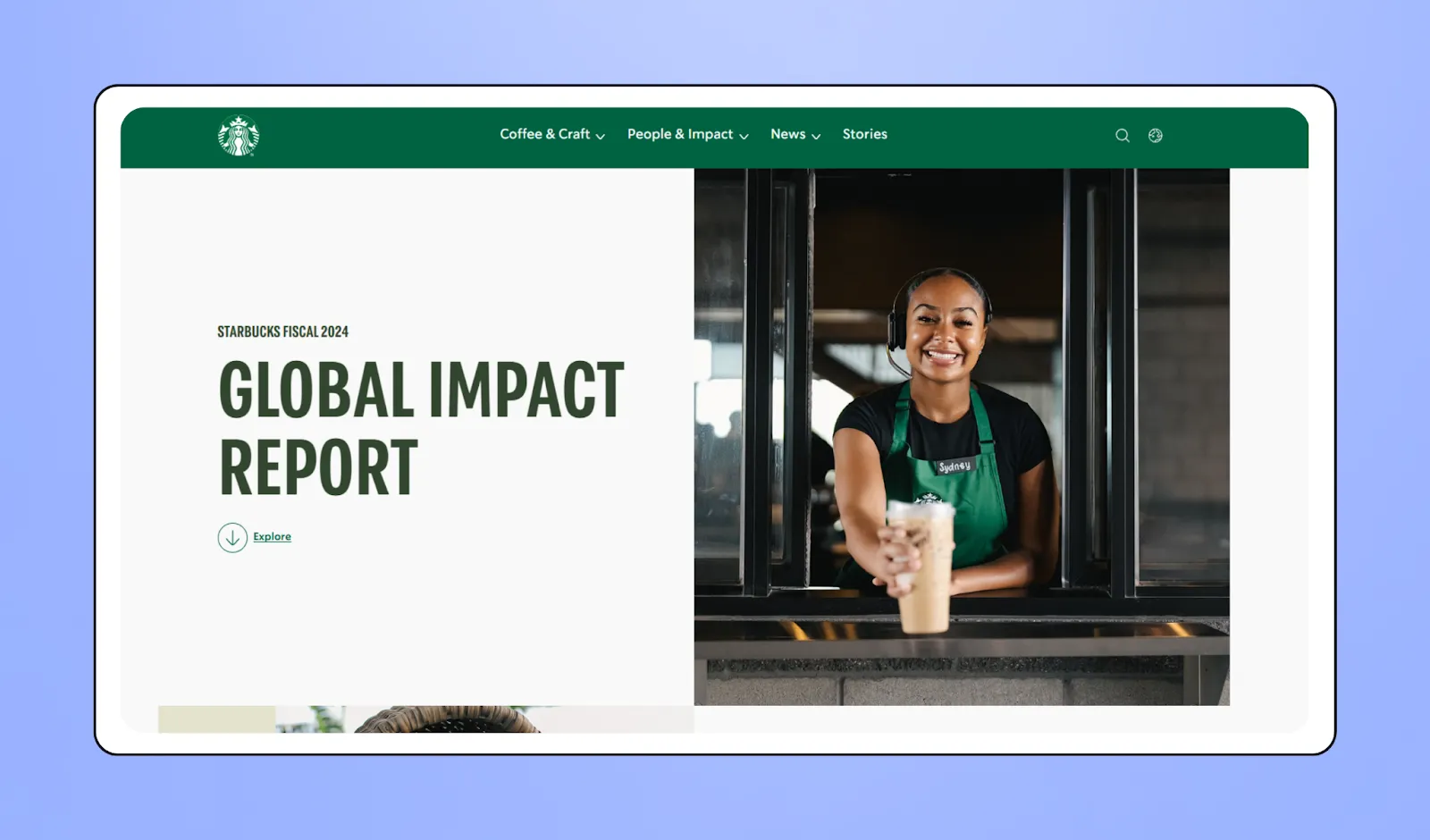
🌍 CSR type: Corporate philanthropy, environmental sustainability, and ethical labor practices
⭐ Program result: Highlights from the past year include awarding $5M in neighborhood grants, distributing 100 million climate-tolerant coffee trees, and helping more than 14,000 employees graduate from Arizona State University.
5. Ben & Jerry’s: Funding grassroots changemakers 🍦
Ben & Jerry’s awards a whopping $2.5M every year, mostly through grants, to support grassroots organizations focused on community action and systemic change.

🌍 CSR type: Corporate philanthropy
⭐ Program result: The Ben & Jerry’s Foundation has donated more than $70M to date.
6. Disney: Turning volunteerism into millions of hours of service ✨
Disney has a great company social responsibility example when it comes to volunteering. Through the Disney VoluntEARS program, employees (and their friends and families) are encouraged to donate their time, energy, and talents to local causes.
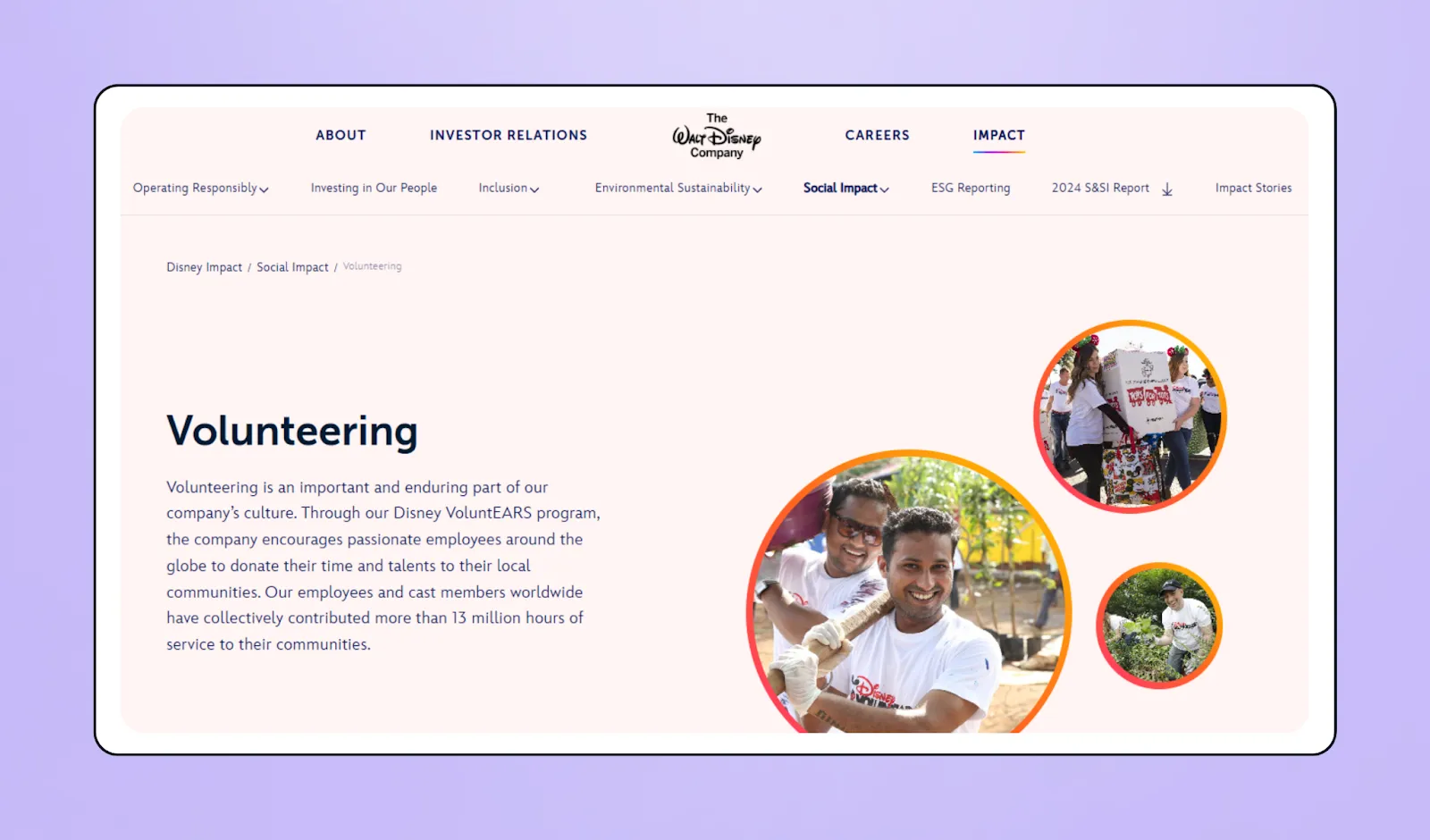
🌍 CSR type: Volunteering
⭐ Program result: So far, the Disney VoluntEARS program has contributed more than 13 million hours of service.
7. Levi’s: Driving planet-first sustainability across its supply chain 👖
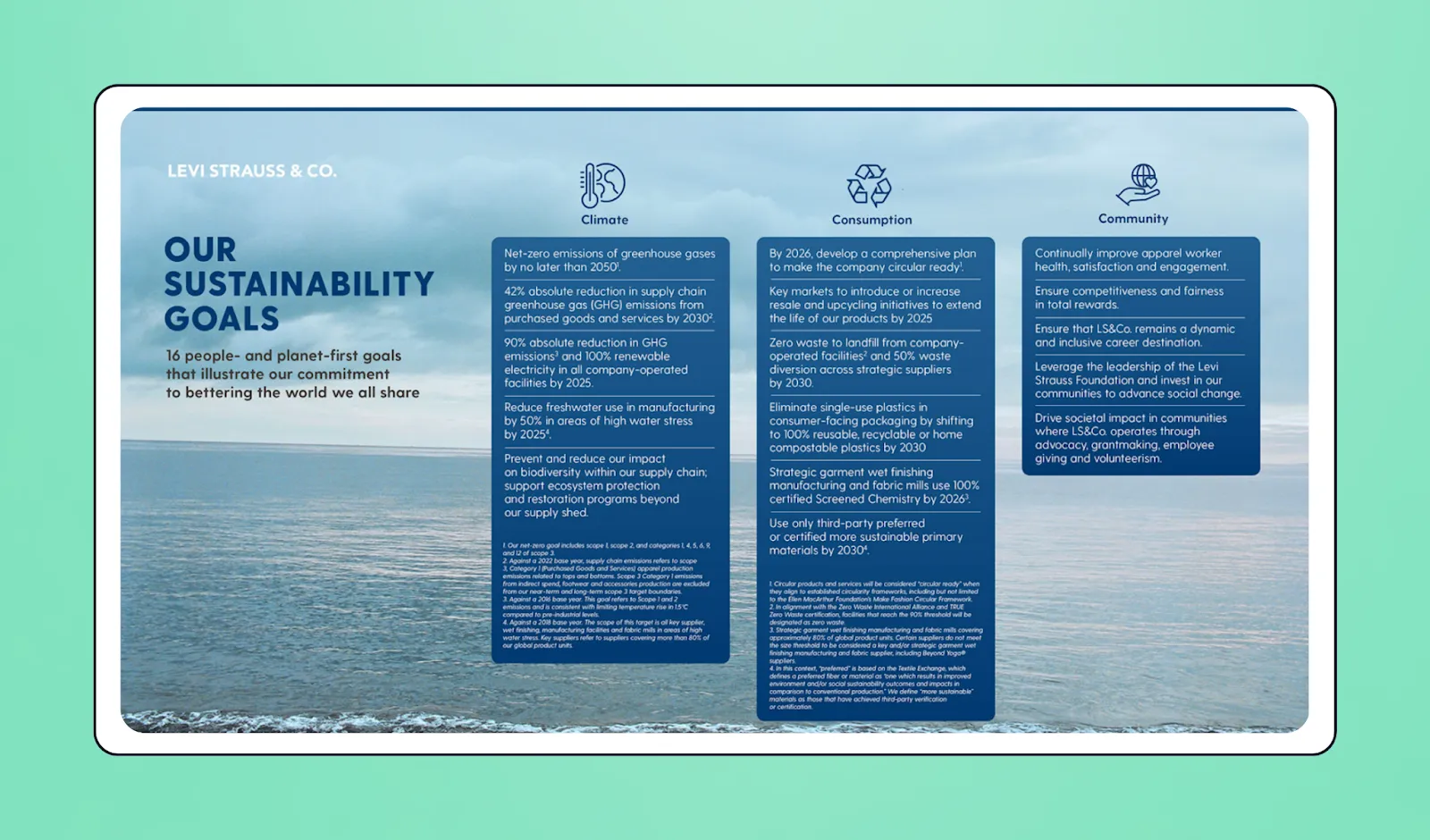
Levi’s is committed to a range of planet-first sustainability goals that cover climate, consumption, and community—including net-zero emissions by 2050 and reducing freshwater use in manufacturing by 50%.
🌍 CSR type: Environmental sustainability
⭐ Program result: Levi’s proactively publishes updates on their sustainability goals, with their latest showing that they’re moving in the right direction. The company also provided more than $2.6M in funding to nonprofit organizations worldwide in 2024.

How nonprofits can partner with CSR programs
Many businesses have CSR goals or want to give back to their local community, but aren’t sure where to start. As a nonprofit organization, here’s how you can partner with sustainability-focused businesses for the greater good.
1. Identify mission-aligned companies 🎯
Corporate social responsibility initiatives work best when the company and the nonprofit are aligned on mission and values. Seek out local businesses and national companies that share a similar purpose—whether that’s water conservation, anti-racism, or clean energy.
2. Craft a values-driven partnership proposal ✉️
Focus on your common goal as you draft your partnership proposal. Explain your mission and demonstrate your success. Outline how you can make a bigger impact together, and highlight the benefits for the business—like positive promotion, meeting CSR goals, and improved employee retention.
3. Engage employees through volunteering 🙌
One of the easiest CSR programs to start is volunteering because of its low financial requirements. Encourage the company to establish employee volunteer hours and make the program rewarding and enjoyable for those who serve.
4. Make giving effortless (and measurable) 📊
Some businesses may be put off by the perceived admin burden that another program can bring. Invest in tools and processes that reduce friction for your corporate partner, so they can contribute employer matches, track volunteer hours, and make donations in the easiest way possible.
5. Nurture the relationship year-round 🌱
Invest in the partnership to grow it into a year-round and long-lasting commitment. Check in regularly to share impact updates, collaboration opportunities, and program ideas.

Corporate social responsibility ideas and initiatives
Here are some of the most common workplace giving initiatives that businesses use to support nonprofit organizations:
- Cash donations 💰 Lump sums, ongoing payments, and expense reimbursements
- In-kind donations 💼 Product donations, professional services and expertise (nonprofit marketing, human resources, legal advice), and cash equivalents (bonds, stocks, assets)
- Matching gift programs 🎁 Companies match donations for a limited time or up to a certain dollar amount
- Employee programs 💚 Paid volunteer days or automatic payroll deductions for donations
- Volunteer grant programs 💸 Employers provide grants to the organizations their employees volunteer for
- Community grant programs 💛 Companies award cash, gift cards, and more to select local organizations
- Corporate sponsorships 🤝 Businesses make financial contributions to sponsor fundraising events, campaigns, and more
- Ethical and sustainability commitments 🌍 Waste reduction goals, ethical supply chain standards, and internal equity or anti-racism initiatives that align with nonprofit missions
Bring your CSR partnerships to life with Givebutter
Corporate responsibility can be transformational for your mission—whether as donations, volunteers, sponsorships, or long-term collaboration. The good news? Many companies already want to do more good. They just need an easy, meaningful way to partner with nonprofits like yours.
Givebutter helps you create a CSR experience that’s effortless for companies and empowering for your team with tools like matching gifts, automated donor engagement, and real-time reporting.
When your systems are smooth, your mission is clear, and your partners feel valued, CSR collaborations become something bigger than a one-time gift—they become relationships that drive lasting impact.
.png)
Make matching donations easy
Sign up for Givebutter today to build stronger, more sustainable corporate partnerships.
FAQs about corporate social responsibility
Explore some of the most frequently asked questions about corporate social responsibility and sustainability efforts.
What is corporate social reporting?
Corporate social reporting is when a company publishes a CSR or sustainability report about its initiatives, programs, and impact to date. Responsible companies typically publish these once a year to improve transparency and demonstrate their sustainability efforts.
How do companies measure CSR success?
Companies measure CSR success by setting clear goals—often called KPIs—and tracking their progress over time. These might focus on emissions, energy use, DEI benchmarks, community investment, or supply chain ethics.
The rise in sustainability reporting across U.S. companies shows that CSR isn’t just a feel-good initiative—it’s becoming part of how businesses assess risk, define strategy, and demonstrate accountability to their stakeholders.
What are CSR frameworks and standards?
A CSR framework is a structured approach to corporate social responsibility, allowing everyone involved to understand what the goal is, how to reach it, and how progress is measured. A popular example is Carroll’s CSR Pyramid.
CSR standards are guidelines that help organizations understand how to meet CSR requirements, with common examples including the ISO 26000 standard and the Global Reporting Initiative (GRI).
What is strategic corporate social responsibility?
Strategic corporate social responsibility is when CSR goals are ingrained in the company’s overall business strategy, so that all initiatives align with the organization’s long-term goals—making it easier to develop programs and partnerships that support the core mission.
Share this article









.svg)
.svg)