










Your nonprofit makes an incredible impact every day, but your supporters might not see it. An impact report transforms your results into a compelling story of change, demonstrating to donors how their gifts have made a difference.
Below, you’ll learn what a nonprofit impact report is and how to create one donors actually want to read. You’ll also find impact report examples and design tips to help you share your impact clearly and inspire even more giving.
Key takeaways
- Impact reports focus on donor-funded results 🥳 Unlike annual reports, which cover finances and operations, they show what gifts made possible and help re-engage lapsed donors.
- Consider timing 🗓️ Send one at year-end, after a major campaign, around milestones, or quarterly, with no ask or alongside an appeal.
- Focus on outcomes and storytelling 📈 Choose three to five outcome-focused success metrics, then back them with accurate data and real stories.
- Write with donors at the heart 💛 Thank supporters, add a leader’s letter, connect gifts to results, and close with a call to keep giving.
- Design your report for clarity and accessibility 🎨 Use simple charts, high-contrast colors, and alt text, and consider a snapshot, video, or interactive format.
- Share your report widely and track results 📣 Distribute it via email, text, social, and your website, then track clicks and A/B test subject lines.
- Maximize your reach with Givebutter 🧈 Send updates with the free drag-and-drop email editor and see giving data in Givebutter Plus’s ready-made reports.
What is an impact report for nonprofits?
An impact report is a donor-centered summary that highlights how contributions made a real difference. It connects gifts directly to outcomes, stories, and measurable results, and serves as a powerful touchpoint in the donor stewardship cycle.
Unlike annual reports, which cover finances, operations, and organizational updates, an impact report focuses on donor-funded results, community change, and gratitude.
Why is a nonprofit impact report important?
An impact report is one of your best tools for re-engaging lapsed donors and staying connected with mid-level donors between asks. Impact reports increase long-term donor engagement by helping your nonprofit:
- Reinforce your mission 💡 By reiterating your goals, highlighting your success, and sharing lessons learned, you remind supporters exactly why your work matters.
- Build trust and transparency 💛 Sharing real results, setbacks included, shows donors their gifts are in good hands.
- Strengthen donor relationships 💪 When donors can see the real results of their contributions, it deepens the connection and encourages continued support.
- Track organizational progress 📈 Impact reports help your team measure growth and progress over time, offering valuable insights for your strategy.

When to send your nonprofit impact report
One benefit of an impact report is its flexibility. Unlike annual reports, which are typically sent once a year, you can share impact reports at various points throughout the year as a standalone stewardship touchpoint with no ask or alongside a fundraising appeal.
The right timing depends on your size and fundraising calendar:
- At the end of the year 📅 Annual impact reports recap the year’s results while supporting year-end giving campaigns.
- After a major campaign or fundraiser 📈 Show donors the results of their support while excitement is high.
- Following milestones or anniversaries 🎉 Highlight achievements on organizational milestones or program anniversaries.
- Quarterly or mid-year 📊 Keep recurring donors engaged with progress reports and updates throughout the year.
How to write an impact report in 5 steps
Impact reports keep supporters updated on your work and engaged with your mission. But planning, writing, and sharing one requires strategy. Follow these five steps to take you from start to finish.
1. Define what success looks like for your nonprofit 📊
Your nonprofit impact report should highlight what your organization has achieved or is working toward.
Start by choosing three to five success metrics that reflect meaningful impact for your organization over a specific period, such as a calendar year or fiscal year. Then, focus on outcomes that show real impact (e.g., “you helped 100 single mothers go back to school”) rather than outputs.
💡 Pro tip: If you’re creating an impact report specifically for donors, focus on gratitude and outcomes. If you’re creating one for grant funders, you might want to include more quantitative results.
2. Collect stories & data that shine 💬
Nonprofit impact reports blend valuable data with powerful stories and visuals. Be sure to:
- Use multiple sources 📝 Gather insights from surveys, interviews, program evaluations, and nonprofit CRM exports to capture both quantitative and qualitative data.
- Clean and organize your data 🧹 Review your data for accuracy, remove duplicates, fill in missing information, and store everything in one centralized location.
- Focus on relevance and accuracy 🎯 Highlight data that supports your goals and shows measurable impact, without inflating or misrepresenting it. Say whether you’re counting unique people or total visits.
Givebutter makes pulling your numbers easier. Connect ChatGPT or Claude to your Givebutter data with free AI connectors, or use Givebutter Plus’s ready-made reports like Giving Overview and Donor Health to pull funds raised, donor count, and new, repeat, and lapsed donors for any date range.
💡 Pro tip: Always obtain written permission before using photos, quotes, or personal stories from clients, volunteers, or staff. Be clear about how and where their information will be shared.
3. Write your story with donors at the heart 💛
Take all the data and stories you’ve gathered and turn them into a compelling narrative.
Begin by thanking supporters for their generosity and include a letter from a leader at your organization to build connection. Then, demonstrate impact by connecting donations with real results (both qualitative and quantitative).
End with a call to action that invites supporters to keep making a difference and continue giving.
💡 Pro tip: Position your readers as the heroes of your story and key contributors to the success of your mission.
4. Design it to be seen & shared 🎨
Strong impact report design can make all the difference. Keep it engaging by focusing on:
- Visual data 📊 Use charts, infographics, or icon rows to make numbers easy to digest and visually appealing. A simple financial overview and three to five impact metrics tied to outcomes are enough.
- Context and quotes 🗺️ Include a mini map, timeline, or before-and-after photos to show your impact geographically or over time. Feature short testimonials or standout quotes from beneficiaries, volunteers, or donors.
- Accessibility 🌈 Use high-contrast colors, legible fonts, and alt text for all images.
💡 Pro tip: Design graphics in Canva for nonprofits, then add them to your impact update with Givebutter’s Canva integration. For a digital report, Givebutter’s Storyraise integration lets you embed a donation form so readers can give without leaving the report.
5. Share, measure, & keep improving 📈
Share your impact report strategically, tracking your successes and adjusting as needed:
- Create a multichannel plan 📣 Distribute your report via email, text, social media, and your website, tailoring each version to the donor segments you want to reach.
- Track engagement 🔗 Monitor clicks, downloads, and shares to see which channels and messages resonate most.
- Analyze and refine 📊 A/B test subject lines, headlines, or calls to action.
💡 Pro tip: With Givebutter Plus, the ready-made Engage Momentum report shows how much each email, text, and mailing raised through tracked links and QR codes, so each impact report can be sharper than the last.
3 effective impact report examples by format
Not all impact reports look alike. Many nonprofits get creative with the format, from interactive digital reports to sleek one-pagers. Take a look at these standout impact report samples, one for each format.
1. Snapshot-style impact report 📃
While this impact report from Scripps College spans a few pages, its key data is showcased boldly on one page, giving supporters a quick, eye-catching snapshot of their impact.
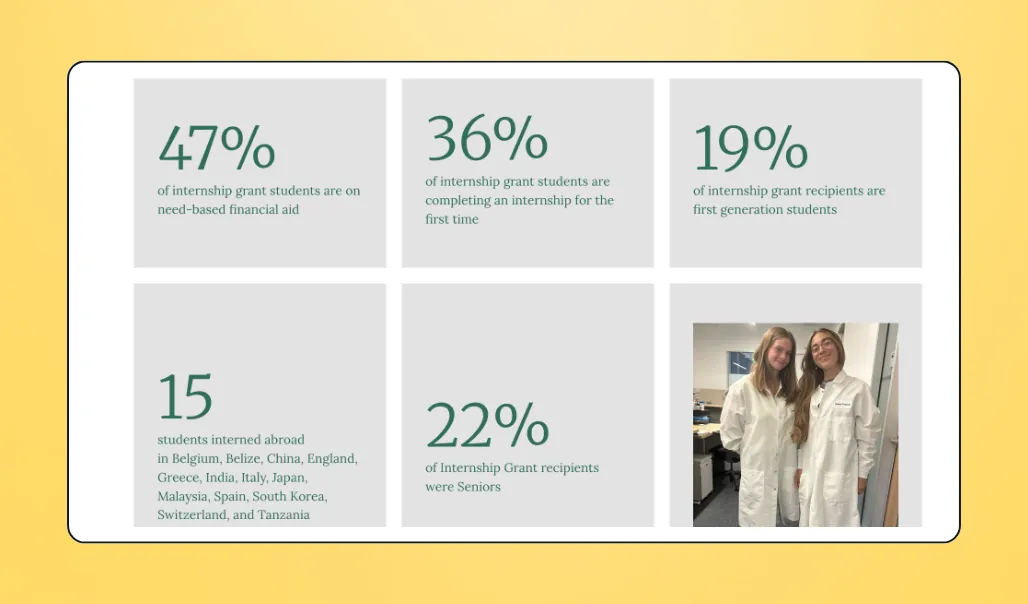
⭐ Why it works: This condensed report gets straight to the point, giving supporters all the details they’re looking for without having to scroll through several copy-heavy pages.
💪 Try this: Review your data and highlight the top five takeaways you want stakeholders to remember. Then, use a Canva charity report template to design your own one-page report.
2. Video impact report 📹
East Tennessee State University’s video impact report lets the people behind the work tell the story. Testimonials from staff and volunteers shared in their own words create an authentic connection.

⭐ Why it works: Video is easy to watch and puts real faces on your results, so it creates a stronger emotional connection.
💪 Try this: Record beneficiaries, volunteers, or staff members talking about what your mission means to them. Add captions and music for extra polish.
3. Interactive impact report 👀
Hausner School’s impact report invites readers to interact. As they scroll, impact numbers load in real time, making the organization’s results fun to explore.
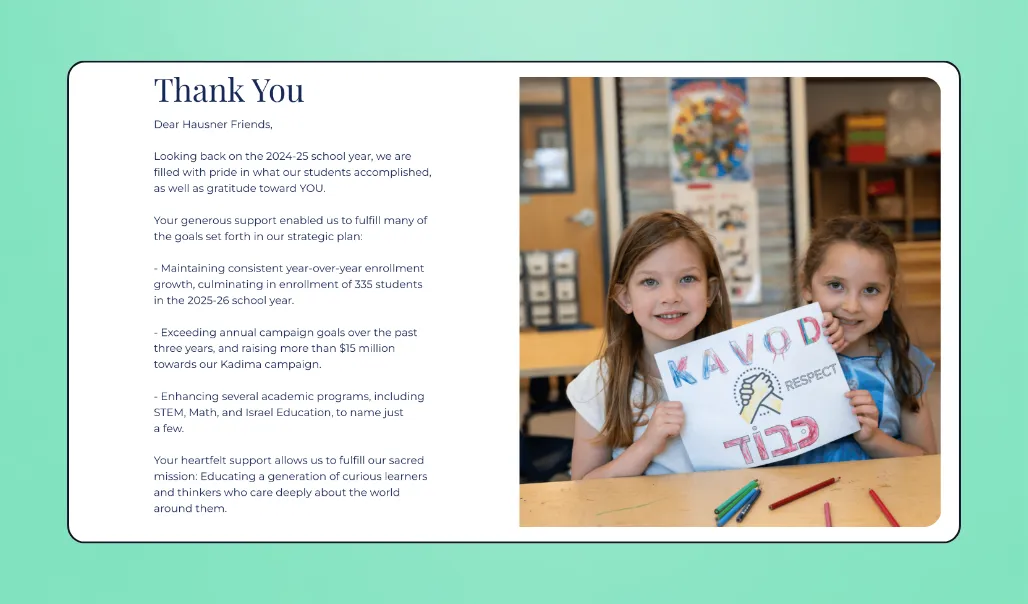
⭐ Why it works: Interactive reports immerse supporters in your content, encouraging them to explore and engage.
💪 Try this: Use Storyraise to add interactive elements to your impact report. No technical or design skills needed.
Nonprofit impact reports make donors the heroes
Your nonprofit makes an impact every day, and an impact report makes sure your supporters see it. Donors who see what their gift made possible have every reason to give again, and each new gift gives next year’s report more to celebrate.
Givebutter gives you all the pieces to build your impact report and get it in front of the right supporters, minus the busywork.
Ask ChatGPT or Claude to summarize your year with free AI connectors, and pull funds raised, donor count, and average gift from Givebutter Plus’s ready-made reports in a few clicks. Pair those numbers with the stories you gathered in Step 2, design your report in Storyraise or Canva, then send it to the right segments with Givebutter’s free drag-and-drop email editor.
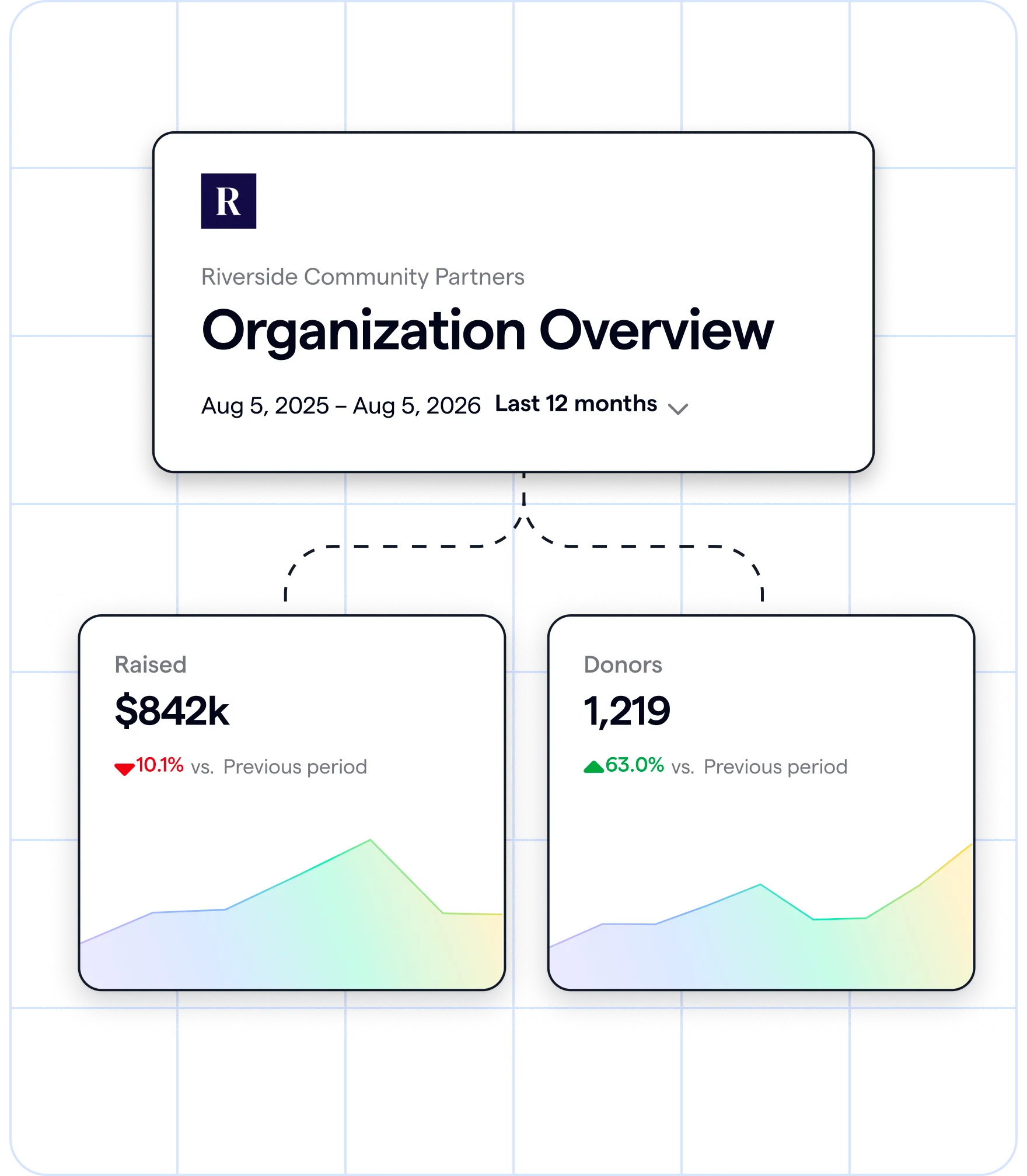
Pull your impact numbers in seconds
Start your free 30-day Givebutter Plus trial and begin tracking your giving data today, so your numbers are ready when it’s time to write your next report.
FAQs about donor impact reports
How do I collect data for my impact report if our tracking isn’t perfect?
Start with what you can verify, like program data, service counts, CRM exports, surveys, intake forms, or interviews. When numbers are incomplete, use clear proxies (“estimated based on…”) or qualitative insights. Never guess or inflate results, because transparency builds donor trust.
What if our impact this year wasn’t substantial?
Be honest. Donors appreciate transparency about challenges, waitlists, staffing gaps, or lessons learned. Sharing what you’re improving for next year can increase trust and retention.
How do I choose the right metrics?
Work backward from your mission and your audience, and focus on outcomes rather than activities. Instead of “We held 42 workshops,” try “87% of participants reported increased confidence.” Pick three to five metrics that demonstrate the most change.
How long should a nonprofit impact report be?
Aim for one to four pages or a scrollable webpage. Shorter visual formats are easier for donors to skim than a dense PDF.
What is the difference between a nonprofit impact report and an annual report?
An impact report focuses on donor-funded outcomes and stories, while an annual report covers the full organization, including programs, finances, governance, and the board. Use an impact report to show donors what their gifts made possible, and an annual report when you need a complete record of your year for your board, funders, and community.
Share this article