











Treating lapsed donors as lost causes is one of the biggest mistakes nonprofits make in fundraising. In reality, these donors are already primed to give again—you just need the right re-engagement strategies.
Below, we’ll explain the difference between LYBUNT and SYBUNT donors, then show you how to find, segment, and win back both groups, plus how to prevent donor lapse.
Key takeaways
- Understand LYBUNT vs. SYBUNT 🤔 LYBUNT stands for “last year but unfortunately not this year.” SYBUNT stands for “some year but unfortunately not this year.”
- Pull both lists from preset segments 📋 Free tools like Givebutter offer default LYBUNT and SYBUNT segments that update automatically as new gifts come in.
- Split the list by why donors lapsed 💔 Failed recurring gifts, one-time givers, first-time donors, quiet downgraders, and truly moved-on donors each need a different message.
- Open with a no-ask touchpoint 👋 Saying thank you or offering a new way to engage, plus referencing the donor’s past gift, is an effective, low-effort tactic.
- Monitor lapse signals year-round 🗓️ Instead of only looking at donor red flags in December, regularly review records to identify donors who skipped their usual donation, didn’t open emails, or decreased their donation amounts over time.
What do LYBUNT & SYBUNT mean?
LYBUNT (pronounced lie-bunt) stands for “last year but unfortunately not this year” and refers to donors who gave last year but haven’t given yet this year. SYBUNT (pronounced sigh-bunt) stands for “some year but unfortunately not this year” and refers to donors who gave in an earlier year, but not last year or this year.

Nonprofits may define these windows differently (fiscal vs. calendar year, 12 vs. 13 months). Set a single definition for your organization and document it so your LYBUNT and SYBUNT counts remain consistent from year to year and across every board report.
Here’s how four donors would be labeled, assuming your fiscal year matches the calendar year:

How to find & segment LYBUNT & SYBUNT donors
The first step in winning back LYBUNTs and SYBUNTs is to identify and segment them. This relies on clean data, including clear gift sources, campaign codes, household information, and deceased-donor records.
Pull both lists in minutes 📊
First, pull both LYBUNT and SYBUNT donors from your CRM. With Givebutter, you can:
- Start with default segments: Access LYBUNT and SYBUNT segments that update automatically as new gifts come in.
- Use smart filters: Type a plain-language request, such as donors who gave last year but not this year, and let Givebutter Magic create filters for you.
- Ask questions: With AI connectors, you can ask about lapsed donors in plain English.
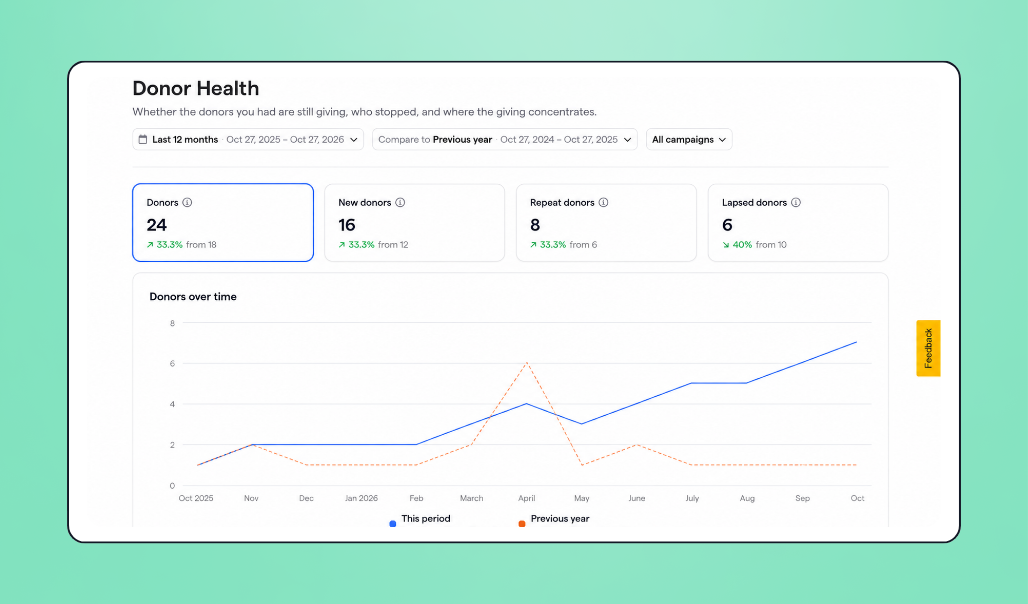
- See the full picture: Givebutter Plus reporting lets you view new, active, and lapsed donors over a specific date range.
Split the list by why they lapsed 👥
Not all LYBUNT donors are the same. Some donors never meant to lapse (their payment method may have failed, for example), while first-time donors with no second touch may just feel disconnected and underappreciated.
Splitting donors into groups like these lets you personalize outreach, improving your chances of winning them back. That matters most for newer donors. According to M+R Benchmarks 2026, only 24% of new online donors gave again the following year, compared to 66% of online donors who had already given at least twice.
When identifying LYBUNT donors, consider breaking them into segments like:
- First-time vs. repeat donors: First-time donors may need extra encouragement, while repeat donors often respond well to a reminder of their impact.
- Major vs. small-dollar donors: Major donors often require a personal touch, like a phone call, while small-dollar donors may be more responsive to email or text messages.
- One-time vs. recurring donors: An incentive to give again, such as a matching gift opportunity, can work well for one-time donors. For lapsed recurring donors, targeted outreach that acknowledges their past commitment may be more effective.
- Donors by giving motivation: Use past interactions, survey data, or notes from donor meetings to tailor messages based on why they gave.
Here’s an example of specific lapsed donor groups and how a nonprofit might best re-engage them:
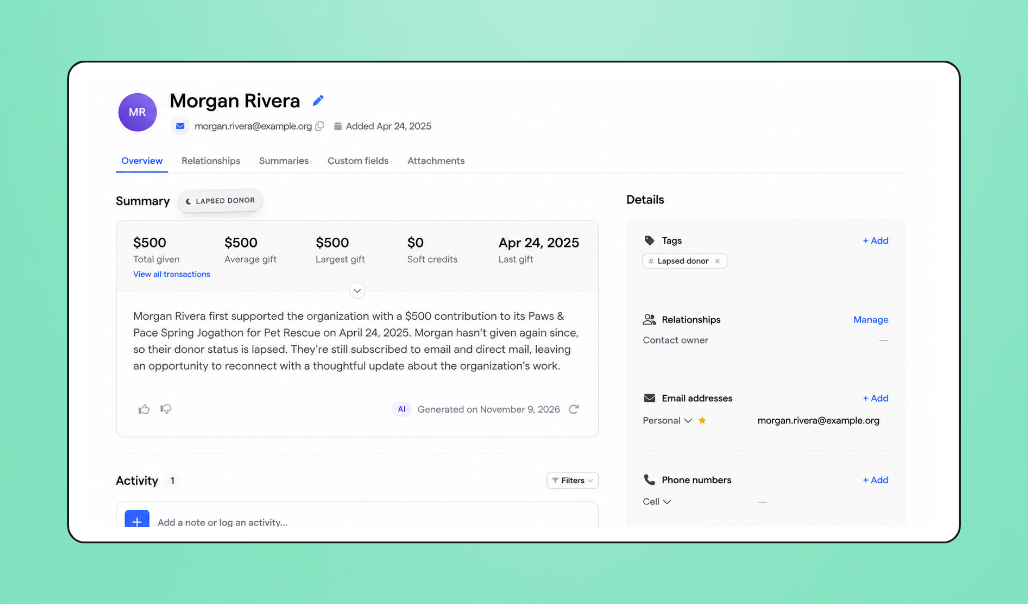
💡 Pro tip: To spot quiet downgraders, open a donor’s contact profile in Givebutter. It leads with their giving summary, recurring gifts, and communication preferences.
How to win back LYBUNT & SYBUNT donors
Once you’ve gathered your data, it’s time to put your LYBUNT strategy into action. Re-engaging lapsed donors is often about ensuring they feel appreciated, heard, and connected.
- Open with a no-ask touchpoint 👋 Lead with a short survey, an event invite, or an impact update, and mark the anniversary of their last gift with a quick note.
- Remind them what their last gift did 💛 Use their name and last gift amount or date, tie it to a real outcome, then suggest a slightly higher amount.
- Match the channel to the gift 📬 Use email or text for small-dollar LYBUNTs, and a handwritten note, call, or mailing for bigger ones. With Givebutter Plus video messages, you can send major donors a personal check-in from their donor record.
- Offer more than one way back 🔁 Let donors choose between a recurring gift, a small donation, or volunteering.
- Use peer influence 🤝 Ask board members, volunteers, and loyal donors to reach out to lapsed donors in their networks.
- Give them a reason to act now ⏰ A matching gift window or a behind-the-scenes perk can help overcome inertia.
How to keep donors from becoming LYBUNT
Strong donor stewardship ensures that supporters feel valued and connected to your mission year-round—not just when you need another gift.
Here’s how to keep donors engaged before they become LYBUNT:
Thank donors fast & highlight impact between asks 🙏
One of the most effective ways to retain donors is to thank them promptly and meaningfully and to keep in touch between appeals.
To do that:
- Send an acknowledgment email: After a gift is made, say thank you immediately, then follow up with a personalized thank-you letter for mid-to-large donors. A phone call can go a long way, too.
- Show impact: Send newsletters, highlight real impact stories, and share videos, interviews, or impact reports to make donors feel like insiders in your mission.
- Keep donors involved in non-monetary ways: Invite donors to appreciation events, volunteer opportunities, or virtual Q&A sessions with leadership. These touchpoints help maintain their commitment and keep them engaged with your mission.
Make it easy to keep giving 💸
Flexible giving options reduce friction for supporters, helping them continue donating. To prevent donor lapse, be sure to offer:
- Recurring donations: Allow donors to give monthly, quarterly, or annually.
- Alternative giving: Offer options like donor-advised funds, stock donations, or workplace giving.
- Easy upgrades or downgrades: Give donors the flexibility to scale their donations up or down as needed. This can prevent them from dropping off completely.
Watch for early warning signs year-round 📉
Tracking donor engagement helps you catch lapse signals early. Review your CRM or run reports to identify donors who:
❌ Skipped their usual donation month
❌ Didn’t open emails or attend recent events
❌ Decreased their donation amounts over time
With Givebutter Plus, you can use workflows to trigger an email, text, or follow-up task when a donor’s last gift is past a set date, and ready-made reports help identify lapse trends monthly rather than annually.
📣 Did you know? M+R Benchmarks 2026 found that 10% of recurring donors stop giving within two months of setting up a new monthly gift. That makes the first 60 days an especially important time to check in with new recurring donors.
Download your free lapsed donor letter template
Use this free lapsed donor letter template as your LYBUNT or SYBUNT appeal letter. It helps you remind each donor of their past gift, share what your nonprofit is working on now, and invite them to renew their support. It also includes a shorter email version for donors you’d rather reach by inbox.

Your LYBUNT list is a second chance, not a lost cause
Your LYBUNT and SYBUNT donors already said yes to your mission once. Many didn’t mean to leave: a card expired, an email got buried, or no one followed up after their first gift.
Start small: pull both lists, split them by why each donor lapsed, and send your warmest group a thank-you or impact update with no ask attached. Then keep an eye on early warning signs year-round so fewer donors end up on next year’s list.
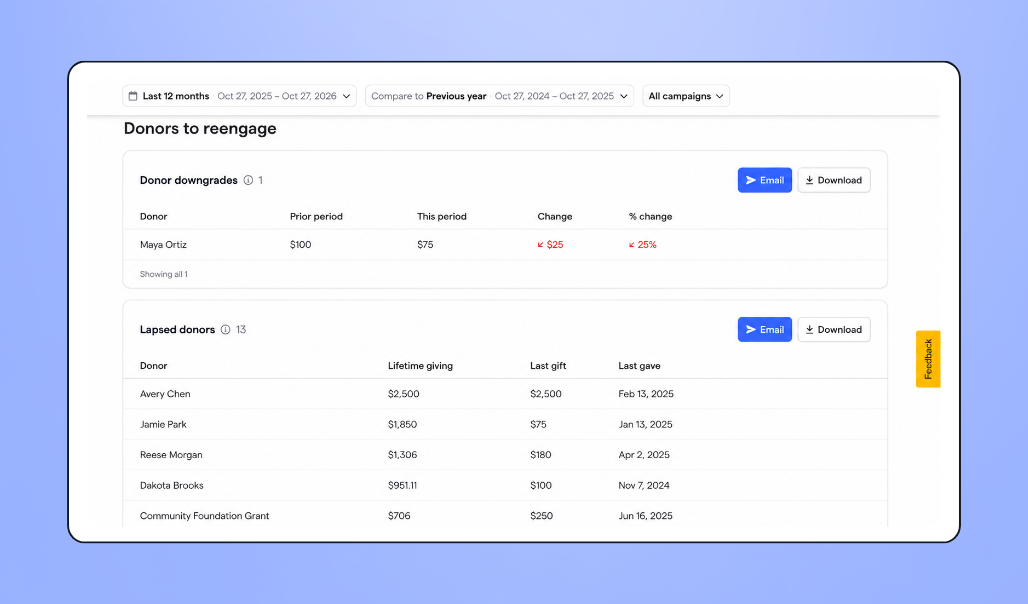
Givebutter makes the whole cycle easier. Default LYBUNT and SYBUNT segments update on their own, smart filters find the exact donors you’re looking for, and Givebutter Plus workflows handle the follow-ups, so you can spend your time on the conversations that bring donors back.

Turn last year’s donors into this year’s gifts
Create your free account today to see how Givebutter’s all-in-one platform can help transform your fundraising.
FAQs about LYBUNT & SYBUNT
What does LYBUNT stand for?
LYBUNT stands for “last year but unfortunately not this year,” while SYBUNT stands for “some year but unfortunately not this year.”
What’s the difference between LYBUNT & SYBUNT?
LYBUNT donors gave last year but haven’t given yet this year, while SYBUNT donors gave in an earlier year but not last year or this year. LYBUNTs are usually easier to win back because their last gift is more recent, so many nonprofits reach out to them first.
What is a lapsed donor?
A lapsed donor is someone who has given to your nonprofit before but hasn’t made a gift within a set time frame, usually 12 months. LYBUNT and SYBUNT are two common labels for lapsed donors based on when they last gave. According to M+R Benchmarks 2026, only 24% of new online donors give again the following year, so lapse is a normal part of fundraising.
How do you run a LYBUNT report?
To run a LYBUNT report in your CRM, set the date range and filter for donors who gave last year but not this year, or use a preset LYBUNT segment in Givebutter.
How do you win back lapsed donors?
To win back lapsed donors, segment them by giving history and motivation, and open with a no-ask touchpoint before making a personal ask that references their last gift.
How do you get back a lapsed recurring donor?
Start by finding out why the recurring gift stopped. Many lapsed recurring donors never meant to leave: a card expired or a payment failed. Send a friendly reminder to update their payment method with no fundraising appeal, then follow up with an impact update. With Givebutter Plus workflows, you can send that reminder automatically when a recurring plan is canceled.
Share this article