.svg)
.svg)
.svg)
.svg)
.svg)
.svg)
.svg)
.svg)
.svg)


.svg)
.svg)
.svg)
.svg)
.svg)
.svg)
.svg)
.svg)

.svg)
.svg)
.svg)

.svg)

.svg)
.svg)
.svg)
.svg)
.svg)


.svg)
.svg)
.svg)
.svg)
.svg)
.svg)
.svg)




.svg)




%20(1).png)

A recent survey of nonprofits found that monthly donations accounted for 27% of online revenue, showing 12% growth from the previous year.
While nonprofit organizations are aware of the benefits of recurring giving, many haven't built a formalized program—yet! This guide covers everything you need to know to launch and grow your monthly giving program in 9 concrete steps, with free outreach templates and additional resources to make the process as smooth as butter.
Key takeaways
- Build with intent 🏗️ A monthly giving program is more than toggling on recurring donations—it's a branded initiative with goals, messaging, and a stewardship plan.
- Name it something that sticks 🏷️ A strong program name (like charity:water's “The Spring") makes donors feel like they're joining something meaningful.
- Recruit from your existing base 🎯 Your best monthly donor prospects are already in your CRM—look for repeat one-time givers.
- Retain with impact updates 💛 Regular impact communication is the single highest-ROI retention strategy for monthly donors.
- Upgrade annually ⬆️ Donors who've been sustaining for 6+ months are prime candidates for gift upgrade asks.
- Use the right platform ⚙️ The right tool handles payment retries, donor management, and upgrade campaigns—all without adding admin overhead.
What is a monthly giving program?
A monthly giving program empowers nonprofit donors to commit to giving a specific amount to a cause every month. Instead of making a one-time donation whenever they remember, supporters set up a recurring payment as an automatic monthly contribution, much like setting up auto-pay for a cell phone bill.
While monthly gifts aren’t usually the largest source of income for nonprofits, regardless of size, they do provide a layer of predictability and stability, helping changemakers plan with confidence, knowing exactly how much revenue they can expect each month.
In a recent Givebutter survey, 41% of nonprofits said they accept recurring gifts but don't yet have a dedicated monthly giving program.
Why monthly giving matters for your nonprofit 📊
Beyond reducing the uncertainty that can come with grant funding or relying on one-time random donations, monthly donations are a strong indicator of donor retention. M+R found that the one-time donor retention rate was 23%, while the recurring donor retention rate was 61%.
The benefits of sustaining gifts cannot be understated, as recent fundraising statistics show:
- Revenue growth 💸 One-time gifts average $121, while the average monthly gift is $25, totaling $300 a year.
- Lower fundraising costs ✨ Raising a single dollar from a new donor can cost up to $1.50, while it only costs about $0.20 to solicit from existing donors.
- Stronger community 🤝 Cultivating loyal donors creates champions for your cause who can bring in new supporters.
“Consumers want subscription models because they enable authentic ongoing engagement that we desire. There's a reason that we’re seeing the growth of recurring giving in our sector because it's how we're purchasing products as well.” — Dana Snyder, Positive Equation
9 steps to build a monthly giving program
Recurring donations feel good for everyone involved. These nine steps will help you start a monthly giving program you can feel proud of.
Step 1. Set your monthly giving goals 🎯
Create SMART goals for both revenue AND donor count. For example: "We want 50 monthly donors averaging $25/month by year-end, generating $15K in recurring annual revenue."
A concrete goal gives direction and makes ROI measurable from day one.
Step 2. Name & brand your program 🏷️
Branding your program makes your recurring donors feel recognized and emphasizes the value and impact of giving monthly.
The Red Cross, for example, calls its monthly donors “Champions” to elevate their role, while charity:water’s monthly giving program is called The Spring, which sounds like a special membership club anyone would be excited to join.
✍️ Note: If you already have a membership program, a monthly giving program can coexist—they serve different functions!
Step 3. Choose the right fundraising platform ⚙️
The right platform does the heavy lifting, including handling payment retries, donor management, and upgrade campaigns without adding admin overhead. Use these questions to evaluate your options:
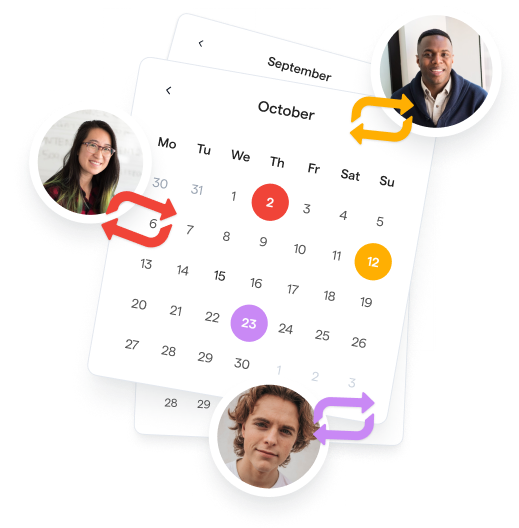
⚡️ Pro tip: Dynamic upsell messages at checkout can reframe a one-time gift as a monthly commitment. Showing a donor that "$10/month means $120 for your mission each year" converts better than a generic recurring giving ask.
Build recurring giving that lasts on Givebutter
Step 4. Set up your donation form for recurring gifts 💳
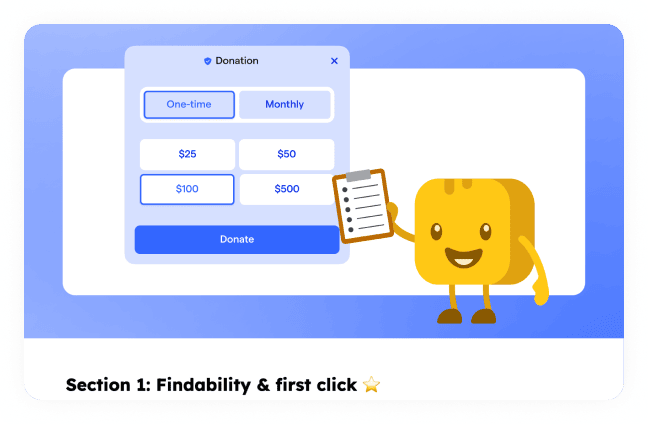
Create a new form just for recurring giving and set the default frequency option to “monthly.” You can offer quarterly or annual enrollment, though 94% of recurring donors prefer giving monthly.
The most successful programs also offer several giving levels and a clear idea of what each gift amount provides (e.g., "$25/month funds one tutoring session per week"). This flexibility equals more funds for you and happier donors.

⚡ Pro tip: Providing ACH (bank transfer) as a payment method makes recurring giving even smoother. Rather than credit or debit card payments, which frequently require updating expired information, ACH donations are directly deposited monthly from the donor’s bank account. Plus, processing fees are typically lower than other options.
Step 5. Build your monthly giving ask campaign 📩
Don’t make the mistake of adding a “turn it into a monthly gift” option to your online donation form and calling it a day. To captivate your community members, you need to craft a compelling appeal that motivates increased giving.
Think about how you can highlight monthly giving options in your fundraising efforts, and think of the channels that your donor base already knows and loves, including:
- Social media
- Text messages
- Direct mail
- Website
- Phone calls
You don’t have to craft your monthly giving appeal letter from scratch. Givebutter’s free outreach templates have everything you need to encourage new and existing donors to opt in. We’ve also included an automation and workflow checklist to make your recurring giving program even more impactful.

Step 6. Recruit your first monthly donors 🤝
Your first monthly donors are likely already on your donor list. Instead of cold acquisition, look through your CRM for donors who have given two to three times in the past year. From there you can personalize your asks using their giving history (e.g., "You've given $120 this year—could you consider $20/month instead?")
Some other prime monthly giving prospects include:
- One-time donors who contribute less than $200 annually
- Current donors who give three or more times each year
- Long-term donors who have supported previously but didn’t give last year
- Past board members, volunteers, and event attendees
Step 7. Onboard and welcome your sustainers 💛
The goal is to make new monthly donors feel seen and valued from the start.
“Leading with gratitude-based communication deepens emotional connection and fosters long-term loyalty.” — Dr. Sanjay Bindra, The GIVE Study playbook
💡 Want to go deeper? Watch Dr. Bindra's full session on the GIVE Arc to see how one nonprofit moved 80% of donors to recurring giving →
Set up and automate the following systems in your monthly giving platform that make acknowledgment a breeze, without sacrificing personal connection:
- First-time follow-up 👋 Create a workflow so that every new monthly donor receives a prompt thank you and welcome email in addition to the standard donation receipt.
- To-dos ✅ Workflows can also create a task every time your nonprofit gains a new recurring donor, such as sending a reminder to conduct a more personal follow-up (like a phone call).
- A monthly giving welcome email series 🔄 To keep new recurring donors engaged, create an exclusive, automated drip campaign to give them a behind-the-scenes look at your mission and showcase the impact of their generosity.

Step 8. Reduce churn with smart retention tactics 📊
If the only communication your monthly donors get is the same automated “Thank you for your $20” every month, they’ll stop feeling the impact.
Create a stewardship plan for ongoing engagement to nurture donor relationships that includes:
- Segmentation ✂️ Create custom donor segments for your monthly givers, so they receive targeted communications.
- Multiple communication touchpoints 📣 Beyond email, consider thank-you letters via direct mail, social media testimonials, and mid-year impact updates to keep donors emotionally connected.
- Engaging lapsed monthly supporters 👋 It may just be that their credit card has expired. Reach out with a friendly message to get them back on board.
- Exclusive benefits 🎁 Throw in a few perks like special events, insider news updates, and fun merchandise to encourage donors to join your monthly program.

Step 9. Upgrade your monthly donors annually ⬆️
Donors who've been sustaining for six months or more are prime candidates for an upgrade. Even asking for a $5/month increase across 50 donors can lead to an additional $3K a year.
Givebutter makes it easy to filter donors by giving history and send targeted upgrade campaigns. You’ve got this!
.png)
Monthly giving program examples
Looking for some monthly giving campaign ideas? Check out these four examples to inspire your team.
Membership programs 🤝
Offer monthly giving options as part of a membership program that highlights the benefits of monthly giving for donors. By joining, members may receive special newsletters, access to webinars, or even merchandise.

⭐ See it in action: The Bennington Theater offers three branded membership levels with various perks for monthly donors.
Monthly needs 💪
Encourage supporters to become monthly donors to meet specific time-bound needs.
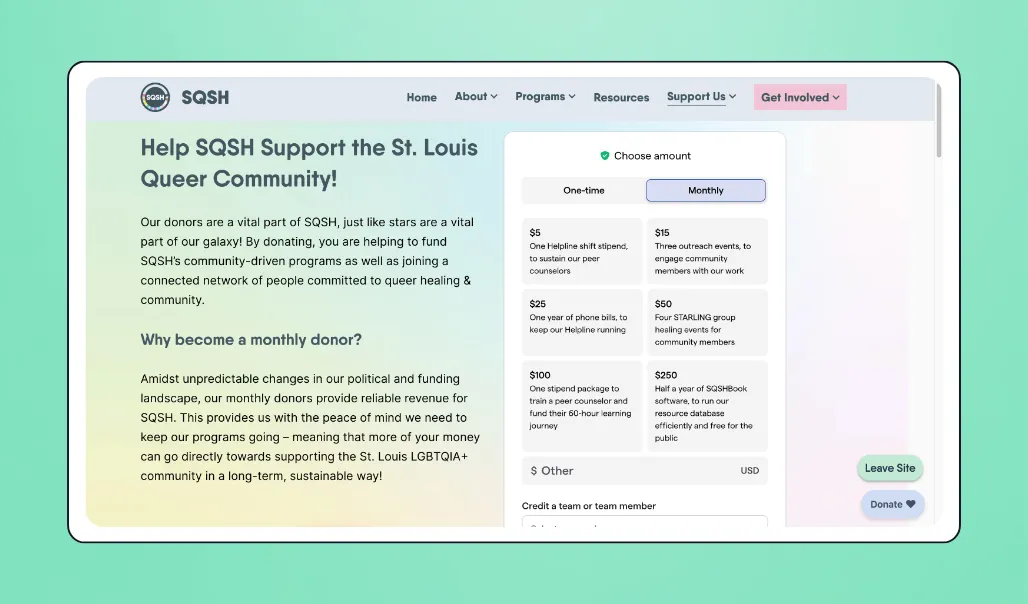
⭐ See it in action: St. Louis Queer Plus Support Helpline encourages recurring giving at multiple levels to help fund specific needs in their community.
Special occasions 🎂
Use special occasions like anniversaries, holidays, or awareness months to promote monthly giving, such as encouraging supporters to support ongoing research during Breast Cancer Awareness Month.
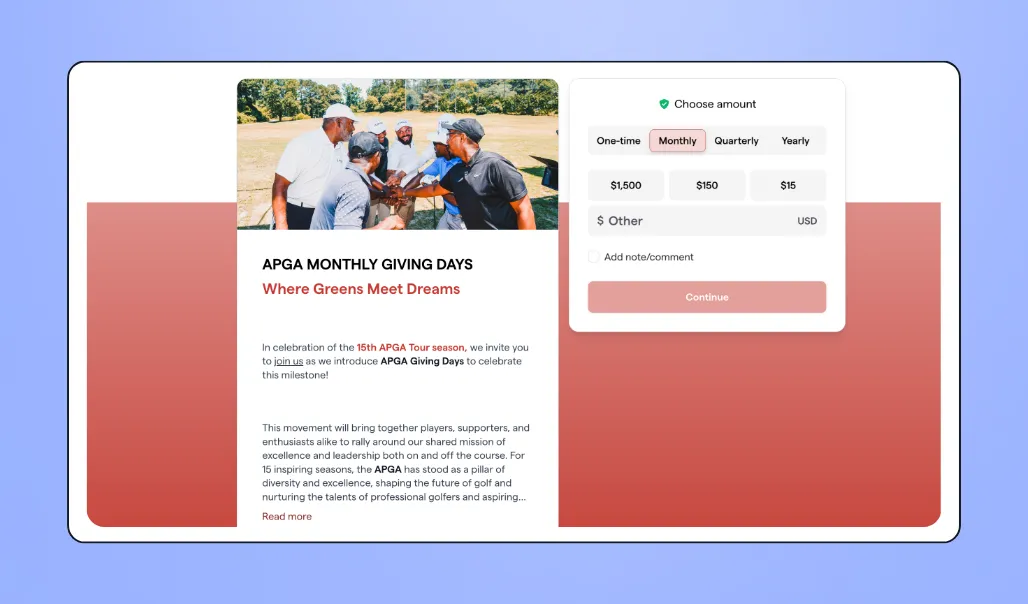
⭐ See it in action: To celebrate its 15th anniversary, Advocates Professional Golf Association launched APGA Monthly Giving Days to promote recurring gifts and keep its programs running strong.
Tangible impact 👟
Engage recurring donors by encouraging them to participate in a campaign linked to specific, tangible results—like providing shoes for kids.

⭐ See it in action: Respond Crisis Translation makes a compelling case for monthly gifts with high-stakes, mission-driven language.
Grow your recurring giving with Givebutter 🧈
Monthly giving is one of the most powerful revenue streams a nonprofit can build. With Givebutter's recurring giving features, including dynamic upsell messages that show donors the real impact of a monthly gift, growing a loyal base of sustainers has never been easier.
Givebutter is also giving away $25K for Monthly Giving Week. From May 11 to 15, 2026, for every new donor who starts a recurring gift of at least $5 a month, Givebutter will deposit $10 into your Givebutter Wallet.
- 10 new monthly donors = $100 in your Wallet
- 50 new monthly donors = $500 in your Wallet
The more new monthly donors you sign up, the more Givebutter reinvests in your mission.
Sign up for your free Givebutter account to start your monthly giving success story today.
FAQs about monthly giving programs
How do I start a monthly giving program for my nonprofit?
Start by enabling recurring donations on your fundraising platform, setting a revenue and donor count goal, naming and branding your program, and making a targeted ask to your existing donors. Tools like Givebutter make setup straightforward for nonprofits of any size.
What should I name my monthly giving program?
Choose a name that's tied to your mission and makes donors feel like they're joining something meaningful. charity:water calls their program "The Spring," while the Red Cross calls monthly donors "Champions." Avoid generic names like "Monthly Giving Club.” The more specific and mission-driven, the better.
What percentage of revenue should come from monthly giving?
According to the M+R 2025 Benchmarks, the average nonprofit receives 27% of online revenue from monthly giving. For rights-based organizations, it can go as high as 40%. Even 10-15% is a meaningful milestone for small nonprofits building from scratch.
How to promote monthly giving?
Focus on storytelling across your website, email newsletters, and social media to show how consistent gifts create long-term impact. Create a dedicated landing page that makes monthly giving the default option and highlights the convenience and impact of this type of donation.
How to launch a monthly giving campaign?
Start by inviting your most loyal one-time donors to join your program first. Then use a multi-channel approach to build momentum during a defined kickoff period.
How can nonprofits track monthly giving programs?
Use your CRM to monitor key performance indicators such as donor retention rates, monthly recurring revenue, and churn rate. Regular reporting on these metrics helps you identify when donors drop off and measure the lifetime value of your recurring supporters.
Share this article









.svg)
.svg)