.svg)
.svg)
.svg)
.svg)
.svg)
.svg)
.svg)
.svg)
.svg)


.svg)
.svg)
.svg)
.svg)
.svg)
.svg)
.svg)
.svg)

.svg)
.svg)
.svg)

.svg)

.svg)
.svg)
.svg)
.svg)
.svg)


.svg)
.svg)
.svg)
.svg)
.svg)
.svg)
.svg)




.svg)



%20(1).png)

Fundraising events are the bread and butter of nonprofit success, with 81% of donors attending nonprofit fundraising events, and 24% giving through events such as auctions.
Cue the paddle raise: a fun and memorable way to rally your supporters and bring in serious funds for your cause. In this guide, we’ll break down everything you need to plan, promote, and pull off a paddle raise that inspires generosity.
Key takeaways
- Know your paddle 🏓 A paddle raise is a fund-a-need appeal, not an auction or bidding contest.
- Shorter is better ⏰ Paddle raises are over before you know it, but the results can be huge.
- Preparation is key 🔑 Assign clear roles and use tools that prevent missed or duplicate pledges.
- Choose an engaging emcee 🤩 A confident speaker sets the tone and motivates higher-level giving.
- Make your life easy 💛 Givebutter has fast and easy tools for real-time pledge tracking and post-event follow-up, so no donations fall through the cracks.
What is a paddle raise?
A paddle raise is a fundraising appeal that invites attendees at an event to pledge a financial contribution to a particular charity or nonprofit program.
Sometimes referred to as a paddle up or fund-a-need, paddle raises often lead to some of the highest-value moments in nonprofit fundraising, typically taking place as a special program moment during a gala, charity banquet, school auction, or other live fundraising event. An emcee makes a direct ask, and donors raise their paddles or numbered cards to pledge gifts at various levels.
While they may look and feel similar to paddle raise auctions with bidding paddles and fast-talking auctioneers, paddle raises don’t involve winning items, prizes, or competition—just pure generosity.
How does a paddle raise work, exactly?
This fast-paced moment typically lasts just about 10–15 minutes, but with the right story, software, and stage presence, it can raise thousands (sometimes tens or hundreds of thousands) of dollars in a single night!
Here’s how it works:
- An emcee sets the stage 📣 A designated speaker or auctioneer kicks things off with a heartfelt appeal—often after sharing a powerful video or moving story that highlights your mission.
- A goal is announced 🎯 The emcee might say something like, “Tonight, we need to raise $25K to fund our youth mentorship program!”
- Pledges start at the top tier 💸 The emcee begins with a big ask (e.g., “Who can give $5K?”), then works down to smaller amounts like $2K, $1K, $500, and so on.
- Guests raise their paddles 🙋♀️ When someone wants to give, they raise their paddle, sign, bid number, or even a hand to signal their commitment.
- Volunteers or staff record the gifts ✍️ Spotters and runners help record each pledge from every individual in real time for immediate follow-up and payment.
- Everyone celebrates 🎊 Organizers tally up the total amount raised and announce the final amount. Cue the applause and happy tears!

Pros and cons of paddle raises
Incorporating a paddle raise into an event can lead to a major revenue moment, but it also requires thoughtful planning. Consider the following benefits and drawbacks before you get started:
Benefits of paddle raises
- Quick and impactful ⚡ In just a few minutes, you can raise a huge chunk of your event’s total revenue. No silent auction items to prep or prizes to deliver after the event—just focused on generosity in real time.
- Emotional and inspiring 💖 Paddle raises can be extremely moving. When done well, they deeply connect supporters to your cause and foster a strong sense of community belonging.
- Flexible and customizable ✅ You can host paddle raises at in-person fundraising events or integrate them into a hybrid, livestreaming event, making them ideal for nonprofits with global audiences.
Drawbacks of paddle raises
- Personality-driven 🎤 Emcees are key to the success of a paddle raise. If the emcee lacks enthusiasm, sounds monotone, or fails to build momentum, donors may not feel compelled to give.
- Nimble teamwork required 🤝 When the energy is high for a paddle raise, the results are amazing. However, without the right structure and roles in place, pledges can fall through the cracks.
- Audience-dependent 👥 Though paddle raises can be an effective way to raise funds, they likely won't go over as well with an audience unfamiliar with your cause. Long-time supporters, on the other hand, are already invested in your mission, making them much more likely to contribute.

How to host a successful paddle raise in 5 steps
Whether it’s your first time or you’re looking to elevate your next paddle raise, these steps will help you host a giving moment that’s smooth, successful, and full of high energy.
1. Define your goal & impact 🎯
Before you dive into logistics, be sure to get clear on the following:
- Your “why”: What program or initiative are you fundraising for? How will it directly help your beneficiaries?
- Your fundraising goal: Set a realistic yet inspiring goal (a stretch goal!) that will motivate donors without overwhelming them. (e.g., “Let’s raise $50K to fund 100 student scholarships!”)
- Your giving levels: Break down your goal into donation amounts tied to tangible impact (e.g., $500 = one month of meals, $1,000 = one new laptop for a student, and so on).
💡 Pro tip: Reverse-engineer your tiers based on your total goal and your audience’s giving capacity. You want to set stretch goals but still fill the thermometer!
2. Choose your speaker 🎤
The success of your paddle raise depends on the strength of your ask. Choose a speaker who can connect emotionally, speak with passion, and clearly invite people to give. This person guides the entire moment, so charisma is key! Consider asking:
- A professional: Someone who emcees professionally is especially helpful if you’re running a major event.
- A familiar face: Your executive director, development director, or board chair can establish a sense of trust and authenticity.
- A program participant: Someone your organization directly helped (or their family member) can provide a personal and powerful appeal.
3. Set up your tech & materials 🏓
Whether you’re going old-school or fully digital, your paddle raise needs a smooth backend to run effectively. Make sure you have the following elements in place:
- Paddles: Whether you’re using numbered paddles or pledge cards, make sure everyone has what they need to join in the action when the time comes.
- Paddle raise software: Equip your team with phones or tablets to instantly record pledges on Givebutter for an ongoing tally and seamless follow-up after the event.
- Mobile giving: For donors who want to give on the spot, clearly post a QR code, text-to-donate number, or simple donation link. Bonus if you include instructions like “Scan to give!” or “Join the paddle raise digitally!”
💡 Pro tip: While leaderboards and fundraising thermometers are not required for a successful paddle raise, a live display projection can help build momentum and encourage more gifts, as donors see their names and gift amounts pop up on the screen in real time.
4. Create a short mission moment 💛
Because paddle raises rely solely on generosity, it’s essential to immediately hook your audience, connect them emotionally to your cause, and create a sense of shared purpose. Try one of the following:
- Show a quick video: A two-minute impact video featuring real stories and visuals can draw donors to your cause.
- Tell a story: Have your emcee convey the heart of your mission through a meaningful anecdote or example.
- Bring a beneficiary to the stage: Invite someone who has been personally impacted by your work to share about their experience.
💡 Pro tip: Ensure your emcee and speakers are easily seen and heard by both in-person and virtual audiences. A spotlight or elevated platform goes a long way for visibility and engagement.
5. Run the raise 🗣
You’ve set the stage—now it’s showtime!
- Prep your volunteers: Station spotters and runners throughout the room to spot raised paddles, clearly record pledges, and call out numbers to the emcee.
- Build momentum to the end: Your speaker will move through each level, consistently maintaining the energy and acknowledging pledges as they come in. Keep a tally of the total amount raised and close things out with one final thank-you and collective celebration.
- Collect pledges and share gratitude: While some people will make a donation on their phone or pull out their checkbook on the spot, you’ll need to follow up to collect pledges from most participants after the event is over.
💡 Pro tip: In addition to sending automatic donation receipts, ensure that every paddle raiser receives a warm, personalized thank-you for their generosity, whether via email or letter.
Essentials for a successful paddle raise fundraiser
Ready to turn a moment of generosity into a major impact? While every paddle raise event is a bit different, here's what you need to set the stage and drive results. Keep these paddle raise best practices in mind:
- Lead gift 🥳 Kick things off with a pre-committed gift from a champion supporter to build momentum and inspire giving at every level.
- Name your giving levels 🏷 Don't just say "$1K." Give it meaning! Name each tier based on its impact. For example, $1K = Scholarship Sponsor, $500 = Meal Hero, $250 = Care Kit Champion.
- Choose the right timing 🕓 Schedule your paddle raise at a peak engagement moment during your event—typically after dinner but before dessert or entertainment, when service is paused, and donors are still energetic.
- Add a match to build momentum 💸 Got a major donor or sponsor on board? Have them match gifts at a certain level! For example: “All $100 gifts in the next 5 minutes will be doubled!”
- Mix up the format 💡Try a twist on the traditional structure with a reverse paddle raise (start low and build to higher tiers), surprise level (drop in a fun mystery giving level mid-appeal), incremental asks between donation levels, or a countdown challenge (“We need 10 donors at the $500 level—can we get there in 60 seconds?”).
- Finish strong 🥰 Close things out with a low-dollar paddle sweep to give everyone an opportunity to contribute—not just the highest-dollar donors.
5 best paddle raise software for nonprofits
The right paddle raise software can make or break your fund-a-need moment. When guests raise bidding paddles and pledges come in fast, your team needs a system that captures every gift accurately—without slowing down the energy in the room.
Here are five paddle raise tools nonprofits use to track live appeals, plus what they cost and who they’re best for.
1. Givebutter: Free, real-time paddle raise software built for events
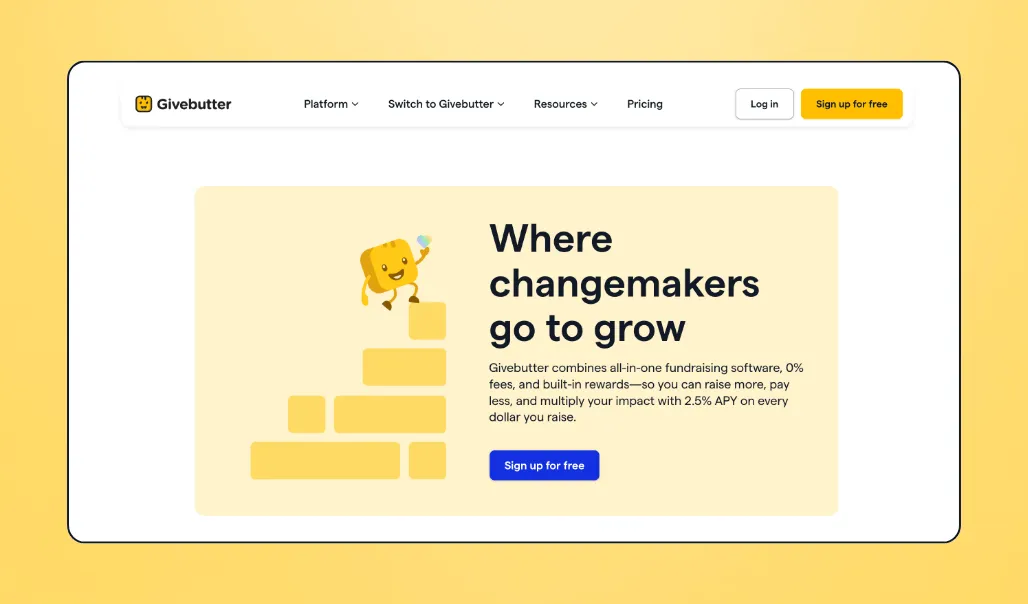
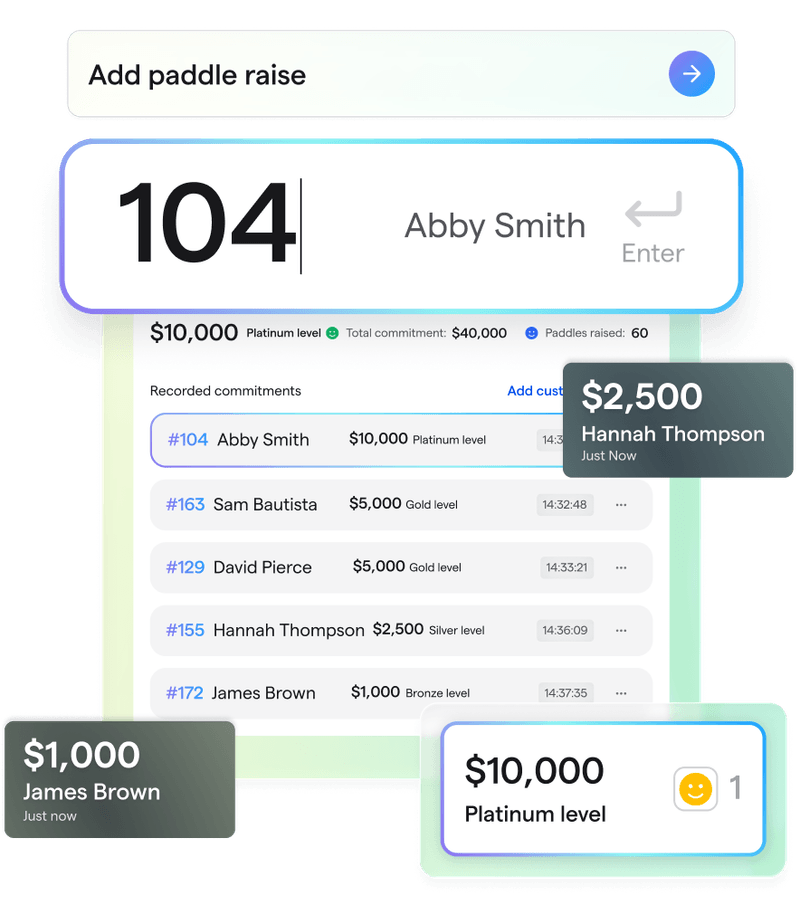
Givebutter’s intuitive paddle raise software is built directly into its event fundraising platform, making it easy to record live commitments, assign paddle numbers at check-in, and prompt guests to complete their pledges via QR code—all in one place.
Organizers can track payment status in real time and keep everything connected to their ticketing, auctions, and CRM without relying on paper pledge sheets or manual reconciliation.
💰 Price: Free with optional donor tips (0% platform or processing fees under the Givebutter Guarantee). If tips are disabled, a flat 3% platform fee applies, plus standard processing fees (2.9% + 30¢) that you can pass to donors, make optional, or cover yourself.
✅ Best for: Nonprofits, schools, and faith-based organizations that want paddle raise software fully integrated with ticketing, event seating, auctions, CRM, and post-event follow-up.
👉 Our take: Givebutter’s paddle raise software is built specifically for high-energy live appeals. Spotters log paddle numbers and preset giving amounts in seconds, emcees see a real-time total, and admins reconcile everything in minutes.
Get started with free paddle raise software
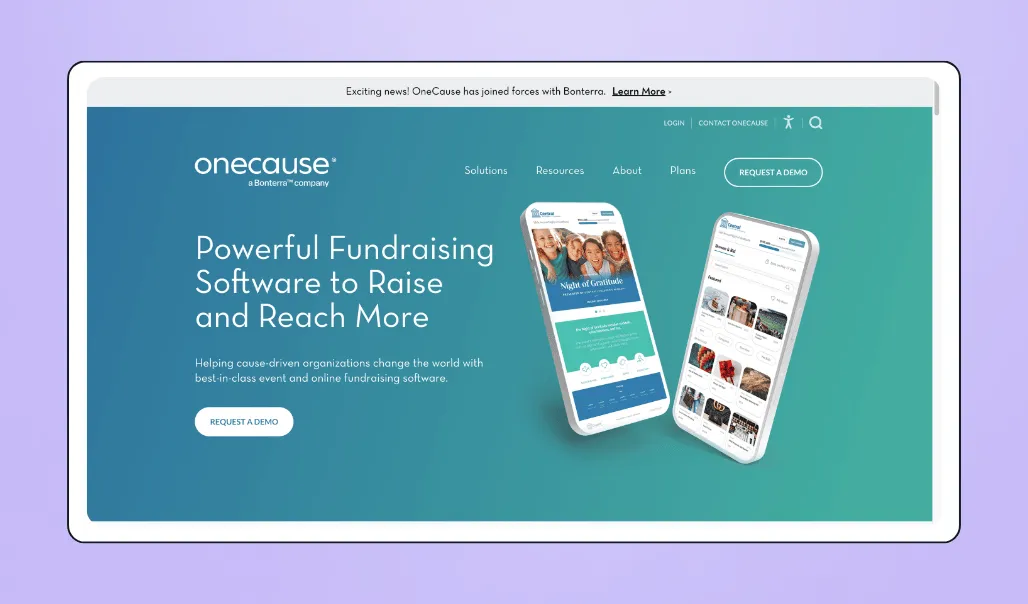
2. OneCause: Enterprise-level event fundraising software
OneCause is designed for large-scale fundraisers and combines mobile bidding, auction management, advanced reporting dashboards, and fund-a-need tracking under one roof. It’s built for organizations that need contract-based event software with deeper integrations and more complex gala management tools.
💰 Price: Custom pricing (typically contract-based; requires demo)
✅ Best for: Large nonprofits running formal galas with complex live and silent auction components.
👉 Our take: OneCause offers robust event fundraising tools, including fund-a-need and paddle raise functionality. It’s a strong option for high-budget galas that need advanced reporting and integrations—but it often comes with a higher price tag and longer onboarding process.
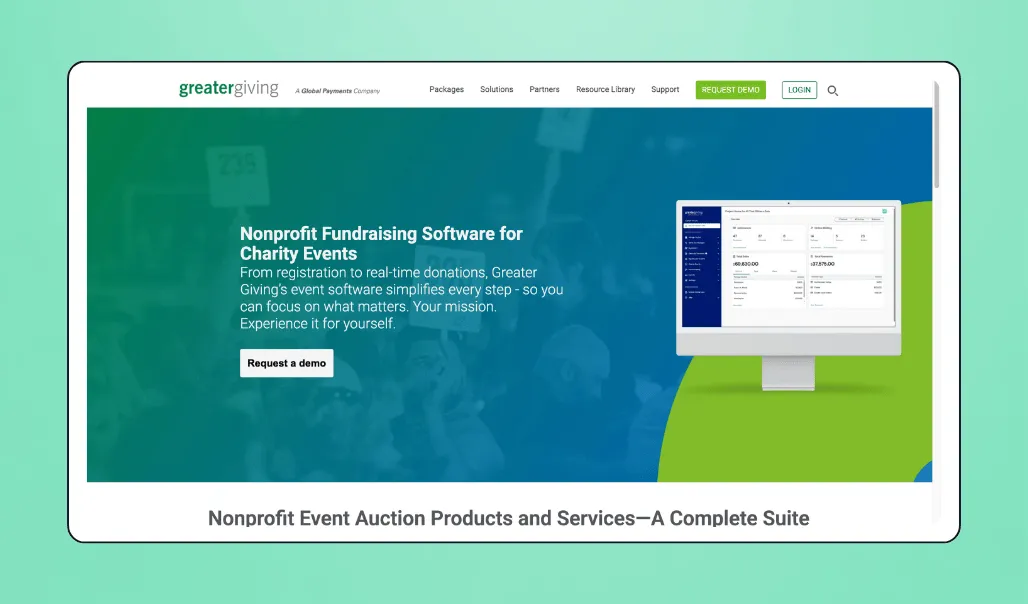
3. Greater Giving: Traditional auction & paddle raise management
Greater Giving helps nonprofits manage in-person fundraising events with tools for bidder number tracking, auction management, fund-a-need moments, payment processing, and post-event reconciliation. It’s a long-standing platform commonly used by organizations that host recurring gala-style events.
💰 Price: Tiered pricing; event packages vary
✅ Best for: Organizations running traditional in-person galas and paddle auction events.
👉 Our take: Greater Giving has long been used for auction and paddle raise events. It provides tools for tracking pledges and managing bidder numbers, though some nonprofits find the interface less modern compared to newer platforms.
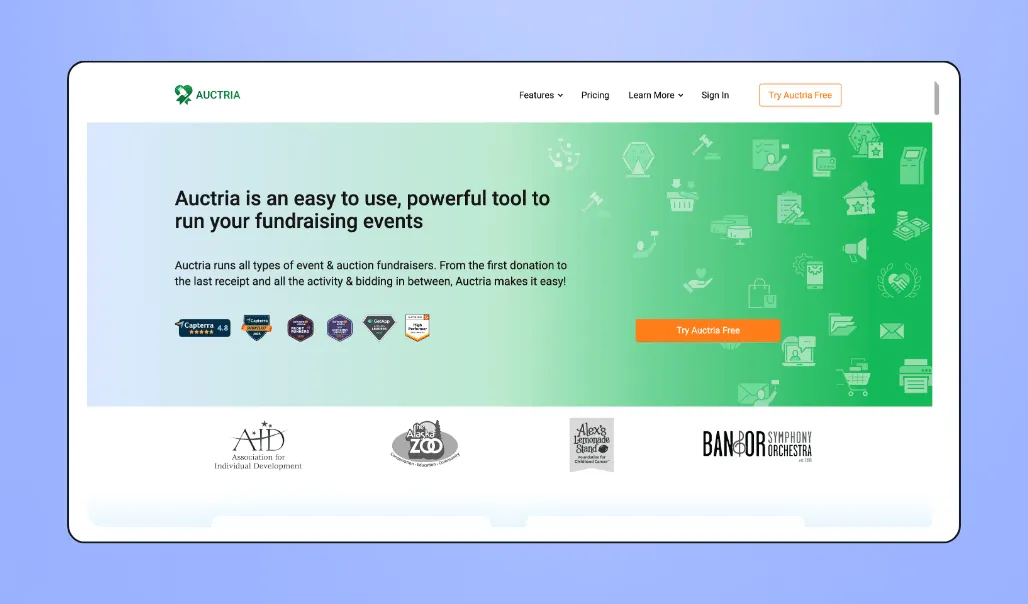
4. Auctria: Budget-friendly auction software with paddle raise support
Auctria focuses on auction events and includes paddle raise-style pledge tracking alongside auction catalog management and bidder number tools. Its streamlined setup and lower-tier pricing make it accessible for volunteer-led events that don’t require a built-in CRM or full fundraising suite.
💰 Price: Lower-tier pricing plans; varies by feature access
✅ Best for: Smaller nonprofits running DIY-style auctions and fundraisers.
👉 Our take: Auctria focuses on auction management but includes paddle raise-style pledge tracking. It’s often chosen by smaller teams looking for a simpler, lower-cost solution without a built-in donor management system.
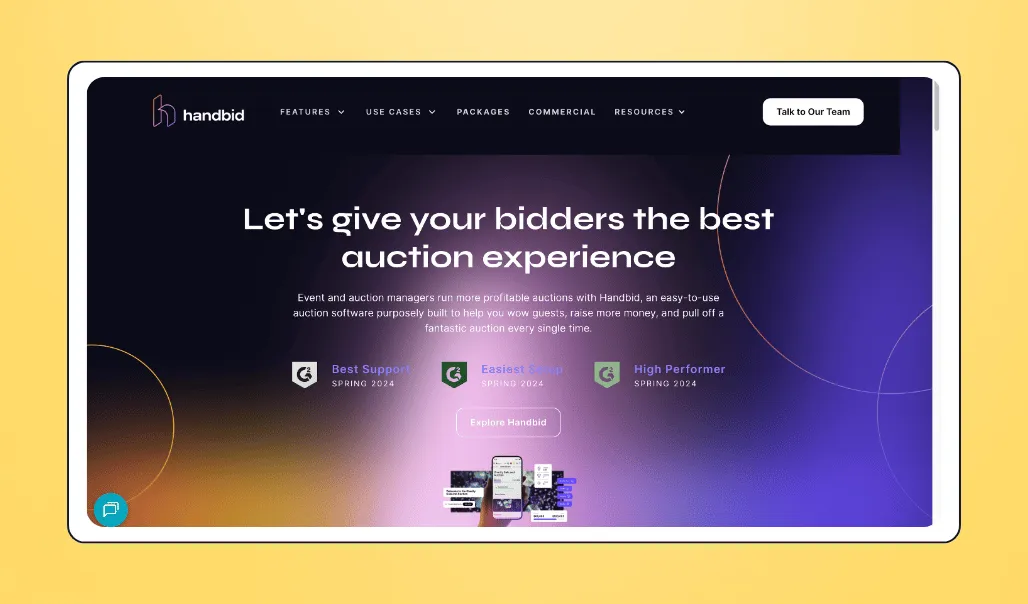
5. Handbid: Mobile-first bidding platform
Handbid emphasizes mobile bidding and digital engagement, enabling supporters to participate in auctions and fund-a-need appeals directly from their phones while capturing digital payments in real time. Its app-based approach prioritizes audience interaction and mobile-first event experiences.
💰 Price: Custom pricing; typically event-based
✅ Best for: Events prioritizing mobile bidding and digital engagement.
👉 Our take: Handbid centers around mobile bidding experiences and includes fund-a-need features. It works well for tech-forward audiences comfortable using their phones throughout the event.
Raise more paddles (& money!) with Givebutter
A paddle raise can be one of the most powerful giving moments of your event. At the same time, scrambling to manually record paddle numbers on paper while maintaining the energy in the room can lead to missed pledges, recording errors, and a chaotic post-event reconciliation process that can delay follow-up and frustrate donors.
Thankfully, Givebutter offers nonprofits a fast, accurate, and hybrid-friendly way to capture pledges during live appeals and keep your momentum going at any live auction or event.
Givebutter’s paddle raise software ensures that your spotters record paddle numbers and amounts in seconds, emcees get a real-time total to keep energy high, and admins reconcile pledges in minutes with clean exports. Plus, a paper backup with QR code imports ensures nothing gets lost when the room gets loud.
Givebutter’s all-in-one fundraising event workflow keeps your ticket sales, seating assignments, and pledges in one place for a smooth process from start to finish. Sign up for Givebutter today →
Frequently asked questions about paddle raises for nonprofits
Do paddle raises collect pledges or payments?
Paddle raises collect pledges, which means that event organizers need to take extra care to track paddle numbers and every pledged donation in the moment, so they can follow up to collect payment. Givebutter’s free paddle raise software helps nonprofits capture pledges accurately during the live appeal and simplify post-event follow-up, so no commitments get missed.
What’s the difference between a paddle raise & a paddle auction?
At a paddle raise, participants raise their paddles to indicate the amount they are pledging to donate to a cause. In a paddle auction, raising a paddle indicates a bid on a particular auction item.
When should a paddle raise happen during an event?
A paddle raise should happen at least halfway through an event, while the energy is still high, and before anyone has decided to call it a night. Give attendees the chance to eat, drink, and feel connected to one another and your mission, but don’t wait too long to make this special appeal—be sure that there’s more to the event program or evening entertainment afterward that they won’t want to miss.
What tools do you need to record paddle raise donations accurately?
Paddle raise software offers event organizers the tools to record donations with speed and accuracy. With Givebutter’s free paddle raise tools, you can record pledges quickly with preset amounts, paper backups, and a live running total your emcee can trust.
Share this article






.svg)
.svg)