.png)


.svg)
.svg)
.svg)
.svg)
.svg)
.svg)
.svg)
.svg)
.svg)


.svg)
.svg)
.svg)
.svg)
.svg)
.svg)
.svg)
.svg)

.svg)
.svg)
.svg)

.svg)

.svg)
.svg)
.svg)
.svg)
.svg)


.svg)
.svg)
.svg)
.svg)
.svg)
.svg)
.svg)







%20(1).png)
Table of contents
Table of contents
.svg)

Peer-to-peer fundraising is one of the highest-impact campaigns a nonprofit can run. But for most organizations, the hardest part isn't the fundraising itself. It's knowing where to start, keeping fundraisers engaged once the campaign is live, and finding the time to manage it without dropping everything else.
This guide walks you through how P2P fundraising works, a 7-step launch plan, and real examples from nonprofits who've done it well. Grab the free toolkit at the end to hit the ground running.
Key takeaways
- Activate your supporters 📣 Your existing donors and volunteers are your most powerful fundraisers. P2P gives them a way to ask their network for support on your behalf.
- Onboard fundraisers in 48 hours ⏱️ The strongest predictor of P2P success is whether fundraisers send their first ask within two days of joining.
- Make pages personal 📸 Fundraising pages with photos, stories, and goals convert better than generic templates.
- Lead mobile-first 📱 25% of donors complete their donations on mobile devices, so any platform that doesn't lead with mobile-friendly pages and digital wallets is leaving money on the table.
- Turn new donors into long-term supporters 🗺️ Every new donor a fundraiser brings in is a potential recurring giver. Add them to your nonprofit CRM and continue building the relationship after the campaign ends.
- Pick a free P2P platform 💛 Givebutter offers all the P2P features you need, including unlimited fundraisers, automated emails, and leaderboards, for free.
What is peer-to-peer fundraising?
Peer-to-peer fundraising, often called P2P, social fundraising, or supporter fundraising, is a campaign style where supporters raise money on a nonprofit's behalf by creating and sharing personal fundraising pages with their networks.
In P2P campaigns, individuals can launch their own fundraising pages or join a team fundraising effort and compete against other groups to raise the most money for the cause.
Here's how it works: a nonprofit creates a parent campaign, then invites supporters to set up their own personal fundraising pages tied to it. Each fundraiser shares their page over text, email, and social media. Donations roll up to the parent campaign, while leaderboards, automated emails, and team features keep fundraisers motivated and moving.
As Fundraising Expert Floyd Jones describes it:
“I see P2P and movement building as one and the same. It's not just about the funds. It's about who you're partnering with to propel your movement forward. The fastest way to ignite the movement and gather momentum for your cause is peer-to-peer fundraising.”
How to create a peer-to-peer fundraising campaign
Launching a successful peer-to-peer campaign hinges on strategy and execution. Follow these 7 key steps to maximize your impact.
Step 1: Set clear, achievable goals 🎯
Keep your campaign focused and effective by setting SMART fundraising goals (specific, measurable, achievable, relevant, and time-bound):
- Specific: Clearly define what you want to achieve (e.g., raise $75K).
- Measurable: Determine what metrics you'll track to measure success (e.g., number of fundraisers recruited, total funds raised, and average amount raised per fundraiser).
- Achievable: Set realistic goals based on past performance (e.g., aim for a 20% increase in donations from last year).
- Relevant: Ensure your goals align with your mission (e.g., funds will directly support four programs that our animal shelter runs).
- Time-bound: Set a campaign timeline (e.g., our P2P campaign will run for six weeks, from September 1 to October 15).
Step 2: Assemble your team 💪
P2P fundraisers have many moving parts. Assign staff and volunteers to assist specific roles within the campaign, such as:
- Campaign Manager: Oversees the fundraiser from start to finish, including setting timelines, making high-level decisions, and coordinating with all departments.
- Marketing Coordinator: Handles all print and digital advertising, including the campaign's messaging strategy and branding.
- Sponsorship Lead: Creates sponsorship levels, contacts potential corporate sponsors, and manages relationships.
- Volunteer Coordinator: Recruits and trains individual fundraisers, creates fundraising toolkits, and provides ongoing support to participants.
- Donor Stewardship Lead: Develops and implements donor communication strategies, follows up with major donors, and oversees donor recognition.
- Ambassadors: Recruit dedicated volunteers, board members, or other active stakeholders to champion your campaign. Some may even have connections to companies that match donations or employee giving programs, helping amplify results.
Step 3: Get the right tools 🧰
Selecting the right peer-to-peer fundraising platform is essential for effectively reaching your network via social media, email, and text.
Start by assessing your goals and budget, then make sure the platform has the features you need, including:
- Individual and team fundraising features
- Personalized pages with custom links
- Leaderboards
- Easy social sharing
- Peer-to-peer texting
- Supporter feed
- A nonprofit CRM
- Donation tracking
- Mobile-first experience
- Multiple payment options (Venmo, Google, and Apple Pay, etc.)
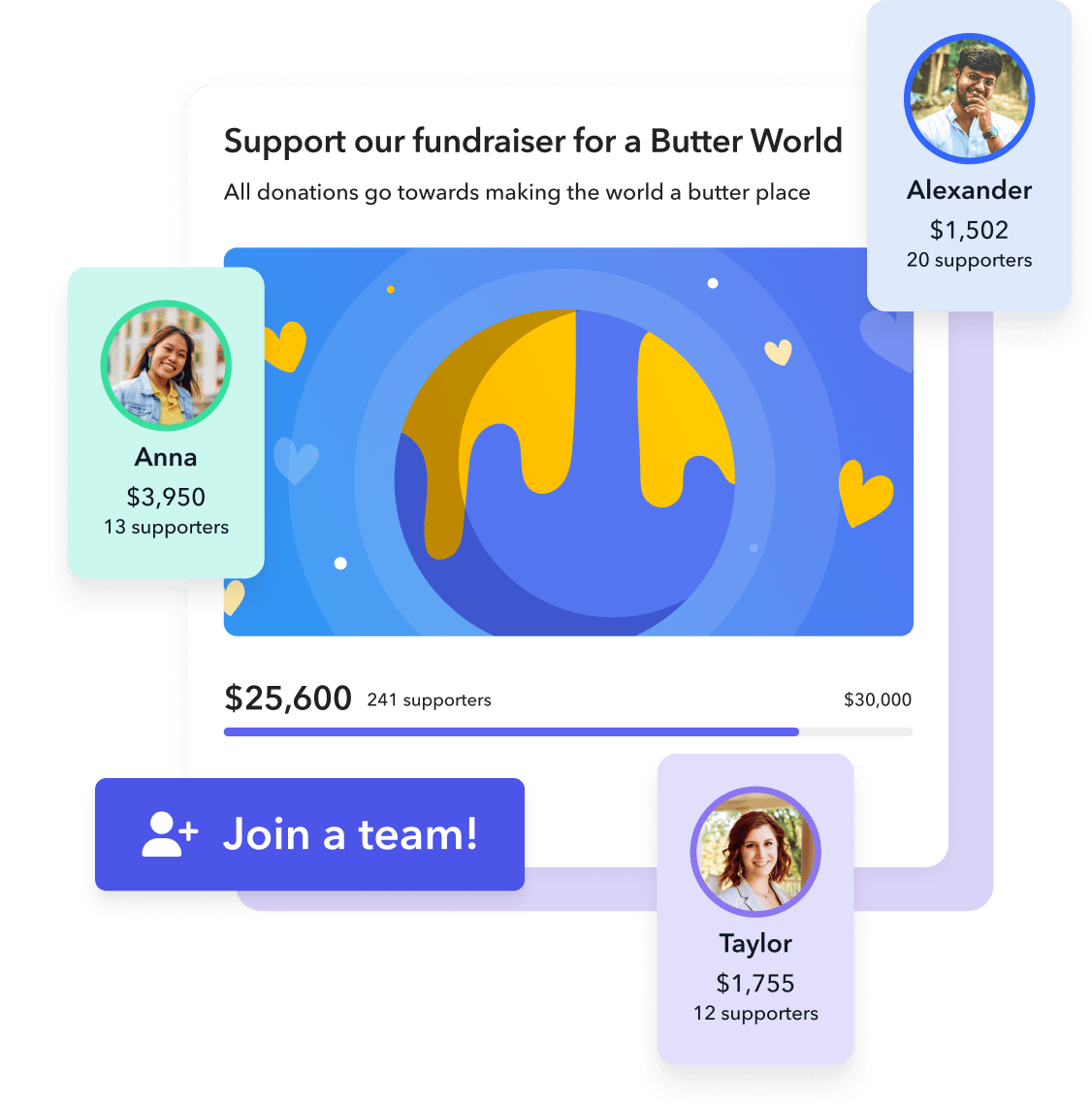
Start peer-to-peer fundraising with Givebutter
Step 4: Rally the troops 📣
Recruit a team of enthusiastic P2P fundraisers and encourage them to create their own custom campaign pages. Start by targeting team captains like board members, longtime donors, and active volunteers who can rally 5–10 fundraisers on their own and keep the momentum going.
Because writing a personal fundraising story is usually the most intimidating part for new fundraisers, make it easier by providing templated copy and examples. The less they have to think, the more likely they are to follow through.
Step 5: Launch your campaign 🚀
Once your campaign is live, give fundraisers the encouragement, tools, and resources they need to succeed, including high-quality images and videos that highlight your cause and fundraising FAQs. That includes making the ask itself as easy as possible.
"A lot of the people you'll engage in a P2P campaign aren't fundraisers themselves. You'll need to make it easy for the fundraiser to reach out and bring other people on. Make a toolkit with approved language and graphics that fundraisers can copy and paste. Whatever software you're utilizing, make it incredibly easy for people to get involved." — Floyd Jones, Fundraising Expert
Track your P2P fundraisers' progress, share updates, provide tips, answer questions, and express gratitude throughout the campaign. And encourage fundraisers to make the first donation to their own page. Early gifts build momentum and show potential supporters the campaign is already moving.
Step 6: Build momentum 🏆
A lot of campaigns fall short because they grow quiet right in the middle.
To avoid that, share regular progress updates via leaderboards, milestone announcements, and fundraiser shoutouts. Plus, announce timed matching gift opportunities to encourage giving.

Step 7: Steward supporters after the campaign 💌
A successful peer-to-peer campaign doesn't end when the fundraising does. Thank donors, recognize fundraisers, and create a plan to stay connected long-term. Be sure to:
- Send thank-yous within 7 days: Send thank-you emails or personal notes to every fundraiser, highlighting the impact they helped create.
- Thank fundraisers and donors differently: Tailor your message to each group's unique contribution to the campaign.
- Focus on new supporters: Retain new donors with an email welcome series that introduces your mission, shows impact, and makes a soft recurring ask.
Download your free peer-to-peer fundraising toolkit
The strongest predictor of P2P success is whether fundraisers send their first ask in the first 48 hours.
To help, we've put together a free toolkit with everything you need, including our best practices and a complete template.
Peer-to-peer fundraising examples from real nonprofits
Sometimes the best way to plan your own campaign is to see what's already working.
These real nonprofits in the Givebutter community ran P2P campaigns that crushed their goals, and each one takes a different approach. Find the format that fits your community and make it your own.
1. Capital Crew Ergathon Fall Fundraiser 🚣
Capital Crew Boosters Club is a youth rowing program in Sacramento that rallies its athlete community every fall for an annual ergathon fundraiser.
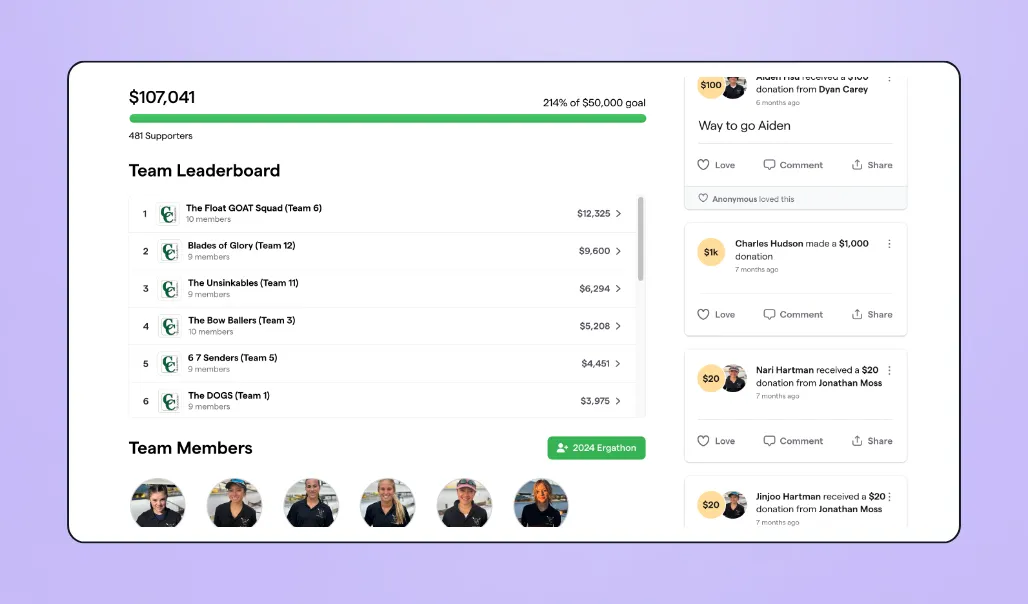
💛 Why we love this peer-to-peer fundraising example: This P2P fundraiser brought together every member of this crew team, turning athletes into fundraisers and expanding the campaign's reach.
💰 Raised: $107K
💪 How you can do it: Whether you're raising money for your basketball team or your chess club, ask each member to start their own fundraising page and reach out to their friends and family for support.
2. Hope Creek Academy 📚
Hope Creek Academy is a school for neurodivergent children that used P2P fundraising to build a new playground and fund parent and teacher training.
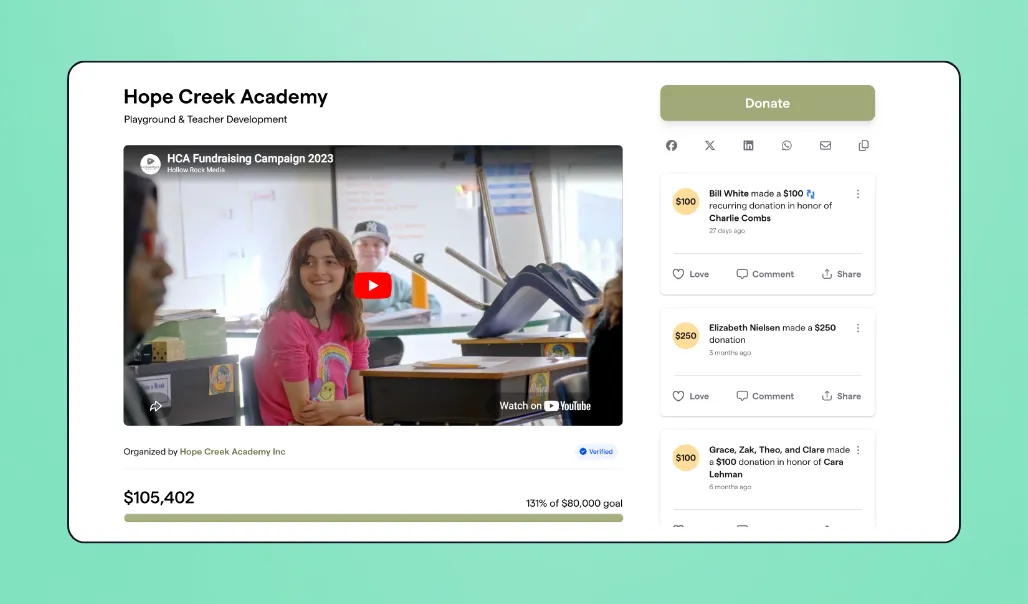
💛 Why we love this P2P fundraising example: This school for neurodivergent children rallied its community with a team fundraising campaign that sparked friendly competition between school groups.
💰 Raised: $100K+
💪 How you can do it: Inspire participation by gamifying your fundraiser and rallying groups to foster a fun, competitive spirit!
3. L-CMD Research Foundation 🏥
When Hannah Lowe's son Austin was diagnosed with a rare and fatal muscle disease, she launched the L-CMD Research Foundation with one urgent goal: to raise $2M before his second birthday to fund a gene therapy that could save his life.
.webp)
💛 Why we love this peer-to-peer example: To help fund various stages of a gene therapy project for LMNA-related congenital muscular dystrophy (L-CMD), this campaign leveraged emotional storytelling and social media to reach its goal.
💰 Raised: $2M+
💪 How you can do it: Combine compelling storytelling with social media outreach to help supporters connect emotionally with your mission and share your campaign with their own networks.
4. Your Dog's Five Minutes of Fame 🐶
For the Love of Dog Rottweiler Rescue ran a creative voting campaign where supporters donated to choose which two rescue dogs would appear on a local brewery's beer label.
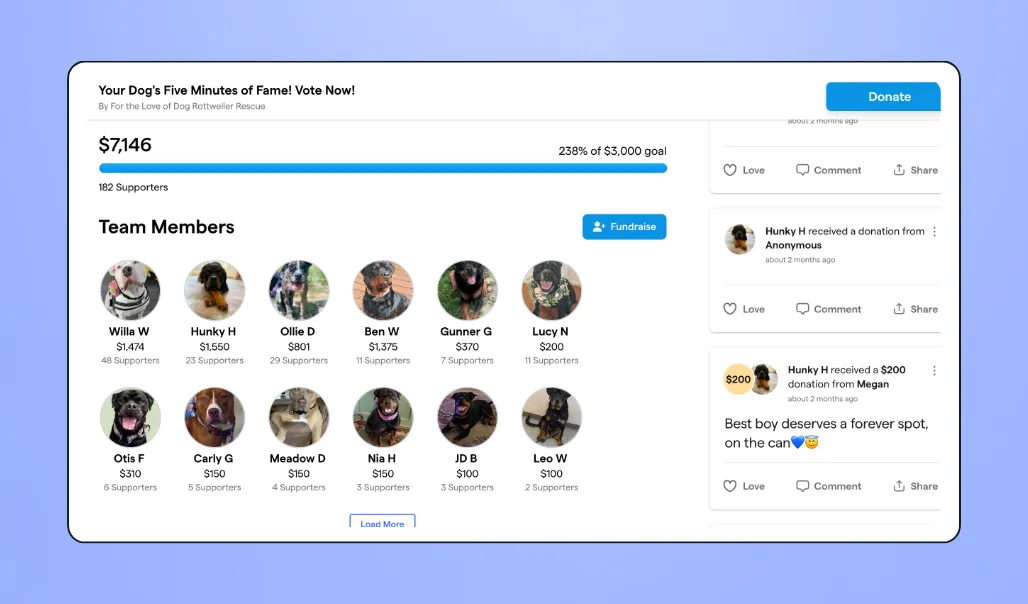
💛 Why we love this peer-to-peer fundraising example: This campaign asks supporters to vote with their dollars, offering a fun way to engage and contribute to your cause at the same time.
💰 Raised: $7K+
💪 How you can do it: Create a community voting contest where donors support their favorite option, such as selecting a featured pet or choosing a new logo.
5. Drama Club Giving Tuesday 🎭
Drama Club is a New York City nonprofit that uses theater to build community. For Giving Tuesday, they turned their internal team into fundraisers.
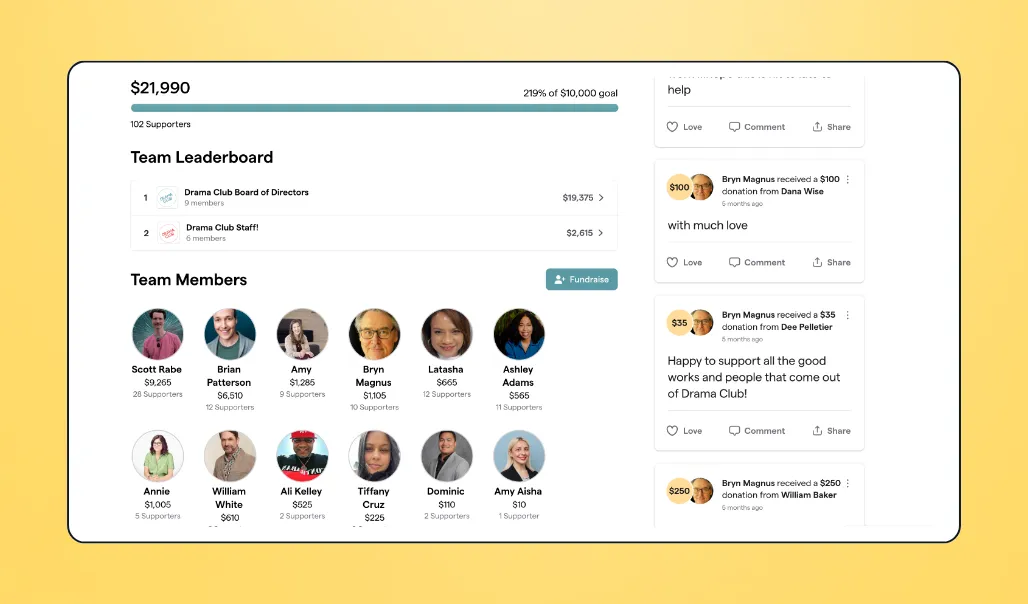
💛 Why we love this peer-to-peer fundraising example: Leveraging one of the biggest giving days of the year, this drama club's Giving Tuesday campaign pitted their staff and board of directors against one another in a friendly competition to see who could raise the most.
💰 Raised: $21K+
💪 How you can do it: Challenge your board, staff, or volunteer teams to compete against each other on Giving Tuesday and watch your network expand as each side rallies their own supporters.

Peer-to-peer fundraising ideas for every campaign
The best P2P campaigns are built around something your community already loves. Here are a few fundraising ideas to get started:
- Fitness events like 5K charity runs, walkathons, and basketball shoot-a-thons 🏋
- Contests and tournaments like trivia nights, game nights, or golf outings 🏆
- Social challenges like No Shave November or read-a-thons 🥸
- Merchandise sales like t-shirts or baked goods 🍪
- Corporate matching gift campaigns that double every dollar raised 💰
- Birthday and personal milestone fundraisers that tap into existing celebrations 🎂
- Board or staff competitions where teams race to hit individual fundraising goals 🎯
💡 Pro tip: Foster friendly competition and recognize your top fundraisers publicly. A social media shoutout to the first team to hit $500 or recruit 10 donors can reignite momentum mid-campaign.
Start peer-to-peer fundraising for free with Givebutter
Your supporters already believe in your mission. P2P fundraising gives them a way to act on it, and brings in new donors your organization might never have reached on its own.
Givebutter gives you everything you need to launch and run a successful campaign, including free donation forms, fundraising pages, donor management & CRM, and email marketing, with no platform fees. Every new donor your fundraisers bring in gets captured in your CRM automatically, so you can keep building those relationships long after the campaign closes.
Sign up for Givebutter for free and launch your own P2P fundraiser today!
FAQs about peer-to-peer fundraising
What’s the difference between crowdfunding and peer-to-peer fundraising?
Crowdfunding and peer-to-peer fundraising both raise money through social networks, but they work differently. In crowdfunding, donations go to a single centralized page managed by the nonprofit, usually with a time-bound goal like "Help us raise $10K in 30 days."
In a P2P campaign, each fundraiser creates their own personal giving page tied to the nonprofit's parent campaign. Instead of one ask from the org, you get dozens of trusted asks from individuals in their own networks.
What are the disadvantages of peer-to-peer fundraising?
P2P fundraising comes with real challenges. Individual fundraisers can lose momentum without regular check-ins, team leaders don't always follow through on their commitments, and first-time fundraisers often feel intimidated by the idea of asking friends and family for money.
Most of these issues come down to onboarding and support. A solid fundraising toolkit, a clear 48-hour activation plan, and a platform that makes sharing easy can solve most of them before they start.
How can we make sure fundraisers actually participate?
Activation in the first 48 hours is everything. Fundraisers who send their first ask within two days of signing up are significantly more likely to follow through.
Make it easy by giving them a toolkit with templated copy, graphics, and a step-by-step guide to sharing their page. Check in regularly, celebrate milestones publicly, and encourage fundraisers to make the first donation to their own page to build early momentum.
How long should a peer-to-peer campaign run?
Most successful time-bound P2P campaigns last 2-6 weeks. Short enough to keep urgency high, long enough to build momentum and give fundraisers time to activate their networks.
Campaigns shorter than two weeks don't give fundraisers enough runway, and campaigns longer than eight weeks tend to lose steam in the middle. If you're running a year-round ambassador program rather than a one-time event, the timeline rules are different since the focus shifts to ongoing recruitment and stewardship rather than a single push.
Is peer-to-peer fundraising just for big nonprofit organizations?
Not at all! Small and mid-sized organizations often see the biggest impact from P2P because their supporters have closer, more personal relationships with the cause.
You don't need a large staff or a big budget to run a successful campaign. A free platform, a solid fundraiser toolkit, and a group of passionate supporters are enough to get started.
How do I start a peer-to-peer fundraising campaign?
Start by picking a free P2P platform, then build a parent campaign page with a clear, story-driven goal. Recruit team captains first since they'll help bring in individual fundraisers. Give everyone a toolkit with templated copy, social graphics, and a step-by-step ask guide so they can hit the ground running. Then activate your fundraisers in the first 48 hours before momentum fades.
Share this article


Subscribe
150K+ changemakers already subscribed






.svg)
.svg)


%201.webp)