.svg)
.svg)
.svg)
.svg)
.svg)
.svg)
.svg)
.svg)
.svg)


.svg)
.svg)
.svg)
.svg)
.svg)
.svg)
.svg)
.svg)

.svg)
.svg)
.svg)

.svg)

.svg)
.svg)
.svg)
.svg)
.svg)


.svg)
.svg)
.svg)
.svg)
.svg)
.svg)
.svg)





.svg)



%20(1).png)

Sending a donation thank-you letter within 48 hours of a gift is a useful goal. The harder part? Making it feel personal when you have a growing donor list and a dozen other responsibilities.
A thoughtful thank-you tells donors more than “we received your gift.” It shows that you noticed their generosity and helps them understand what their support makes possible.
In this guide, you’ll learn how to write a thank-you letter for a donation without starting from scratch every time. We’ll share templates, timing tips, ways to tailor your message to different donors, and tools for follow-up emails and personal video thank-yous.
Key takeaways
- Know what to include ✅ Personal donor details, specific donation impact, and a clear path to further connection.
- Send your donation thank-you letter within two days ✉️ Aim to thank donors within 48 hours so they know their gift was received and appreciated.
- Personalize your donor thank-yous 👥 Tailor outreach to the donor’s relationship with your organization. Consider handwritten notes or personal videos for meaningful gifts and milestones.
- Understand thank-you letters and receipts 💸 A receipt documents the gift; a thank-you builds the relationship. One message can serve both purposes when it includes the necessary information.
- Bring your thank-yous together with Givebutter 🧈 Customize automatic receipts and organize donor outreach, then use Givebutter Plus for automated follow-ups and personal video messages.
Download your free donor thank-you letter templates
Need help getting started? Use these fill-in-the-blank donation thank-you letter templates for first-time donors, recurring supporters, major gifts, in-kind contributions, and year-end giving.
The toolkit also includes email templates, timing guidance, and a personal video thank-you script. Pick the format that fits, customize the details, and make it your own.

How to write a thank-you letter for a donation in 3 steps
“The most important elements of acknowledgments are timeliness and accuracy.” — Donor relations expert Lynne Wester
Writing a solid thank-you letter for a donation comes down to following three key steps.
Step 1. Personalize 👋
Before you start writing your donation thank-you letter, gather some essential information from your donor records or nonprofit CRM:
- The gift amount, date, and campaign or fund supported
- Giving history, including whether this is their first gift
- Volunteer involvement or event participation
- Their specific connection to your organization
- Communication preferences
Use one or two relevant details to make your message feel personal. For example: “Thank you for supporting our school supply drive again this year—and for helping pack backpacks last Saturday.”
💡 Pro tip: Givebutter’s contact management tools help you keep donor details organized, while donor segments help you tailor outreach to groups such as first-time and recurring donors. Check the available merge fields in your message editor before adding automated personalization.

Step 2. Customize ✨
“Acknowledgments are about the donor, not the institution.” — Donor relations expert Lynne Wester
Once you’ve decided on the format and gathered the necessary information, craft a message that makes your donor feel seen and appreciated. Follow this simple formula:
- Introduction: Use the donor’s name and thank them for their specific gift. Avoid generic “Dear friend” greetings.
- Details: Explain what their support makes possible. Share a concrete outcome or a brief story connected to the program they supported. If you’re thanking donors on camera, use these nonprofit video storytelling techniques to shape the story.
- Closing: Sign off warmly. “Sincerely” or “With gratitude” works well. Include your name, title, and contact information so the donor knows who’s thanking them.
For example, replace “Your gift makes a difference” with “Your $50 gift helps us keep our pantry stocked with fresh produce for local families.”
Use impact statements you can support. If gifts are pooled, say the donation “helps provide” an outcome rather than implying it funded that outcome alone.
Step 3. Inspire 🚀
The primary purpose of a donation thank-you letter is to show gratitude. A thoughtful closing can also help donors stay connected to the work they support.
Choose one optional invitation that fits the relationship:
- Continue connecting: Invite them to follow your updates or sign up for your newsletter.
- Get involved: Mention a relevant volunteer opportunity or invite them to share your mission with their networks.
- View fundraising progress: If your campaign is still live, link to your fundraising page so they can follow the goal they helped support.
- Give feedback: Invite them to reply with questions or share their experience giving to your organization.
For example: “We’d love for you to see what your support makes possible. We’ll share an update from the pantry next month.”
Keep the invitation brief and pressure-free. A sincere thank-you doesn’t need another donation request—or any next step at all.
5 ways to say thank you in a format your donors appreciate
Donor thank-yous can take many different forms. Choose a format that fits your nonprofit’s voice, your team’s capacity, and the donor’s preferences. You can also combine formats—a prompt email followed by a handwritten note, for example.
💡 Pro tip: Add a handwritten P.S. to a printed letter. A specific detail about the donor’s involvement can make a template feel more personal.
🎥 Trying a video thank-you? Our fundraising video guide includes filming tips and a simple script framework to help you get started.

Tailor your donation thank-you letter by gift size
Every donor deserves a timely, thoughtful thank-you. Segmenting your supporters helps you add personal touches based on their gift size and relationship with your organization.
Use this three-tier model as a starting point. Adjust the thresholds to your donor base, staff capacity, and donor preferences. A first gift, giving anniversary, or longtime commitment can also warrant extra recognition, regardless of the amount.
Make every donation thank-you letter feel personal with Givebutter
A thoughtful thank-you starts with a few details—who gave, what they supported, and why it matters. With templates and a manageable follow-up plan, you can make donors feel appreciated without writing every message from scratch.
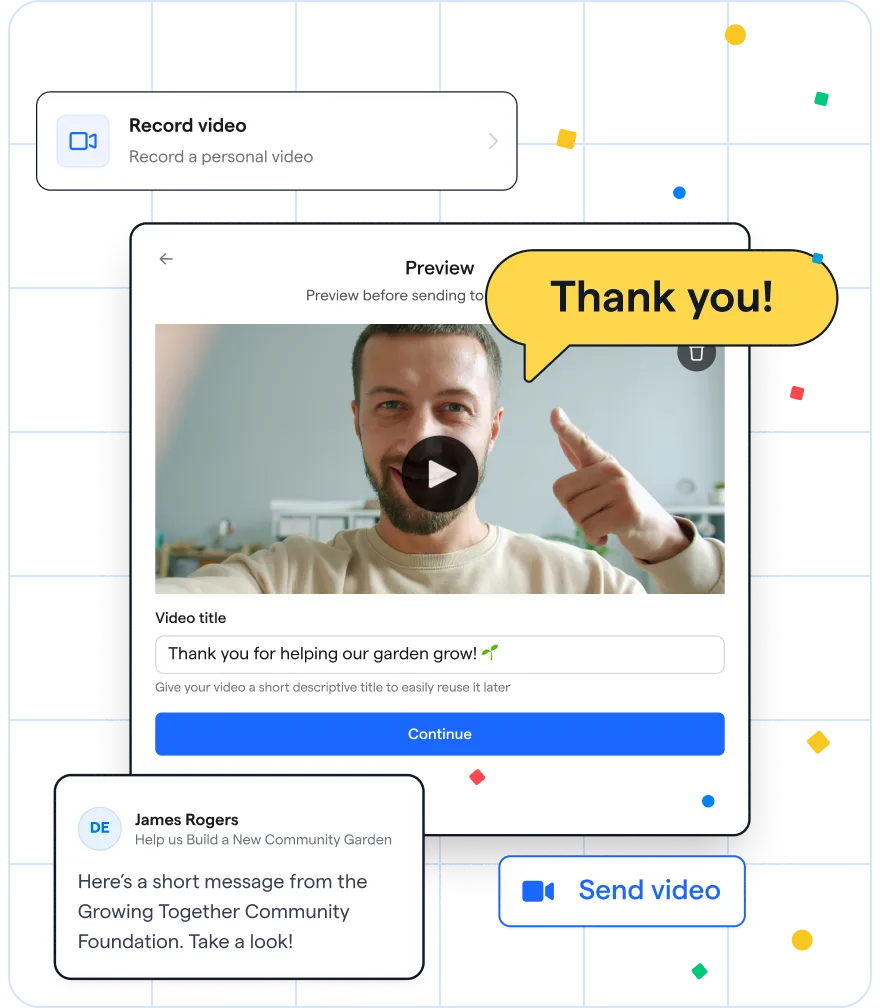
Givebutter helps you bring that plan together. Add a warm message to your automatic donation receipts, organize supporters into donor segments, and tailor your outreach to their relationship with your nonprofit. With Givebutter Plus, you can automate follow-up emails and record, send, and track personal video thank-yous.
Start with one improvement this week: customize your receipt message, adapt a letter template, or personally thank a first-time donor. Build a routine your team can sustain, then add more personal touches as you go.
Send personal thank-yous with Givebutter Plus
Sign up for your free Givebutter account and start building stronger donor relationships, one thank-you at a time.
Thank-you note for donations FAQs
How do you write a thank-you letter for donations?
Start with the donor’s name, thank them for their specific gift, and explain what their support makes possible. Close with your name, role, and a warm sign-off. Use a template to save time, then personalize it with details about the donor’s relationship with your organization.
What should a donor thank-you letter include?
Include a personal greeting, the gift amount or a description of the contribution, a specific impact statement, and a signature from a real person at your organization. You can also add a brief invitation to stay connected, but another donation request isn’t necessary.
How long after receiving a donation should you send a thank-you letter?
Aim to send a digital thank-you within 48 hours and mail a physical letter within one week. An automatic receipt can acknowledge the gift immediately while you prepare more personal outreach. If you’ve missed that window, send your thanks now rather than skipping it.
What’s the difference between a donation receipt and a thank-you letter?
A donation receipt documents the contribution and may provide information donors need for tax purposes. A thank-you letter expresses appreciation and builds the relationship. One message can serve both purposes if it includes the necessary acknowledgment details. Learn more about donor acknowledgment letters.
How do nonprofits automate donor thank-you letters?
Use automatic receipts for immediate acknowledgment and donor segments to organize personalized follow-up. Givebutter lets you customize receipt thank-you messages, while Givebutter Plus workflows can send follow-up emails based on triggers you configure. Review your messages and test the workflow before turning it on.
How do you thank a major donor?
Send a prompt, personal message that recognizes the gift and explains what it helps accomplish. Depending on the donor’s preferences, follow up with a handwritten note, phone call, or personal video from an executive director, board member, or staff member. Use specific details that reflect your relationship.
What is an example of a short thank-you message for a donation?
“Gina, thank you for your donation of $150 to our year-end campaign. Your generosity helps local families access safe, stable housing. We’re grateful to have you in our community!”
How do you end a thank-you note for a donation?
Reaffirm your gratitude and close with a warm sign-off, your name, and your role. For example: “Thank you for helping make this work possible. With gratitude, Pat O’Butter, Executive Director.” Add an invitation to stay connected only when it fits naturally.
Share this article








.svg)
.svg)