.svg)
.svg)
.svg)
.svg)
.svg)
.svg)
.svg)
.svg)
.svg)

.svg)
.svg)
.svg)
.svg)
.svg)
.svg)
.svg)
.svg)

.svg)
.svg)
.svg)

.svg)

.svg)
.svg)
.svg)
.svg)
.svg)


.svg)
.svg)
.svg)
.svg)
.svg)
.svg)
.svg)




.svg)



%20(1).png)

In 2024, an estimated 47.9 million people in the U.S. lived in food-insecure households. When neighbors are struggling to put food on the table, people want to help, and a food drive gives your community a tangible way to show up.
But turning that willingness into impact requires clear direction. A generic “all nonperishables welcome” appeal can leave supporters unsure of what will make the biggest difference.
This guide walks you through how to organize a food drive from start to finish, including how to set a goal, partner with a food bank, rally volunteers, collect food and online donations, and share the impact your community made possible.
Key takeaways
- Go hybrid 🤳 Combine physical drop-offs with an online campaign so supporters can contribute food, funds, or both.
- Start with your local food bank 🍞 Before promoting your drive, ask which items it needs most and whether it can provide collection boxes, materials, or volunteer support.
- Choose a goal people can picture 🎯 Set a clear target, such as pounds collected, items donated, dollars raised, or families served.
- Show supporters what they made possible 🔄 Within one week, share your final totals, the impact of the drive, and a heartfelt thank-you.
- Bring online giving together with Givebutter 🧈 Create a fundraising page with a live goal tracker, accept online donations, and invite supporters to join through peer-to-peer fundraising.
What is a food drive?
A food drive is a community effort to collect food or funds for a food bank, pantry, or hunger-relief organization. It can take three forms:
- Physical food drive: Supporters bring requested food items to one or more drop-off sites.
- Virtual food drive: Supporters donate money online to help an organization purchase food or meet other urgent needs.
- Hybrid food drive: Supporters can contribute food, funds, or both.
A hybrid format can broaden participation by giving people a way to help even if they can’t reach a physical collection site.

How to organize a food drive in 7 steps
If you’re wondering how to start a food drive, these seven steps will take you from choosing a format and setting a goal to collecting donations and sharing your final impact.
1. Choose your format & set a goal 🎯
Start by deciding whether you’ll host a physical, virtual, or hybrid food drive. Then define what success will look like.
- Meet supporters where they are 👥 A physical drive may work well for a local school, workplace, or faith community. If supporters live in different areas, an online or hybrid format gives more people a way to participate.
- Choose a goal people can picture 📊 Set a target based on pounds, food drive items, dollars, or another measurable outcome. “Collect 500 jars of peanut butter by November 15” is clearer and more motivating than “collect as much food as possible.”

2. Partner with a local food bank 🤝
Contact your local food bank 4–6 weeks before your drive. Ask which food drive items it needs most, what it can accept, and whether donations need to be sorted or labeled before delivery.
Confirm the intake schedule and drop-off process, too. Your food bank may also be able to provide collection boxes, flyers, or volunteer support.
💡 Pro tip: Use Feeding America’s food bank finder to locate a member food bank near you, then contact it directly about partnership requirements.
3. Plan how you’ll collect donations 📦
For a physical or hybrid drive, choose collection sites that are convenient, visible, and easy to monitor.
- Use one central site 📍 A church lobby, office break room, community center, or school gym can work well for a smaller audience.
- Create multiple drop-off points 🗺️ Several locations can make it easier for supporters across a larger community, school system, or workplace to participate.
- Host a scheduled collection event 🚗 A staffed drop-off day or drive-through event can build urgency and give volunteers a chance to welcome and thank donors.
Confirm each location’s hours, signage, storage space, and volunteer coverage. You’ll also need a plan for sorting, counting, and transporting everything to your food bank partner.
4. Launch an online food drive page 💻
Make online giving part of your drive with a fundraising page. Share your story, display progress toward your goal, and accept donations from supporters who can’t reach a physical drop-off site.
You can also enable peer-to-peer fundraising, create teams, and use leaderboards to spark friendly competition between classrooms, departments, or community groups.
.png)
Create your food drive fundraising page on Givebutter
5. Promote your food drive 📣
Once the logistics are set, it’s time to promote your fundraiser and give people a clear reason to participate.
- Use multiple channels 📢 Share your drive through food drive flyers, social media, email, community announcements, partner organizations, and local press.
- Start early and build momentum 📅 Begin promoting 2–3 weeks before collection starts, share progress updates during the drive, and send a final reminder before the deadline. If you’re planning a Thanksgiving food drive or another holiday food drive, allow extra time for crowded calendars.
- Make every ask specific 🥫 Tell supporters which items are needed, where and when to drop them off, how to donate online, and what reaching the goal will make possible.
6. Coordinate volunteers and collection logistics 🙌
Clear roles help collection days run smoothly. Assign a lead volunteer to each site, then designate people to welcome donors, sort and count food, transport donations, and monitor the online campaign.
Share the schedule, food bank requirements, key contacts, and transportation plan before the drive begins. Confirm assignments again shortly before collection so every volunteer knows where to be and what to do.
7. Report your impact & thank supporters 💛
Supporters want to know what their food, funds, and time made possible. Close the loop promptly with thoughtful follow-up.
- Send donation receipts automatically 🧾 Givebutter automatically sends receipts to online donors, saving your team one more follow-up task.
- Make your thank-yous personal 💌 Use your Givebutter nonprofit CRM to segment online donors and send relevant messages. Thank volunteers, collection-site partners, and your food bank partner directly, too.
- Share the final impact 📈 Within one week, send an update with confirmed totals, such as pounds collected, dollars raised, and families served. Include a photo or message from your food bank partner when possible so supporters can see the difference they helped make.
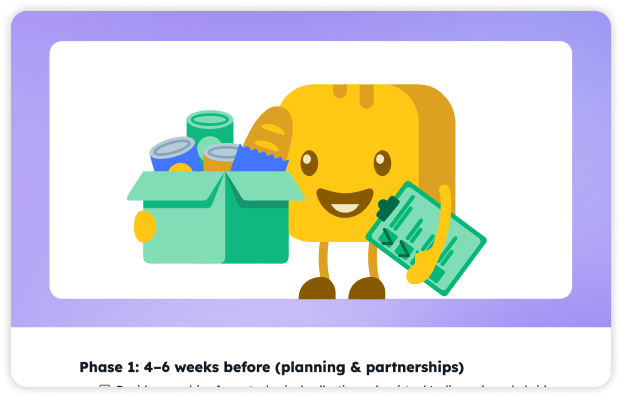
Download your free food drive planning checklist
From coordinating collection sites to sharing final results, a food drive comes with plenty of details. This free checklist breaks the work into five manageable phases, with clear tasks for planning, promotion, collection, and follow-up.
Use it to assign responsibilities, align your volunteers and food bank partner, and know exactly what needs to happen next.
Food drive ideas to boost participation
Your community may be ready to help, but broad requests can get lost among full inboxes and competing priorities. Give supporters a clear reason to act with these participation-boosting ideas:
- Spark friendly competition 🏆 Invite classrooms, office departments, or faith-group teams to compete using a leaderboard and a low-stakes prize, such as a pizza party, trophy, or bragging rights.
- Secure a donation match 🤝 Ask a local business to match every dollar donated online up to a set amount, creating extra motivation to give now.
- Spotlight high-need items 🥫 Feature one or two items each week, such as peanut butter or canned protein, so supporters know exactly what to contribute.
- Start a social media challenge 📱 Encourage supporters to share a photo of their donation with your campaign hashtag and invite a friend to participate. Connect the challenge to a timely theme, such as a Thanksgiving food drive.
- Make milestones meaningful 📈 Share progress in terms people can picture. Work with your food bank partner to explain what each milestone will help make possible.
3 food drive campaign examples to inspire your own
The best food drive ideas become easier to picture when you see them in action. These three campaigns show how a memorable theme, tangible impact, and strong community partnerships can give supporters more reasons to participate.
1. Harvest Hero Drive for THRIVE 🦸
Harvest Hero Drive for THRIVE turned a seasonal appeal into a role supporters could step into: “Step into your cape this season. Become a Harvest Hero.”
.webp)
THRIVE carried the hero theme across its physical food drive, online fundraising, $25K matching challenge, and peer-to-peer teams. It also created separate toolkits for individuals and families, faith groups, schools, businesses, and community organizations—making it easier for every audience to take part.
- Results 💸 $88K+ raised from 241 supporters, reaching 146% of its $60K goal
- Best for ⭐ Food banks and nonprofits building a seasonal campaign around community participation
- What to borrow 💛 Give your campaign a memorable identity, then carry it across every way supporters can participate
2. FRESHFARM’s FRESH Food Drive 2024 🥕
FRESHFARM’s FRESH Food Drive made the impact of each donation easy to understand. Its Thanksgiving food drive explained that $5 could provide one meal, $25 could serve a family of four, and $100 could help four families enjoy a holiday meal.
.webp)
The campaign also paired a clear $10K goal with a firm deadline and a specific purpose: helping neighbors access fresh, locally grown food during Thanksgiving.
- Results 💸 $20K+ raised from 260 supporters, reaching 208% of its $10K goal
- Best for ⭐ Community organizations planning a Thanksgiving or holiday food drive
- What to borrow 💛 Connect suggested donation amounts to concrete outcomes so supporters can immediately picture their impact
3. Help Feed Chesco 🤝
Help Feed Chesco shows what can happen when organizations rally around one shared goal. Four community partners each contributed $25K to create a $100K matching fund for the Chester County Food Bank.
.webp)
The campaign paired that online match with a goal of collecting 50,000 pounds of food, giving supporters two meaningful ways to respond to rising local demand.
- Results 💸 $219K+ raised from 59 supporters, reaching 109% of its $200K goal and completing the $100K match
- Best for ⭐ Food banks running large-scale, collaborative, or hybrid campaigns
- What to borrow 💛 Bring community partners together around a matching gift, then connect online donations and physical food collection under one clear message
Organize your food drive with Givebutter
Learning how to organize a food drive is about giving people a meaningful way to care for their neighbors—and showing them what their support made possible.
A strong food bank partnership anchors the effort, while Givebutter brings the online side of your drive together. Create a fundraising page, show progress toward your goal, accept donations from supporters near and far, and invite community members to fundraise through personal peer-to-peer pages.
When the drive ends, those new relationships don’t have to. Use Givebutter’s nonprofit CRM to thank donors, share your final impact, and keep supporters connected to your mission.
Ready to turn your plan into action? Create a free Givebutter account and give your community more ways to show up.
FAQs about food drives
What food items are best for a food drive?
The best items are the ones your local food bank currently needs and can safely store. For a canned food drive, common requests include unopened peanut butter, canned tuna or beans, shelf-stable milk, rice, pasta, and cereal. Always check your food bank’s wish list and donation guidelines before collecting.
How long should a food drive last?
Most food drives run for 2–4 weeks. A shorter timeline can create urgency, while a longer drive gives schools, workplaces, and community groups more time to participate. Choose a timeframe that matches your audience, goal, and number of collection sites.
What is a virtual food drive?
A virtual food drive is an online fundraiser that collects money instead of physical food. These donations can help an organization purchase food and respond to other urgent needs while allowing supporters to participate from anywhere.
With Givebutter, you can create a fundraising page, display progress toward your goal, and invite supporters to launch personal fundraising pages through peer-to-peer fundraising.
Share this article







.svg)
.svg)