












A fundraising gala can be one of your biggest nights of the year. It can also be one of your most expensive, so it’s worth knowing whether it’ll pay off before you book a venue.
Here’s how to plan a fundraising gala in 11 steps, from setting a net revenue goal to securing sponsors. You’ll also find gala theme ideas and examples from real nonprofits.
Key takeaways
- Set your budget 💰 Create a budget based on your net revenue goal and actual vendor estimates.
- Choose your venue 🏰 Reserve a venue that meets your capacity requirements and budget.
- Find sponsors 👩💼 Offset event costs by offering different levels of recognition in exchange for corporate sponsorship.
- Add entertainment 🧑🎤 Consider adding extra entertainment, such as an auction, a paddle raise, live music, or event speakers.
- Start selling tickets 🧈 Use a platform like Givebutter to set up a custom event page, create multiple ticket types, accept a range of payment methods, and capture key attendee information.
- Finalize your schedule 📜 Confirm details with your vendors and map out your event run-of-show.
- Follow up with appreciation 💛 Thank each of your event attendees and share the impact and next steps to encourage their continued involvement.
What is a fundraising gala?
A fundraising gala, often called a charity gala, is a type of event nonprofits use to raise money for their mission. They’re often formal events, like seated dinners, cocktail hours, or black-tie gatherings. Galas typically include speakers, donation appeals, and entertainment such as a raffle, auction, or paddle raise.
Many nonprofits host galas once or twice a year, depending on their budgets and fundraising goals.
Is a fundraising gala worth it?
Running a fundraising gala requires more resources and effort than other fundraisers, so it’s worth weighing the potential return before committing. While 90% of 102 nonprofit professionals in a Givebutter poll said they always calculate net revenue after an event, doing so beforehand can help you see whether a gala is worth the investment.
Focus on your projected net revenue (how much you’ll raise during your event minus how much the event costs to run) over your gross revenue (how much you’ll raise during your event) to determine if a fundraising gala event makes sense for your nonprofit.
💡 Pro tip: A fundraising gala’s value goes beyond dollars raised. It can also be a relationship-building touchpoint for major donors.
How to plan a fundraising gala in 11 steps
These 11 steps will help you host a gala that raises more and strengthens your community long after the last guest has said goodbye.
Step 1: Start with your net goal 🎯
It can be easy to overspend on a gala. Starting with your projected net revenue will help you stay on track and run an event that raises more than it costs. Use this formula:
Projected net revenue = (projected ticket sales + projected funds raised + sponsorships) - Total event costs
Projected funds include an estimate of how much you’ll raise during the event through donations, auctions, raffles, or other fundraising activity you include. Event costs include your venue, catering, and any entertainment.
Step 2: Build a budget from real vendor quotes 💰
Finalize your nonprofit event budget early to avoid unexpected costs later. Base your budget on actual estimates from potential venues, caterers, event decorators, DJs, entertainers, and other vendors. Do the same for any event planner or outside contractors you plan to hire.
Set a SMART fundraising goal (specific, measurable, achievable, relevant, and time-bound), so you can clearly define your target and track your progress.
Step 3: Build your committee & assign roles 📋
Assign the following roles to your team based on individual strengths and experience:
- Event leader
- Logistics
- Marketing
- Sponsorship outreach
- Speakers
- Volunteer recruitment
- Day-of support
💡 Pro tip: Clearly communicate how your board members can support your gala. Assign each member a specific number of tickets to sell or a table to host and fill with their personal connections.
Step 4: Choose your gala theme & entertainment 🎨
A theme isn’t essential for your fundraising gala, but it can generate interest and drive ticket sales. Consider setting a theme based on your mission, your latest campaign, a trend, or the time of year.
Make sure your theme aligns with your overall goal, values, and audience. If you’re looking for more gala theme inspiration, we’ve outlined some ideas in the section below.
💡 Pro tip: Keep your gala simple. Nonprofits share that a straightforward cocktail hour with an ask moment can go a long way toward raising more for your nonprofit.
Step 5: Book a venue & set a date 🪑
The right venue can boost ticket sales and donations. It’s also typically one of the largest gala expenses. Look for a fundraising gala venue that fits your audience, budget, goals, and theme.
You can host a gala just about anywhere with enough space and amenities. Ballrooms, dedicated event spaces, art galleries, hotels, country clubs, and school halls are all popular options.
💡 Pro tip: Check that your venue’s availability doesn’t clash with any major holidays or community events before you commit to a date.
Step 6: Find corporate sponsors 🤝
Partnering with corporate sponsors can offset costs while providing co-promotion and additional support.
Create corporate sponsorship packages that offer different levels of recognition based on the donation amount. Start with companies you’ve partnered with before. You can also invite sponsors to offer matching gifts. If your packages include a table, ask sponsors to fill their seats with guests who care about your cause, and offer to fill any empty seats with volunteers or supporters.
🎬 See it in action: A nonprofit puts together a corporate sponsorship package with three tiers: $500 for website recognition, $1K to be featured in the event program, and $2.5K for a shoutout and short presentation during the event.
Step 7: Create an event page that sells tickets 🎉
Create an online fundraising event page to sell tickets. With Givebutter, you can offer options like early-bird pricing, VIP tickets, and raffle ticket bundles, and list auction items.
Guests can also use their preferred payment method and add a donation during checkout. Givebutter’s custom forms and donor portals let you collect details such as dietary requirements, meal preferences, and t-shirt sizes.
💡 Pro tip: Customize your event page with your brand colors and photos, and share how supporting your gala translates into impact.
Step 8: Spread the word with personal asks 📣
Generate a buzz with email campaigns, social media posts, and your website. Reach out to your supporters personally with invitations, and ask your board members to share your event with their networks.
If you’re hosting an invite-only event, send custom save-the-dates, invitations, and reminders to encourage early ticket purchases.
💡 Pro tip: Give sponsors and supporters promotional materials they can share with their own networks.
Step 9: Finalize a tight program 📝
Structure your fundraising gala program around one high-level ask moment, like a fund-a-need or a paddle raise. Confirm details with your speakers, vendors, and sponsors. Map out an event timeline. Assign roles so everyone knows what to do and where to be.
Share your agenda with your hosts, speakers, or entertainers. Prepare your program early and conduct a dry run at least one day in advance to address any potential challenges.
Step 10: Make check-in & payments easy on event night ✨
You’ve laid the all-important groundwork. Now it’s time to focus on managing the event, welcoming speakers and VIP guests, and being present for your team and event partners.
Hand out bidder numbers, name tags, and table numbers at the door. Use the Givebutter mobile app to check in guests, sell on-site tickets with Tap to Pay, collect extra donations, and process payments from auction or raffle winners. Add a printed scan-to-donate QR code to your event materials and tables to make donating easy throughout the event.

Step 11: Send thank-you messages within days 💛
After the event, thank your event attendees for their contributions via email, direct mail, or SMS. Don’t forget to highlight your event with photographs and a message of gratitude on social media.
Write a thank-you message that includes each attendee’s details and donation amount. Streamline the process with Givebutter’s CRM, which tracks attendee data, including email addresses, phone numbers, and giving totals. Use Givebutter Plus to send supporters a video message about what your gala accomplished.
13 fundraising gala themes that attract donors
The 13 theme examples below include seasonal, playful, and classic gala ideas that work for any organization.
7 fundraising gala ideas to raise more
Try these go-to gala ideas and tips for a high-impact event:
- Add an auction 💰 Offer your supporters another opportunity to give with a live or silent auction.
- Make check-in easy 📝 Speed through the line and check in attendees using the Givebutter mobile app.
- Include a live display 📈 Showcase real-time donations using a live display.
- Add an event livestream 🖥️ Sell even more tickets by hosting a livestream of your in-person event to virtual attendees.
- Use QR codes to promote donations 📱 Simplify the in-person donation process with QR codes.
- Include a paddle raise or fund-a-need 💰 Make time for a mission moment where guests make contributions to a specific cause.
- Incorporate a matching challenge 💸 Partner with a business or corporate sponsor to offer a donation match if you hit a certain goal.
Real fundraising gala examples to learn from
With so many decisions to make, it helps to see how real fundraising galas come together.
Here are two real nonprofits that hosted successful fundraising galas on Givebutter, along with ideas you can adapt for your own event.
Night to RISE 🌙
The RISE Family Night to Rise Gala features a live auction and an after-party with drinks and live music to support foster families and adoptive parents.
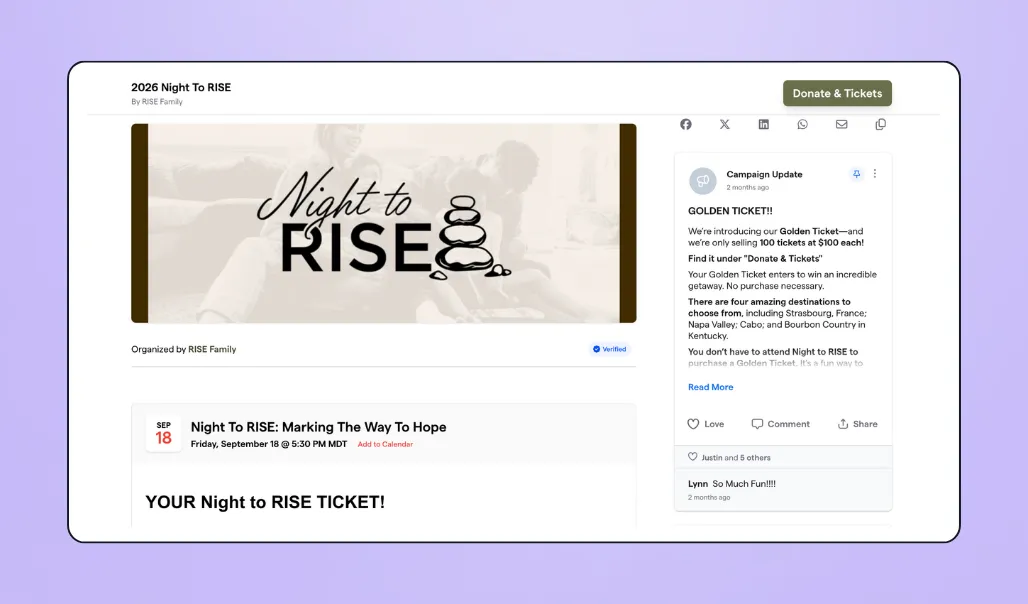
🌟 Why it worked: The gala offered sponsorship packages, group tickets, individual tickets, and special golden raffle tickets. The event page explained each component of the gala, helping guests understand what to expect. Supporters could also view auction prizes and place bids directly on the page.
🫶 Make it your own: Add a “golden ticket” option for those who want to support your event but can’t make it in person. Golden tickets can be purchased for a suggested donation, and each ticket holder is entered into a raffle for a chance to win a high-value prize.
Triumph Foundation Gala 🏆
The Triumph Foundation built its fundraising gala around a mission-aligned theme: “Rebuilding Lives, Redefining Strength.” The event included a cocktail hour and a silent auction.
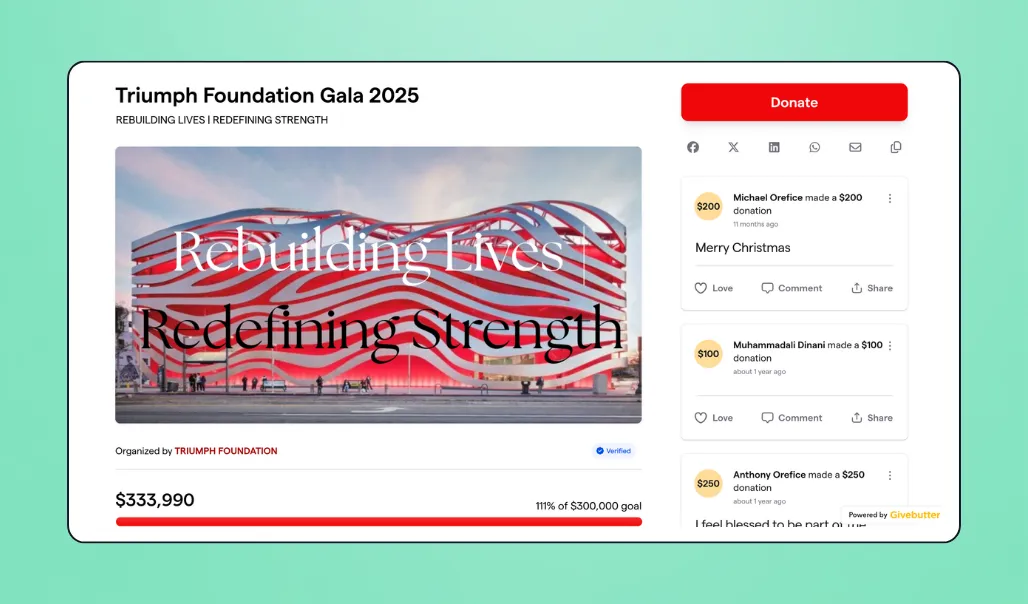
💸 Total raised: $333.9K (111% of their fundraising goal!)
🌟 Why it worked: Triumph Foundation featured detailed information on their mission and impact directly on their branded fundraising page. They also clearly highlighted their sponsorship packages and a VIP tour option before doors officially opened.
🫶 Make it your own: Set a stretch goal. Givebutter Magic can recommend a starting goal, and you can raise it once you pass your first target. The Triumph Foundation Gala initially set its target at $200K and later raised it to $300K on its campaign page. The gala fundraiser went on to raise $333.9K.
Your best gala starts with one number
A fundraising gala takes more time and money than most fundraisers, but it doesn’t have to be a gamble. When you start with a net goal, base your budget on real vendor quotes, and fill tables through personal asks, your gala can raise more than it costs and bring your community closer to your mission.
Your first move is the same no matter the size of your event: set your net goal, then work backward to your budget and ticket prices. Once those numbers are locked in, every other decision, from venue to entertainment, gets a lot easier.
Givebutter is an all-in-one CRM, fundraising, and event platform that makes gala planning easier. Sell tickets, collect donations, run auctions and paddle raises, check in guests, and keep building relationships with your attendees long after the night ends.

Sell gala tickets & more with Givebutter
Sign up for your free Givebutter account today and plan a fundraising gala that raises more.
FAQs about fundraising galas
How far in advance should I start planning a gala?
Ideally, start your nonprofit gala planning 9–12 months in advance. This gives you time to secure a venue, line up sponsors, and build a strong marketing and fundraising strategy.
How much does a fundraising gala cost?
Gala costs vary widely based on location, size, and scope. The biggest cost drivers are often venue, catering, and entertainment, so estimate these costs before committing to a venue or other major expenses.
Opting for a simple event, like a cocktail hour or a virtual gala, can help keep overhead costs low.
How much should a fundraising gala raise?
Every event is different, but a successful fundraising gala raises more than it costs to run. Set a net revenue goal to measure your success, rather than a total fundraising goal. This takes your event expenses into account.
Can a gala be hybrid or virtual?
Yes. Hybrid galas can expand your reach and increase accessibility. Consider livestreaming the main program, offering online auction bidding, and including virtual shout-outs or video chats with remote donors.
Is a gala a charity event?
Yes, a charity gala is one of the most common types of charity events. Nonprofits use galas to raise awareness, connect with donors, and fund good causes.
Share this article