












You’re sitting down to set this year’s fundraising goals, and you're torn between using last year’s data as a starting point or opting for a round number that just feels right.
But when you know you’ll have to explain your goal to both your board members and supporters, it’s best to use a fundraising goal strategy that’s built on more than just a gut feeling.
This guide shows you how to calculate a fundraising goal from your own nonprofit data, track it, and keep the momentum going, along with 10 SMART fundraising goal examples any nonprofit can use.
Key takeaways
- Set a SMART goal 🤓 Set your nonprofit up for success with a fundraising goal that’s specific, measurable, achievable, relevant, and time-bound.
- Share your goal 📣 Tell your team, board members, and supporters what you’re working toward.
- Break it into milestones 🧩 Smaller targets help you stay on track and build momentum.
- Track progress 📈 Regularly review your progress and adapt your strategy.
- Find the goal that fits your mission 🫶 From events to major gifts, choose the fundraising goal type that best supports your organization’s vision.
- Use the right tools 🔧 Givebutter has what you need to help your nonprofit reach its goals, including event management software and communications tools.
How to set a fundraising goal in 3 simple steps
Fundraising goals should challenge your nonprofit while remaining achievable. Build yours on real data and a SMART goal-setting strategy.
Here are three steps any nonprofit can use to set motivating and achievable goals.
Step 1: Start with your purpose & past results 💛
Start with the big picture: your programs, beneficiaries, and values, then review results from previous fundraising efforts. This helps you build a foundation on data rather than guesswork while setting goals that are both achievable and meaningful.
Review these metrics before setting a target:
- Total donor count
- Donor retention rate
- Average gift size
- Repeat donors
- First-time vs. repeat donors
💡 Pro tip: With Givebutter Plus reporting, you can easily view key fundraising metrics over time without doing manual calculations or cross-referencing spreadsheets.

Step 2: Calculate a goal range, not a single number 🧮
Set three revenue goals (minimum, target, and stretch) to stay flexible as your campaign progresses.
Use this formula to calculate your baseline fundraising goal:
(Expected donors x average gift size) + projected major gifts and sponsorships
Data shows that online revenue for the average nonprofit increased 15% last year. Use this as a gut check for whether your target is too high or too low. Then use the SMART goal framework, making sure you can answer yes to these questions:
- Is your goal specific?
- Can you measure progress toward your goal over time?
- Is your goal realistically achievable?
- Is your goal relevant to your organization’s big-picture plans?
- Do you have a time-bound deadline?
Instead of “Get more donations,” set a SMART goal like, “Acquire 10 new donors with an average gift amount of $30 by the end of the year.”
🎬 See it in action: Last quarter, a nonprofit raised $10K. This quarter, they set a target fundraising goal of $11.5K (15% higher, as an example). They also set a minimum fundraising goal of $10.5K and a stretch fundraising goal of $12K.
💡 Pro tip: Use Givebutter’s AI connectors to explore your fundraising data in tools like ChatGPT or Claude as you shape a SMART fundraising goal.
Step 3: Break it into milestones & activity goals 🎯
Breaking your goal into measurable targets streamlines the process, making it easier to track your progress and stay focused on your overall fundraising objectives.
⚡ Example: If you’re looking to secure corporate sponsors, start with a total fundraising goal. Then, break this large goal down into four smaller goals:
- Number of corporations to reach out to
- Number of corporate partnerships you’d like to secure
- Average fundraising amount to secure from each sponsor
- Number of emails or phone calls to new corporations
How to hit your fundraising goal (& keep going past it)
The work doesn’t end once you’ve set a fundraising goal. Follow these steps to keep the momentum even after you’ve crossed the finish line.
Track & share your progress in real time 📊
Set regular times to review progress and assess your strategy. Share updates with your team, board members, and supporters, and add a real-time fundraising thermometer to your campaign page. Record checks, sponsorships, and other offline gifts against the campaign so the thermometer reflects your full progress.

Track your goals with a free fundraising thermometer
Stretch your goal before you hit 100% 🌠
Raise your goal as your campaign builds momentum, and you move closer to the finish line. Clearly explain the goal increase to supporters and highlight how additional dollars raised will positively impact your mission.
Givebutter Magic’s recommended goals give your campaign a starting target, and stretch goals automatically raise it as momentum builds.
Rally supporters around the next milestone 🔥
Get your supporters excited about helping your nonprofit reach its goals. Be specific about why you chose this goal, how it will help your beneficiaries, and how they can get involved. Offer incentives, such as branded merchandise or an invitation to a special event, to encourage participation.
Be honest with donors if you fall short of your goal, since transparency builds trust. Thank them for what they helped you achieve, and share your next steps.
🎬 See it in action: A cat sanctuary sets a goal of securing 10 recurring donors by the end of the year. They launch a social media fundraising campaign, sharing that every recurring donor helps care for two kittens. They even offer an extra incentive with a special kitten meet-and-greet for the first five signups.
Stingrays Swim-a-thon 🏊♀️
The St. Thomas Swimming Association set a $10K fundraising goal for their swim-a-thon. It raised more than 190% of its goal!
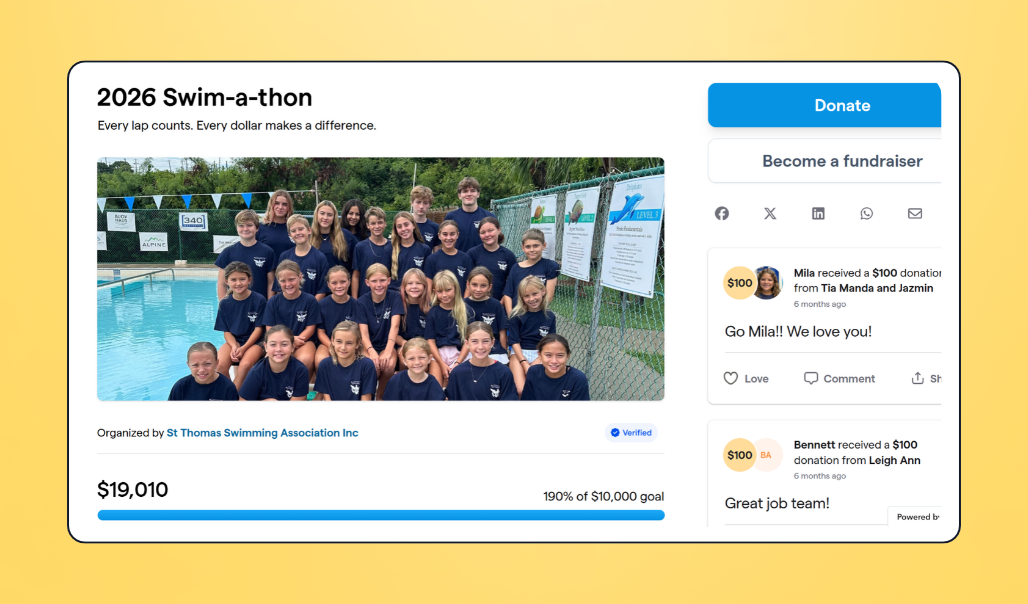
⭐ Why it works: The fundraising goal bar updated in real time, and supporters could post motivational messages directly to the page to build excitement and community around the peer-to-peer fundraiser. The campaign description broke down exactly how funds raised will benefit the cause.
👩🎓 What nonprofits can learn: Use a fundraising progress bar that keeps tracking your progress even after you’ve hit your goals.

10 SMART fundraising goals (with examples)
No two nonprofits are the same, which means your fundraising goals shouldn’t be either.
We’ve outlined 10 key fundraising goals for nonprofit organizations below. Start with one to three fundraising goals that best align with your nonprofit's priorities this year.
1. Total fundraising goal 💸
Whether you’re focusing on how much money to raise per year, per fundraising campaign, or per project, it’s essential to set your total fundraising goal amount and track your progress over time.
🎯 How to set a realistic goal: Review your organization's data and industry norms to create a more informed and attainable target.
💡 Pro tips to hit your goal:
- Diversify your revenue streams: Apply for grants, launch peer-to-peer fundraising campaigns, host events, and seek major gifts or corporate sponsorships.
- Tell your story: Supporters want to feel like part of your mission, not just make donations. Engage them with compelling narratives, beneficiary spotlights, and impact reports.
2. Donor retention goal 🫶
Donor retention is a key component of the donor life cycle. After a supporter makes their first donation, shift your efforts from acquisition to long-term engagement with your mission.
🎯 How to set a realistic goal: Start by analyzing your donor retention. How many of last year’s donors gave again?
Here’s how to calculate your donor retention rate:

💡 Pro tips to hit your goal:
- Show appreciation: Set up automated thank-you messages with Givebutter Plus workflows to lessen your workload while helping every donor feel valued.
- Encourage recurring giving: Launch a recurring donor program with clear incentives.
- Make it personal: Use email and texting (with Givebutter Plus) to send personalized updates, impact stories, and donation appeals to past donors.
3. Donor acquisition goal ☺️
A donor acquisition goal focuses on attracting new supporters, whether through a one-time gift or a recurring donation.
🎯 How to set a realistic goal: Acquiring new donors can be costly, so create a realistic goal based on your donor acquisition rate. This is tracked automatically with Givebutter Plus reporting, or you can use this formula:

⚡ Example: If you had 30 new donors this year and your total number of donors is 150, your acquisition rate is 20%. Try setting a 25% acquisition goal in the next year.
💡 Pro tips to hit your goal:
- Use social media: Use social media to run targeted awareness campaigns.
- Engage donors: Equip your supporters with the resources they need to spread the word about your mission.
- Simplify giving: Streamline your giving page and use a payment processing platform that accepts all forms of payment, including Venmo, checks, and credit cards.
4. Recurring giving goal 🪙
Donors who have donated to your nonprofit two or three times are great candidates for upgrading to recurring donors.
🎯 How to set a realistic goal: Set your target based on the previous year’s conversion rates. Use a recurring donation platform to make it easy for supporters to sign up for recurring gifts.
Here’s a strong example of a recurring donation form:

💡 Pro tips to hit your goal:
- Offer exclusive benefits: Give recurring donors access to exclusive events, donor clubs, and impact reports.
- Spread the word: Promote the value of recurring giving during major fundraising events and campaigns.
- Be patient: Data shows that 71% of monthly donors are still active after one year, so even small increases can make a big difference.
5. Major gifts goal 💰
Major gifts can reach thousands: $1K, $5K, $10K, or more. Base your goal on the number of major donors you aim to secure and the total amount you wish to raise.
🎯 How to set a realistic goal: Use previous giving data to determine what qualifies as a major gift for your organization. With wealth screening tools like DonorSearch, you can identify donors who have already demonstrated commitment to your mission and have the capacity to give.
💡 Pro tips to hit your goal:
- Practice donor stewardship: Develop individualized stewardship plans to build relationships with major gift prospects.
- Tap into your network: Ask your board members and top supporters for introductions to potential major donors.
- Acknowledge donors: Recognize major gift donors with meaningful gestures such as plaques, artwork, or naming rights.
6. Peer-to-peer fundraising goal 🧑🏽🤝🧑🏻
A peer-to-peer fundraising goal is a target set by a nonprofit to encourage supporters to fundraise on its behalf.
🎯 How to set a realistic goal: A peer-to-peer fundraising goal typically includes:
- Number of fundraisers the nonprofit aims to recruit
- Total amount of donations expected from peer-to-peer campaigns
- Average donation per fundraiser to gauge individual impact
💡 Pro tips to hit your goal:
- Offer resources and templates: Make fundraising on your behalf easy with messaging templates and information packs.
- Celebrate your supporters: Recognize top fundraisers by featuring them on your website and social media.
- Give public proof: Track real-time progress to keep peer-to-peer fundraisers motivated.
- Use the right tools: Create customizable, branded fundraising pages with Givebutter’s peer-to-peer fundraising tools.
7. Event fundraising goal 🎈
Concentrate your efforts on one day with a fundraising event goal. Whether in-person, virtual, or hybrid, the key is to foster connections while raising money for your cause.
🎯 How to set a realistic goal: Base your event fundraising goal on ticket sales, sponsorships, and donations from previous events. Keep in mind that different event types yield different results, so don’t compare a charity run to a gala or an auction to a concert.
💡 Pro tips to hit your goal:
- Offer sponsorship: Sponsors can offset overhead costs while increasing revenue and visibility.
- Encourage engagement: Use a live display leaderboard that shows real-time progress toward your goals to foster friendly competition.
- Make it accessible: Livestream your event to engage remote supporters and increase participation.
8. Corporate sponsorship goal 🧑💼
Corporate sponsorships can offer both monetary and in-kind donations, so your goal may focus on securing specific goods or services rather than a fundraising figure.
🎯 How to set a realistic goal: Use past partnerships or industry benchmarks. Establish specific funding tiers with clear, achievable amounts that appeal to businesses of different sizes.
💡 Pro tips to hit your goal:
- Go beyond exposure: Offer more than just logo placement. Run co-branded campaigns, engage employees, or create volunteer opportunities.
- Track impact: Give corporate partners public recognition in newsletters, social media, and donor reports, showcasing the outcomes of their contributions.
9. Grant funding goal ✍️
A grant funding goal aims to secure significant financial support from foundations and grant-making organizations.
🎯 How to set a realistic goal: Set application targets based on your capacity to submit and manage proposals. Next, assess the projected costs of your programs or initiatives to determine your funding needs.
💡 Pro tips to hit your goal:
- Craft your proposal: Successful proposals are compelling, concise, evidence-based, and outcome-focused.
- Cultivate relationships: Build strong relationships with grant officers and funders to better understand their priorities and increase your chances of success.
- Base goals on capacity: Keep your goals attainable and flexible. Writing grant proposals can be time-intensive, especially if this is your first time.
10. Fundraising cost efficiency goal 💡
A fundraising cost efficiency goal helps you maximize revenue while minimizing overall expenses.
🎯 How to set a realistic goal: Review past fundraising efforts, comparing expenses with the amount raised. Aim to lower overhead and increase revenue year over year.
💡 Pro tips to hit your goal:
- Sharpen your digital campaigns: Improve your online presence to make it easier for new supporters to find you with minimal cost.
- Focus your efforts: Prioritize low-cost fundraising methods with the highest ROI for your org, such as recurring giving and peer-to-peer fundraising.
- Eliminate platform costs: Consider free platforms to reduce or eliminate fees.
A goal you can hit is a goal you can grow
Don’t base your fundraising goals on a gut feeling. Build them on your real fundraising data, keep them achievable and aspirational with minimum, target, and stretch goals, and maintain momentum even after you’ve hit your goals.
With Givebutter Plus, you’ll have the data you need to set your fundraising goals, like total donations, donor retention rate, and new vs. recurring donors, without spending hours sifting through donation records. Free tools like goal tracking thermometers, recurring donations, match challenges, and more make it easier than ever for nonprofits to set, track, and exceed their fundraising goals.
⭐ Sign up with Givebutter and start reaching your fundraising goals today.
FAQs about fundraising goals
What is a good goal for a fundraiser?
A good fundraising goal is grounded in past results and realistic growth. The best goals for a fundraiser are broken into a minimum goal, a target goal, and a stretch goal.
Givebutter Plus reporting makes it easy to build fundraising goals based on your real nonprofit data. It automatically tracks metrics like total donations, donor retention over time, and average gift size.
What KPIs should you track for fundraising goals?
Track key KPIs like donor retention rate, donor conversion rate, donor growth rate, average gift size, fundraising ROI, and year-over-year revenue growth.
For even deeper insights, pair fundraising data with supporter feedback. Regularly send donors a feedback form to learn more about what’s working well and where you can adapt.
How can auctions boost your fundraising goals?
Auctions are popular and often lucrative fundraising events. To raise even more, ask local businesses to donate auction items or host an online auction so supporters can participate from anywhere. Add a paddle raise to build excitement and boost your fundraising total.
How often should you update your fundraising goals?
Review your fundraising goals regularly so you can adapt your strategy if necessary. Check on long-term goals at least quarterly, and remember that you can update your fundraising goals at any time. For an active, time-limited campaign, monitor your progress weekly or even daily.
Share this article