.svg)
.svg)
.svg)
.svg)
.svg)
.svg)
.svg)
.svg)
.svg)


.svg)
.svg)
.svg)
.svg)
.svg)
.svg)
.svg)
.svg)

.svg)
.svg)
.svg)

.svg)

.svg)
.svg)
.svg)
.svg)
.svg)


.svg)
.svg)
.svg)
.svg)
.svg)
.svg)
.svg)





.svg)


%20(1).png)

Fundraising without a clear-cut plan is like setting off on a road trip without a map. You might make it to your destination, but likely with wrong turns (and a few missed opportunities) along the way.
In this article, we’ll walk you through actionable steps to reach your destination faster and maximize the use of your available resources, including a free annual fundraising plan template that any nonprofit can use to bring their ideas to life.
Key takeaways
- Start with your mission 🚁 Anchor your fundraising plan in your mission and values so every goal and campaign stays aligned.
- Look back to move forward 👀 Review your previous fundraising efforts for insights into what worked and what you might need to adapt.
- Set your goals 🥅 Create specific, time-bound goals that you can measure.
- Choose your fundraising methods 🎉 Focus on the strategies most likely to work for your audience, capacity, and budget, and skip those that aren’t yielding results.
- Map it all on a calendar 📅 Turn your plan into a 12-month fundraising calendar so priorities, campaigns, and deadlines are easy to see.
- Put your plan into action with Givebutter 🔧 Use Givebutter to turn each part of your plan into live campaigns, track donor data in one place, and monitor progress in real time so you can adjust without juggling tools or spreadsheets.
What is a fundraising plan?
A nonprofit fundraising plan is a practical, working document that outlines how you’ll raise money over a specific period of time (typically 12 months). It serves as both a to-do list and a fundraising calendar, helping your team determine priorities, responsibilities, campaigns, and deadlines.
Most plans include one primary goal and multiple smaller goals, a fundraising budget, a timeline, and an outline of the activities and resources you’ll use to achieve your objectives.
Why is a fundraising plan important?
A fundraising plan helps you move from reactive fundraising to intentional fundraising. Instead of jumping from campaign to campaign, you’re working from a clear roadmap that shows what you’re raising, how you’ll raise it, and when key efforts need to happen.
For small or growing nonprofits, a fundraising plan is especially valuable because it helps you:
- Raise more with less stress 💸 Planning ahead makes revenue more predictable and helps you spot potential gaps before they turn urgent.
- Use your time and budget wisely 💪 When priorities are written down, it’s easier to focus your energy on what’s most likely to move the needle.
- Build stronger donor relationships 🤝 A plan makes donor stewardship part of your process, not an afterthought you only return to when funds run low.
- Set realistic, mission-aligned goals 🎯 Clear goals help you balance ambition with capacity and adjust as you learn what’s working and what isn’t.
- Keep your team and board aligned 💛 A shared plan creates clarity around roles, timelines, and expectations so everyone’s pulling in the same direction.

Download your free annual fundraising plan template
Use this free template to turn your fundraising ideas into a clear, actionable plan—even with a small team or limited data. Bring your goals, fundraising methods, roles, budget, and calendar together in one place, so nothing falls through the cracks.
Plus, this template follows the same step-by-step outline below, making it easy to fill in as you go, revisit regularly, and adjust as your fundraising efforts evolve.
How to write a nonprofit fundraising plan outline
You don’t need perfect data or a large team to get started. The goal is to create a clear and usable plan that you can work from, track, and improve over time using the steps below.
Step 1: Recap your organization’s mission 💛
Start by grounding your fundraising plan in your mission and values to ensure every goal, campaign, and decision aligns with your nonprofit’s mission.
As you draft this section, focus on:
- Who you’re trying to help
- The problem you’re addressing
- The tangible impact of your work
💡 Pro tip: Synthesize your mission and values into a few concise sentences and feature them at the top of your fundraising plan for easy reference.
Step 2: Evaluate past efforts 📊
Review your previous fundraising efforts to understand what worked and what didn’t. This helps you make more informed decisions moving forward.
Ask yourself:
- Did you meet your fundraising goals?
- Which campaigns or appeals performed best?
- What did you learn about your supporters from each effort?
- Did specific donor segments respond better than others?
If this is your first fundraising plan or you don’t have a lot of history, that’s okay. Use this step to document early wins, assumptions, or benchmarks from similar organizations as your starting point.
💡 Pro tip: Centralize your fundraising data with Givebutter, so you can easily review donation totals, top donors, and campaign performance as you plan your next steps.
Step 3: Consider strengths & weaknesses 💪
Take an honest look at your organization’s internal strengths and limitations. These factors affect what’s realistic for your fundraising plan.
Consider questions like:
- What advantages do you have (strong donor relationships, an engaged board, skilled volunteers)?
- Where are you stretched thin (time, staff capacity, budget)?
- How large and engaged is your current donor base?
- Are you communicating with donors regularly?
- Do you have a recurring donor or membership program in place?
This doesn’t need to be a formal exercise, just a clear-eyed snapshot of where you are today.
Step 4: Identify opportunities & threats 🔮
Now it’s time to look outward. Fundraising plans are most effective when they account for external factors and allow for flexibility.
Answer the following questions:
- Are there new grant opportunities, partnerships, or corporate sponsors to explore?
- What risks could affect fundraising (economic shifts, changing regulations, donor fatigue)?
- Are your donation tools mobile-friendly and easy to use?
- What fundraising or giving trends could help you reach new supporters?
You don’t need to predict the future, just note what could influence your plan.

Step 5: Set your goals ✍️
Keeping your mission and capacity at the forefront, you’re ready to set fundraising goals.
Many nonprofits focus on goals like:
- Increasing the number of new donors
- Improving donor retention
- Growing the average gift size
Once you’ve defined your goals, check that they’re SMART:
- Specific 🧐 Clear and well-defined
- Measurable 📐 Trackable with numbers or percentages
- Achievable 💪 Realistic for your organization’s size and resources
- Relevant 💡 Aligned with your mission
- Time-bound ⌛ Attached to a clear timeframe
💡 Pro tip: Create conservative, likely, and stretch versions of your goals to stay flexible and avoid overcommitting early in the year.
Step 6: Determine your fundraising methods 🎨
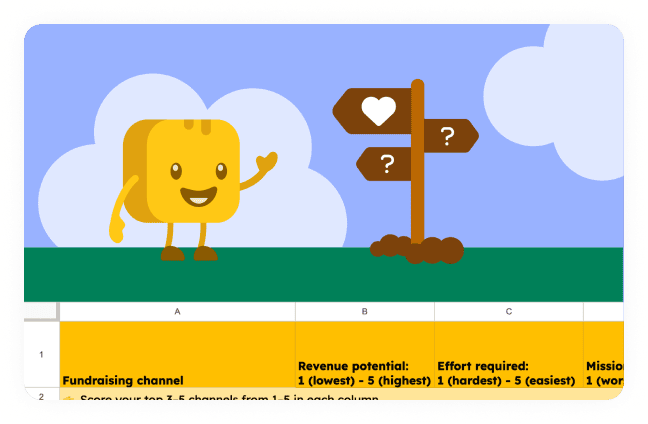
Next, decide which fundraising approaches you’ll use to reach your goals. These might include major gifts, grants, corporate sponsorships, fundraising events, peer-to-peer campaigns, or recurring giving.
For each method, estimate:
- Expected revenue
- Costs and resources required
- Timeline
- How you’ll measure success
💡 Pro tip: Start with a few methods you can execute well rather than trying everything at once. You can expand your strategy later, if needed.
Step 7: Assign roles & tasks 👤
A fundraising plan only works if responsibilities are clear. Assign roles to staff, board members, or volunteers (even if one person wears multiple hats!).
Common roles include:
- Event organizer 🎊 Manages logistics for fundraising events (coordinating vendors, setting up, etc.).
- Marketing specialist 🤳 Handles email, social media, and promotion
- Stewardship lead 👋 Builds relationships with key donors
- Volunteer coordinator 💛 Recruits and supports volunteers
💡 Pro tip: Estimate the time commitment for each role and define what success looks like. In small nonprofits, one person often fills several roles.
Step 8: Build your budget 🧮
Use your previous budget (if you have one) as a starting point, then adjust it based on your plans for this year.
Review:
- Past expenses 📉 Admin, program, marketing, and fundraising costs
- Past revenue 📈 Donations, events, grants, sponsorships, and other income
Step 9: Create your fundraising calendar 🗓️
Give your team a cohesive view of all fundraising initiatives and activities for the year by creating a fundraising calendar.
Consider including:
- Fundraising campaigns and events
- Grant deadlines
- Staff or volunteer availability
- Key giving moments like Giving Tuesday or year-end
Be sure to leave room for adjustment. Your plan should guide you rather than lock you in.
7 fundraising plan examples for small nonprofits
Not every nonprofit needs the same fundraising plan—and that’s a good thing.
The right plan depends on your organization’s priorities, size, capacity, audience, and goals. Below are seven fundraising plan examples to help you determine what fits your organization and get moving with confidence.
1. General operating fundraising plan 💰
This is the most common starting point for small nonprofits. The plan focuses on covering core operating costs by combining a few reliable revenue sources, rather than relying on a single major campaign.
🔧 Key components:
- One total revenue goal, broken down by source (individuals, grants, events)
- A simple 12-month calendar with 3–5 priority campaigns
- Clear ownership for each activity
- Monthly or quarterly check-ins to track progress
💛 Why this works: This approach diversifies risk and gives small teams a realistic, flexible roadmap, especially helpful when fundraising history or experience is limited.
2. Peer-to-peer-led fundraising plan 🫶
Peer-to-peer fundraising is a primary driver rather than a one-off tactic in this approach. The calendar and goals are built around supporter-led campaigns.
🔧 Key components:
- A peer-to-peer campaign tied to a specific season or moment
- Clear fundraising goals per participant
- Training and shareable resources for fundraisers
- Metrics focused on participation and average funds raised per fundraiser
💛 Why this works: A recent study showed that 88% of people trust recommendations from people they know over all other forms of advertising. Translation: Social proof is no joke!
3. Annual fundraising plan 📆
This plan is built around the natural rhythm of the year. Instead of numerous small campaigns, it focuses on a few high-impact moments, such as Giving Tuesday and year-end.
🔧 Key components:
- A detailed fundraising calendar with significant giving moments highlighted
- Revenue projections weighted toward Q4
- Stewardship and follow-up built into the calendar
- Fewer campaigns, but stronger execution
💛 Why this works: Nearly one-third of all annual giving happens in December, with 10% of donations coming in during the last three days of the year. With an annual giving strategy, you can map out your fundraising plan to align with lucrative year-end giving.
4. Volunteer- & board-powered fundraising plan 🥳
Ideal for organizations with limited staff capacity, this approach intentionally assigns fundraising responsibilities to volunteers or board members.
🔧 Key components:
- Clearly defined fundraising roles for volunteers or board members
- Time expectations and simple success metrics
- Volunteer-led fundraising activities
- Built-in recognition and appreciation touchpoints
💛 Why this works: A significant portion of your recurring gifts could come from your volunteer base—so be sure to show your appreciation!
5. Donor retention–focused fundraising plan 🤟
Rather than prioritizing growth, this plan focuses on retaining current donors and sustaining their engagement year over year.
🔧 Key components:
- A donor stewardship calendar (thank yous, updates, check-ins)
- Retention and average gift size as primary KPIs
- Fewer acquisition campaigns, more relationship-building
- Clear ownership of donor follow-up
💛 Why this works: Retention is often the most efficient way to increase revenue—especially for nonprofits with small lists and limited acquisition budgets.
6. Grant- & partnership-heavy fundraising plan 🏢
Institutional funding, such as grants, corporate sponsorships, or workplace giving, is the cornerstone of this plan, with less focus on public-facing campaigns.
🔧 Key components:
- A grants and sponsorship calendar with deadlines
- Revenue goals by funder type
- Assigned responsibility for applications and reporting
- Contingency plans in case funding timelines shift
💛 Why this works: For nonprofits with strong programs but limited individual donor bases, partnerships can provide more predictable revenue. In fact, $5B is given through workplace giving every year.
7. First-time or startup fundraising plan 🌱
Designed for brand-new, fiscally sponsored, or all-volunteer organizations, this method helps teams create their first formal fundraising plan.
🔧 Key components:
- Conservative, likely, and stretch revenue scenarios
- A small number of fundraising methods
- Clear assumptions documented in the plan
- Quarterly reviews to refine goals as data becomes available
💛 Why this works: It prioritizes clarity over precision and gives boards or sponsors a credible roadmap without attempting to predict exact outcomes.
Bring your nonprofit fundraising plan to life with Givebutter
You’re already doing the hardest part: turning fundraising from a series of one-off ideas into a clear, workable strategy. A strong fundraising plan gives you confidence because you know what you’re raising, who’s responsible, and how you’ll track progress.
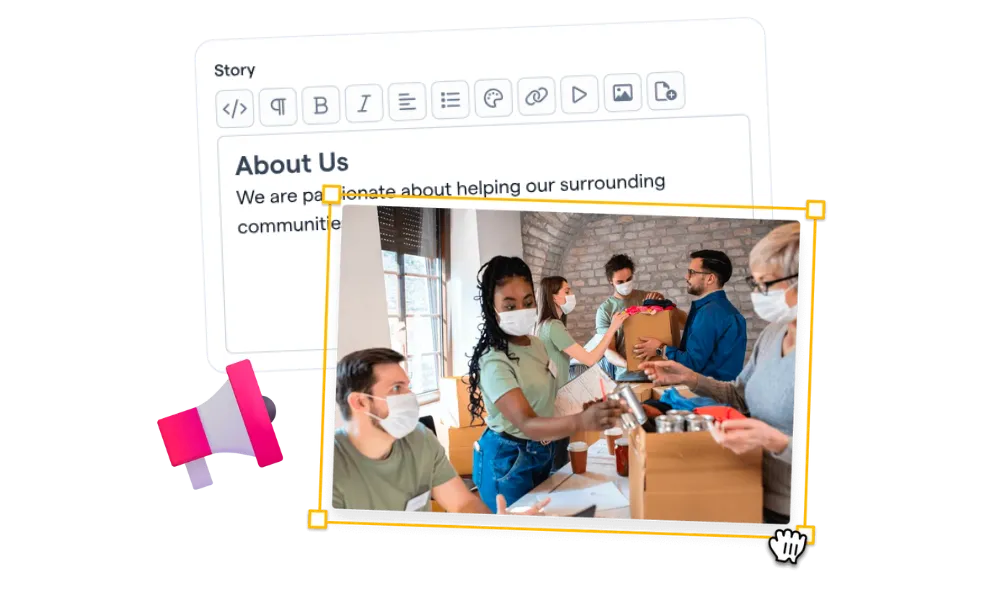
The key is momentum. Givebutter makes it easy to put each piece of your plan into action. You can create fundraising pages for every campaign, manage donor data in one place, and view real-time results, so you can easily adjust your plan as you go.
Create unlimited fundraising pages on Givebutter
Sign up for free and turn your fundraising plan into campaigns, donations, and donor relationships that move your mission forward—one step at a time.
FAQs about fundraising plans for nonprofits
How do you write a fundraising plan for a nonprofit?
Start by writing a simple plan that covers goals, fundraising methods, roles, budget, and a 12-month calendar—even if you don’t have perfect data. If you’re new or lack history, estimate revenue using conservative, likely, and stretch scenarios rather than exact numbers. Most nonprofits refine their plan quarterly as they learn what works.
What’s the best fundraising plan format?
The best fundraising plan format is one that your team can easily edit, share, and update, such as Google Sheets, Excel, or a Word/Google Doc, rather than a static PDF.
To simplify the process, use a free, downloadable annual fundraising plan template in an editable format, which allows you to customize, collaborate with your team, and adjust your plan in real time.
What are the most important fundraising plan components?
Your fundraising plan should answer four simple questions:
- How much do we need to raise?
- Where will the funds come from?
- Who’s responsible for executing each part of the plan?
- How will we measure success?
That means every plan should include a total revenue goal, the fundraising methods you’ll use, clear ownership for each task, and a few metrics to track progress.
What’s the difference between a fundraising plan & an annual fundraising plan?
A fundraising plan outlines the overall strategy for raising money for your nonprofit. An annual fundraising plan puts that approach on a 12-month timeline, with specific campaigns, revenue targets, and deadlines for the year ahead. Most nonprofits regularly revisit and adjust their annual plans as results and realities change.
What KPIs should nonprofits track in a fundraising plan?
Most nonprofits start with a few basic KPIs:
- Total funds raised
- Average gift size
- Fundraising ROI
- Donor retention rate
Together, these indicators show whether your plan is sustainable (not just whether you meet a single goal) and provide the insight you need to course-correct throughout the year.
Share this article


.webp)






.svg)
.svg)