.svg)
.svg)
.svg)
.svg)
.svg)
.svg)
.svg)
.svg)
.svg)


.svg)
.svg)
.svg)
.svg)
.svg)
.svg)
.svg)
.svg)

.svg)
.svg)
.svg)

.svg)

.svg)
.svg)
.svg)
.svg)
.svg)


.svg)
.svg)
.svg)
.svg)
.svg)
.svg)
.svg)





.svg)



%20(1).png)

Nonprofit strategic planning is meant to bring clarity and focus. But if you’ve ever sat through a marathon retreat, wordsmithed a mission statement for hours, or inherited a glossy plan no one actually uses, you know how quickly it can turn into busywork.
A strong nonprofit strategic plan isn’t about creating a perfect document. It’s about making clear choices: what you’ll prioritize, what you’ll stop doing, and how you’ll align your board, staff, and resources around the impact you want to make over the next 3–5 years.
In this guide, we’ll walk you through the process of creating a practical, usable nonprofit strategic plan, step by step. You’ll see real examples from nonprofits that got it right, learn how to connect your plan to day-to-day decisions, and get a free strategic plan template you can start using right away.
Key takeaways
- Start with your stakeholders 👥 Gather input from staff, board members, volunteers, and community members early to ground your plan in real perspectives.
- Gather the right data 📊 Use resources like SWOT analysis, interviews, and surveys to understand where you are now before deciding where to go.
- Set 3–5 clear strategic priorities 🎯 Focus on a small number of goals or strategic impact pillars that directly connect to your theory of change, ensuring they're SMART yet flexible.
- Assign ownership and timelines 🗓️ Use frameworks like RACI to ensure every stakeholder has clear responsibilities and deadlines.
- Build systems for accountability 🔧 Set up dashboards, regular review meetings (monthly, quarterly, or annually), and tracking tools so your plan doesn't collect dust.
- Do it all with Givebutter 🧈 Track fundraising key performance indicators (KPIs), donor retention, and campaign progress in one centralized platform, so creating and implementing your strategic plan is as smooth as butter.
What is a strategic plan for a nonprofit?
A nonprofit strategic plan defines your organization’s long-term vision (typically 3–5 years into the future). It outlines the impact you want to make and the path you'll take to get there. When done well, a strategic plan clarifies your goals and mission and helps you align and prioritize activities that support your vision.
While a strategic plan focuses on high-level direction, an annual or operational plan is more granular. Annual and operational plans break down strategic goals into year-long roadmaps with specific, measurable actions, along with defined budgets, stakeholders, responsibilities, and timelines.

Download your free nonprofit strategic plan template
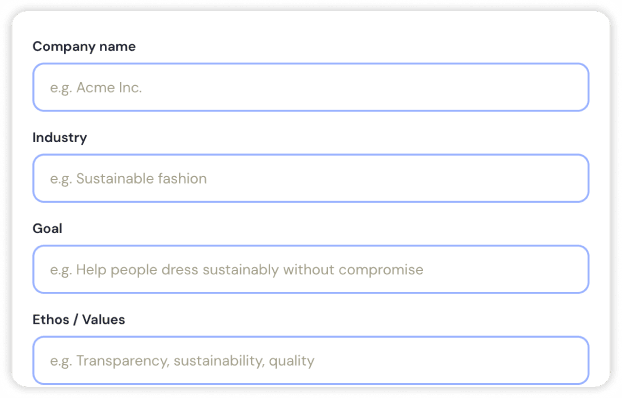
Skip the blank page and start making real progress. This free nonprofit strategic plan template provides a clear structure to guide conversations, set priorities, and move from ideas to action.
Built for busy executive directors, board members, and development leaders, this template walks you through the key stakeholders you’ll need to include, the systems to put in place, and the decisions you’ll need to make.
We’ll show you exactly how to fill it out below.
9 steps to strategic planning for nonprofits
Strategic planning works best when it’s broken into clear, repeatable decisions. The steps below reflect how effective nonprofit leaders actually plan, focusing on priorities, ownership, and follow-through.
Use these nine steps as a practical roadmap for building a strategic plan that aligns your team, guides real tradeoffs, and stays relevant long after the planning phase ends.
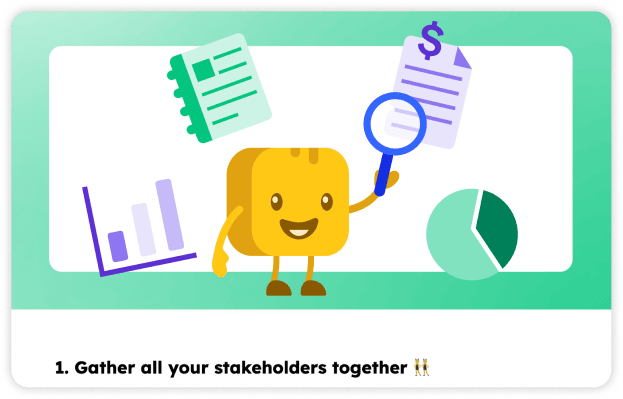
1. Gather all your stakeholders together 👯
By expanding initial discussions to include all staff, board members, and core volunteers, you can gain fresh (and often more informed) perspectives on what your organization can realistically accomplish.
Ask everyone to consider the following questions:
- What worked in past years? What didn't work?
- Did you hit your goals in the previous 1–5 years? Why or why not?
- If you could accomplish just one or two initiatives over the next five years, what would they be?
2. Conduct research & assess where you are 📊
Use interviews, surveys, and past performance to identify gaps and opportunities for the years ahead. To help, try the following exercises:
- Create a SWOT analysis outlining your organization’s strengths, weaknesses, opportunities, and threats to your mission, goals, or a specific program or initiative.
- Conduct in-depth interviews with major donors and sponsors to better understand how the community perceives your organization. Interview staff members and volunteers to identify where you can better allocate resources.
- Send a survey to your supporter base asking which events, programs, or campaigns from previous years felt most impactful and what they hope to see more of in the future.
3. Choose your type of strategic plan 🌱
Select a strategic planning model based on how much uncertainty you’re navigating.
Organizations that benefit from structured, long-range planning may need a different approach than the lighter, more adaptive models used by those operating in fast-changing environments. A strong strategic plan should reduce confusion, clarify priorities, and drive decisions.
- Standard planning: A comprehensive, research-driven approach that supports short-term and long-term goals aligned with your mission.
- Issues-based planning: Designed for organizations facing urgent challenges, this model focuses on identifying key problems and developing targeted strategies to resolve them.
- Organic planning: An agile, adaptable methodology well-suited for dynamic environments or rapidly growing organizations. Planning is viewed as an ongoing, collaborative process.
- Real-time planning: Emphasizes immediacy in decision-making, enabling nonprofits to adjust based on current information and feedback while minimizing the lag between planning and implementation.
- Alignment planning: Ideal for nonprofits seeking stronger internal cohesion, this model focuses on ensuring that all aspects of the organization align with its mission and goals.
4. Revisit your vision, mission, & values 💯
Nonprofit leaders should revisit their vision, mission, and values at least once a year (if not quarterly). This ensures every goal and initiative aligns with your purpose and keeps your entire team moving in the same direction.
Within your nonprofit strategic plan, reflect on the following:
- Do your current goals support your vision? Why or why not?
- Does your community clearly understand your mission? What about your staff?
- Are you taking on projects that don't fully align with your mission statement?
5. Set clear goals for the next 1–5 years 📌
With stakeholder input and your mission front of mind, work with your team to define the most important goals for your programming, advocacy, and fundraising efforts.
Remember: these goals aren’t just a list of projects to complete. They’re deliberate steps toward achieving your long-term vision. That means considering how each goal contributes to your organization's theory of change and how individual efforts connect to measurable impact.
If you need help getting started, try these questions:
- What are your top strategic priorities? If you can only accomplish 1–3 goals, which would they be?
- What is your vision for this organization three, five, or ten years from now?
- Are your goals SMART (Specific, Measurable, Achievable, Relevant, and Time-Bound)?
- How do your goals work together over time to move you closer to your ultimate vision?
💡 Pro tip: While clarity matters, build flexibility into your goals so your organization can adjust to any unforeseen bumps in the road, such as policy changes, funding shifts, or external crises.
6. Create your roadmap and assign responsibilities 🗺
Each SMART goal set in the previous step should have a clear project timeline that breaks the work into manageable steps. As you plan, clarify the following:
- What is the timeframe for achieving this goal, and what milestones will keep you on track?
- Which staff member or team will lead the work, and who will assist them?
- What deliverables demonstrate success, and what are the deadlines for each?
To support this, many nonprofits form stakeholder committees and use RACI (Responsible, Accountable, Consulted, Informed) or DARCI (Driver, Approver, Responsible, Contributor, Informed) frameworks to clarify roles.
7. Choose the tools and resources you need 🛠
Your team may benefit from a project management system to delegate tasks, a CRM to track donors, and a giving platform to raise funds and increase donor retention.
When evaluating your resources, consider the following:
- What nonprofit software do you currently use for project management, communication, donor management, and accounting? Do these systems fully support your organization’s needs?
- What tools, platforms, or apps would have helped you accomplish last year's goals?
- What is your budget for new tools and technology?
8. Share your plan and build buy-in 💪
Present your strategic plan to stakeholders so everyone understands and supports your mission, objectives, and budget.
Before sharing your plan, revisit these questions:
- Does every objective align with your organization’s mission?
- Does each project plan include sufficient time, resources, and people to succeed?
- Does your team have the right tools to accomplish your objectives?
9. Get your systems up and running 🔄
A strategic plan is only successful if the systems to implement and evaluate it are in place. The right systems help ensure you’re meeting your goals and allow you to adjust as needed.
To support your team:
- Use a shared spreadsheet, dashboard, or project management software to track progress against your goals.
- Establish regular check-ins with your team members to review your performance and adjust priorities.
- Set up clear communication channels with key stakeholders and committees to check in and stay accountable.
Nonprofit strategic plan examples
A strategic plan is about creating and communicating a clear vision to stakeholders. But that idea can feel abstract for busy nonprofit leaders juggling competing priorities.
To help you get inspired, explore these real nonprofit strategic plan examples from real nonprofits and see how different organizations bring their strategy to life.
1. The Nature Conservancy 🌳
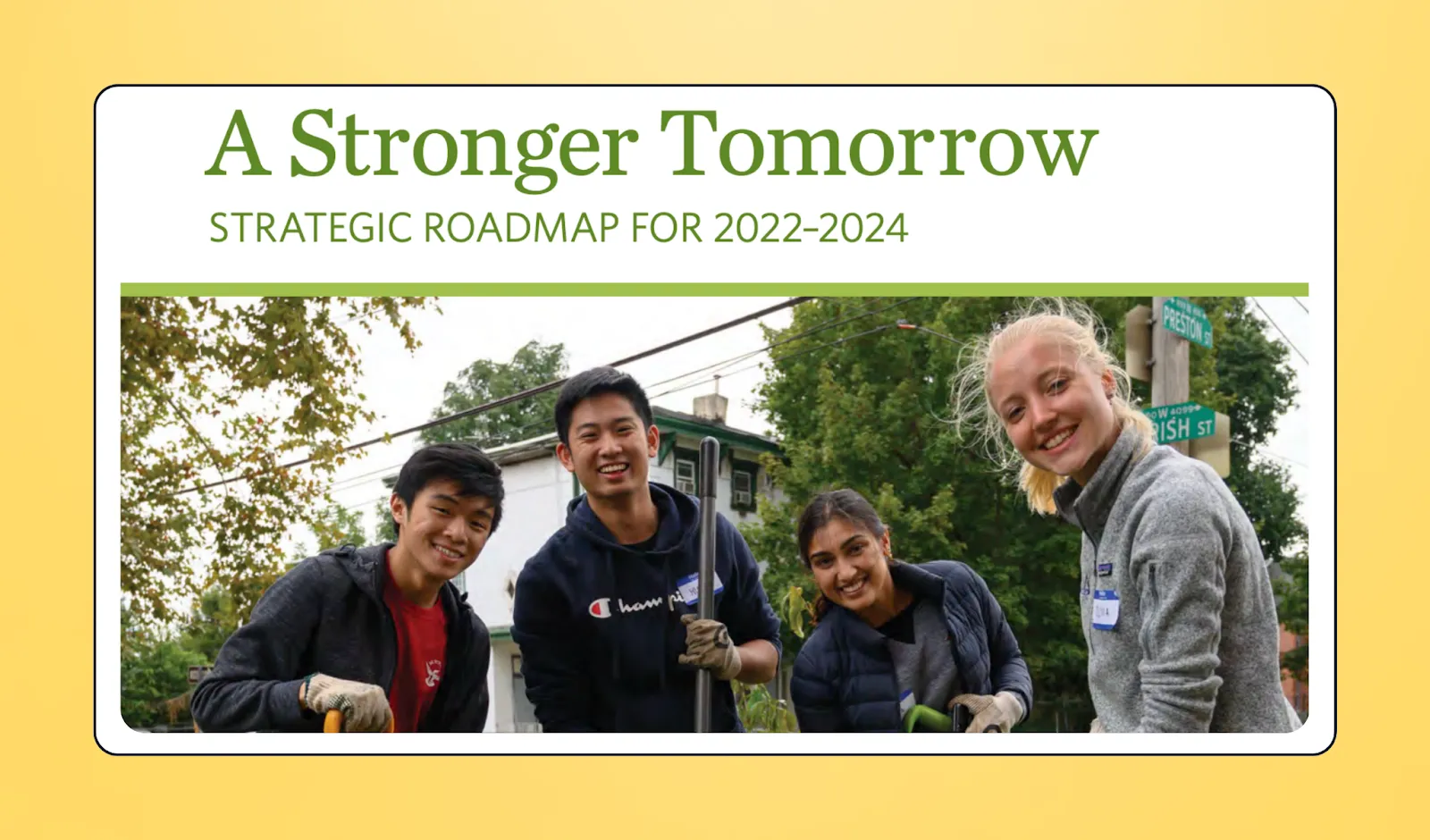
The Nature Conservancy (TNC) is an environmental conservation organization with multiple regional strategic plans, each outlining a vision for its geographic area. Its Pennsylvania and Delaware nonprofit strategic plan shows how nonprofits can translate local goals into a cohesive strategic vision across a global or national organization.
⭐ Best for: Nonprofits with multiple chapters
📊 What this example does well: The Nature Conservancy creates a strategic plan that’s easy to digest, using bold text, photos, and jargon-free language to connect regional priorities directly to TNC's global goals with specific, measurable outcomes.
✔️ Steal this idea: If your nonprofit has multiple chapters, create a shared template of your nonprofit's strategic plan and allow each chapter to tailor it to their regional goals, while still aligning with the broader vision of your organization.
2. Habitat for Humanity 🏠
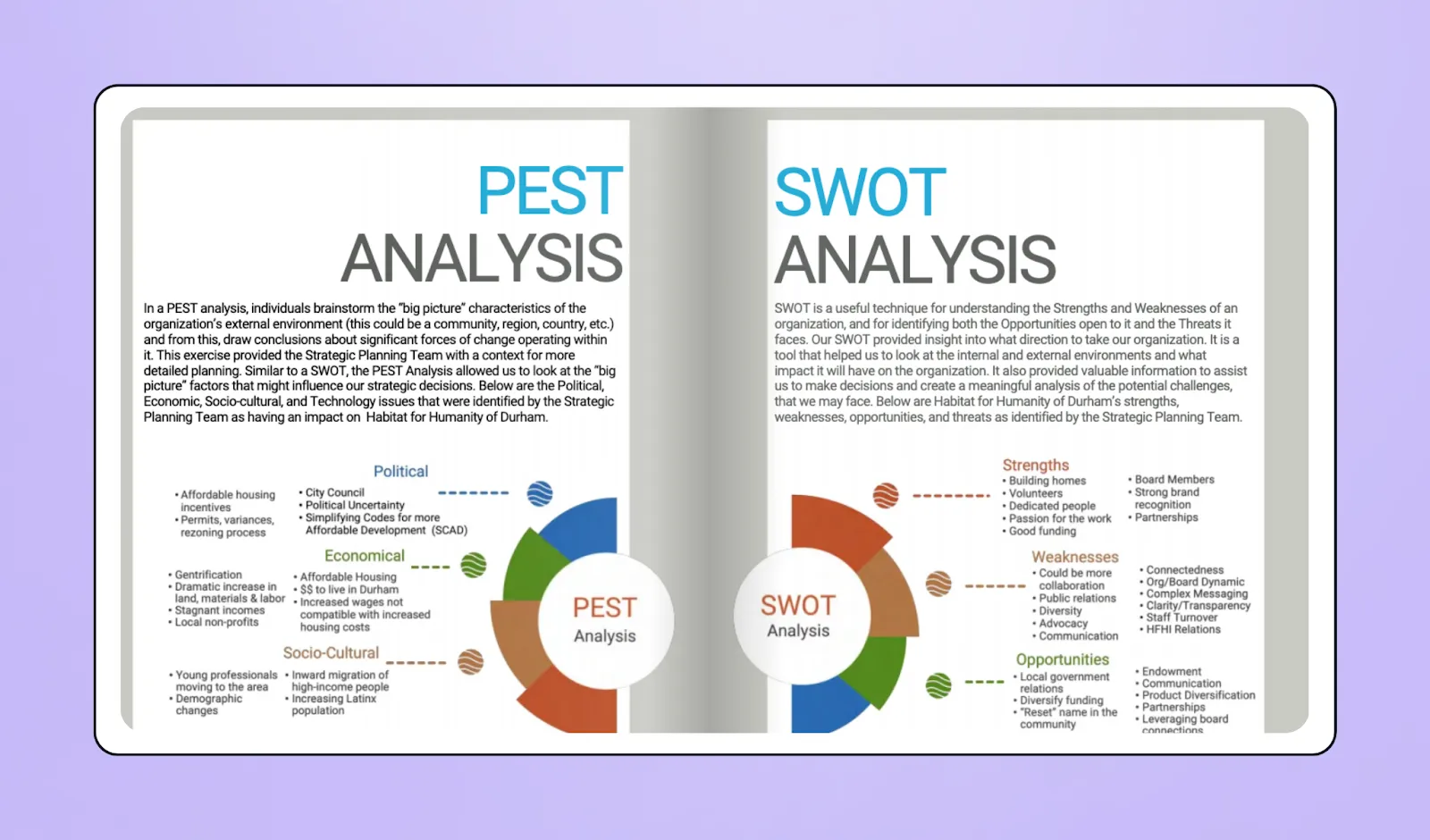
Habitat for Humanity, a global nonprofit focused on affordable housing, offers another strong example of a nonprofit strategic plan that inspires and motivates supporters, volunteers, and staff around a shared mission.
⭐ Best for: Nonprofits that prioritize transparency and community engagement alongside direct service delivery
📊 What this example does well: Habitat for Humanity’s strategic plan transparently shares its SWOT and PEST analyses, showing stakeholders how key decisions were made. The organization also treats the plan as a living document with quarterly monitoring, annual review, and intentional integration into daily work and decision-making.
✔️ Steal this idea: Include your own SWOT or PEST analysis to build credibility and demonstrate thoughtful, data-informed strategy.
3. YMCA 💙
The YMCA uses its nonprofit strategic plans to foster community engagement and connection—and the result is pretty inspiring. Like The Nature Conservancy, each YMCA regional location develops its own strategic plan that aligns directly with the organization’s broader national goals.
⭐ Best for: Community-centered organizations that focus on collaboration with the public
📊 What this example does well: The YMCA of the Fox Cities built its strategic plan on stakeholder input (surveys, focus groups, town halls, and one-on-one meetings), making it truly reflective of community needs.
✔️ Steal this idea: Frame your strategic planning process as community-driven rather than organization-driven. The Fox Cities YMCA positioned itself as a listener first, even publishing a separate "Community Input Report" that treats community feedback as shared knowledge accessible to anyone.
Let Givebutter help you turn your strategic plan into action
Strategic planning helps organizations translate their mission into a guiding north star, aligning activities and goals around a clear purpose. With the right tools, strategic planning can be simple, effective, and sustainable.
Givebutter helps you execute your strategic plan by connecting your priorities to real, measurable action. Once your strategy is defined, you can apply it directly to fundraising campaigns, track donation progress through built-in dashboards, and keep your board, staff, and supporters informed with free email marketing software (or text updates with Givebutter Plus), without juggling multiple tools or spreadsheets.

Start fundraising for free with Givebutter
Sign up for Givebutter for free and start turning your strategy into action.
FAQs about strategic planning for nonprofit organizations
Do we need a nonprofit strategic planning consultant?
If you’re having trouble getting all your stakeholders on the same page and need an unbiased opinion on your strategy, a nonprofit strategic plan consultant can help facilitate the conversation, bring structure to your goals, and assist you in creating a focused, actionable plan.
However, not every nonprofit needs a consultant. If your organization is small but mighty, closely connected to its community, or working with a limited budget, you may be better off creating your plan in-house.
What are the best strategic planning workshops for nonprofit leaders?
BoardSource, Harvard Kennedy School, and Stanford GSB all offer strategic planning workshops and nonprofit management courses for leaders. You can also check out what your state association of nonprofits offers through the National Council of Nonprofits.
How much does a nonprofit strategic plan cost?
Hiring a nonprofit consultant can cost anywhere from $2K to $6K, or more, depending on factors such as the consultant's expertise and the amount of research required. The average hourly rate for nonprofit consultants is about $150, while consultants with more specialized expertise have an average hourly rate of $186.
If your nonprofit creates its own strategic plan, however, it would typically cost under $2K (or even free!), accounting for staff and board time, survey tools, and materials.
What should a nonprofit strategic plan include?
Every nonprofit strategic plan should include:
- Executive summary: A high-level overview of your organization and what’s to come in the following pages of the plan.
- Mission and vision statements: A recap of what you do, who you serve, and why, plus the future you're working toward.
- Situational analysis: An assessment of your organization’s current circumstances, often including a SWOT analysis or community needs assessment.
- Strategic goals: A few broad areas of focus that will guide your work over the next 3–5 years.
- Strategies and action steps: Specific initiatives that support each strategic goal.
- Success metrics: Clear ways to measure progress (e.g., "Serve 500 additional youth by 2027").
Why is strategic planning important for nonprofits?
Strategic planning helps nonprofits:
- Create alignment: Ensure board, staff, and volunteers are working toward the same goals and help prevent misalignment or mission drift.
- Raise more: Create transparency around where the organization is headed and how supporters can get involved.
- Grow: Identify capacity gaps, funding diversification opportunities, and areas that require additional focus or investment.
What is the nonprofit board’s role in strategic planning?
Nonprofit board members typically help build buy-in, provide oversight during the planning process (helping to shape goals, assess SWOT analyses, etc.), and review and approve the plan.
Share this article




.webp)




.svg)
.svg)